How to Grow Finger Citron? A Detailed Guide to Finger Citron Cultivation Techniques
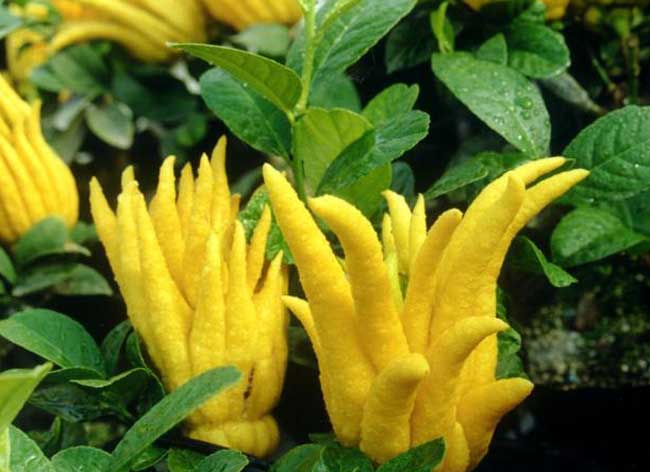
Finger citron is a tropical and subtropical plant that prefers a warm, humid environment with plenty of sunlight. It is not tolerant of severe cold, and fears frost and drought, but it is shade-tolerant, barren-tolerant, and waterlogging-tolerant. It is best cultivated in areas with abundant rainfall and no freezing in winter. The optimal growth temperature is 22-24°C, the overwintering temperature should be above 5°C, the most suitable annual rainfall is 1000-1200mm, and the suitable annual sunshine duration is 1200-1800 hours. It is suitable for growing in acidic loam, sandy loam, or clay loam with deep soil layers, loose and fertile texture, rich humus content, and good drainage.
In the main production areas of Gaoyao City and Deqing County in Guangdong Province, the average annual temperature is 22°C, the average temperature in the coldest month of January is 13.2°C, the extreme minimum temperature is -1°C, the average temperature in the hottest month of July is 28.6°C, the average annual precipitation is around 1600mm, and the annual sunshine duration is 1815 hours. In well-drained, fertile rice fields where the soil is slightly acidic, it grows well, and the yield is relatively high and stable.
Propagation Methods for Finger Citron
Finger citron can be propagated by cuttings, grafting, or air layering. The cutting time is from late June to early-to-mid July. Cut branches from healthy mother plants as cuttings; roots can develop in about 1 month, and sprouts in two months, after which they can be planted out. Long-branch cuttings can also be used: take healthy 3-4 year old branches and cut them into 50cm lengths as cuttings.
1. Cutting Propagation
Preparation of cuttings: Before cutting, select healthy 7-8 year old mother trees, cut off vigorous, pest- and disease-free old healthy branches, remove the leaves and tender top shoots, and cut them into 17-20cm long cuttings. The survival rate of cuttings is over 90%, and the seedlings grow very robustly. Young branches or leggy branches must not be used, because plants grown from such branches often do not bear fruit easily.
Land preparation and cutting: For the seedbed, it is best to choose sandy soil with a relatively thick layer, so that seedlings can be lifted later. After the site is selected, plow deeply and harrow finely, apply human and livestock manure water, and make high beds 1.3m wide, with furrow width of about 30cm and depth of about 20cm. Cutting can be done in spring from February to March and in autumn from August to September, with autumn cutting being the best. Autumn cuttings can grow roots the same year, and after sprouting the following spring they grow rapidly. When cutting, open horizontal trenches on the bed with a trench spacing of 23-27cm; insert the cuttings into the trenches at a plant spacing of 15-17cm, and never insert them upside down. Usually about 12000-15000 cuttings are needed per mu. After cutting, cover with soil and press firm, leaving one bud eye at the tip exposed above the soil surface, and water if the soil is dry.
Seedling management: After cutting, water and irrigate at any time; also build a shed for shading, and do a good job of drainage when there is a lot of rain. When the seedlings are 7-10cm tall, remove the clustered weak seedlings, leaving only one strong seedling per plant. Weed promptly, and apply light human and livestock manure water or ammonium sulfate 3-4 times as a top dressing. After one year of cultivation, they can be transplanted.
2. Grafting Propagation
Carry out in spring and autumn. Using citron or lemon as rootstock is better. The rootstock is generally propagated by cuttings or sowing. Grafting methods include:
Approach grafting: Carry out in early to mid-August to September. Select a 4-5 year old plant as the rootstock with a stem diameter of 2-3cm, a well-developed root system, and robust growth. Cut off the branches below the branching point at the stem base, leaving only one branch, then shave off some cortex downward on one side of the position where the branch was cut. Then select a branch that grew in the previous spring or autumn as the scion, similar in thickness to the rootstock, 5-7cm long. Also shave off part of the cortex on the lower side of the scion, then place the cut surface of the rootstock against the cut surface of the scion, making the two surfaces fit tightly, and bind tightly in the middle with plastic film. It can heal in about one week. After healing, cut off the rootstock portion above the joint.
Side cleft grafting: In early to mid-March, cut the rootstock flat at 5-7cm above the ground, smooth it with a grafting knife, and select a smooth part slightly into the wood to make a slanted cut 1-1.5cm deep. The scion should retain 2-3 buds, and its lower end should be cut into a wedge shape 1-1.5cm long. Then align one side of the rootstock cut with the scion bark and insert it tightly into the rootstock cut, and bind with plastic film. It generally heals in about half a month and sprouts and grows. At this time, loosen the soil and weed. After 45-60 days, it begins to shoot. At this point, the binding material must be removed, otherwise the new shoots tend to bend.
Cultivation Techniques for Finger Citron
Fertilization of finger citron should be determined according to tree age and growth condition. Generally, in the first 3 years, apply a quick-acting organic fertilizer once a month from March to August; after entering the full fruiting period, topdressing can be done 3 times a year, respectively before flowering, during the young fruit stage, and after fruit harvest, applying bran cakes, compost, human and livestock manure and urine together with phosphorus and potassium fertilizer or compound fertilizer in a timely manner, with particular attention to applying winter fertilizer well.
Before finger citron enters the fruiting period, shoot-promoting fertilizer should be applied well: that is, apply quick-acting chemical fertilizer and farmyard manure once 10 days before the spring, summer, and autumn shoots emerge. Generally, apply about 30g urea per plant, mix 100g phosphate fertilizer with 5kg chicken and cattle manure evenly, and apply it in a ring-shaped trench 30cm wide and 25cm deep in combination with intertillage and weeding, then cover with soil tightly. No fertilization after September, to prevent excessive growth of late autumn shoots.
After planting, finger citron can enter the fruiting period in the second year and can continue bearing fruit for about 30 years. It should be fertilized four times each year. The first is pre-flowering fertilizer, preferably applied in mid-March, with 5kg decomposed human manure and urine per plant; the second is at the peak flowering stage, when the fertilizer requirement is relatively large, with 5kg decomposed chicken and cattle manure and 150g urea per plant; the third is fruit-strengthening fertilizer applied around “Minor Heat”, heavily applying phosphorus and potassium fertilizer to promote fruit expansion and increase yield, with 1 kilogram compound fertilizer mixed with 5kg decomposed chicken and cattle manure per plant, and at the same time spraying 100g potassium dihydrogen phosphate diluted in 50kg water once as foliar fertilizer, which is very beneficial for promoting vigorous tree growth and fruit expansion. The fourth is fruit-harvest fertilizer; after harvesting fruit in September-October, dig symmetrical trenches 40cm wide and 40cm deep on both sides of the plant along the drip line of the canopy, apply 10kg decomposed chicken and cattle manure and 1kg compound fertilizer per plant, mix them, and backfill the pit.
After cutting seedlings or grafted seedlings are cultivated for one year, when the seedlings reach 50cm tall, they can be planted out in both spring and autumn, with February, when the temperature begins to warm and new buds are about to sprout, being better. For ordinary cultivated land, first arrange the drainage ditches around the perimeter, and dig holes at a spacing of about 3m between plants and rows. If planting along field edges and corners, it can be slightly denser. The hole diameter should be about 50cm and the depth 30cm. The soil in the hole should be fine, and it is best to arrange them in a triangular pattern. Plant one seedling per hole, and it must be planted upright, with the fibrous roots spreading in all directions. Mound fine soil around the roots, lift gently upward several times so that the roots and soil are in close contact, then cover with fine soil and tread firm, and finally cover with soil slightly higher than the ground surface.
Field Management of Finger Citron
After planting, carry out intertillage, weeding, and topdressing 3 times each year. The first spring fertilizer is before budding, and the second spring fertilizer is around the Summer Solstice. The fertilizers are generally mainly human and livestock manure water and rapeseed cake. At the time of the second topdressing, some areas use 250g urea plus 500g superphosphate mixed with 100 times water and apply it once as a root-outside topdressing with a sprayer to promote vigorous tree growth and fruit enlargement. The third winter fertilizer is applied after finger citron harvest in October-November, heavily applying relatively concentrated fertilizer, with rapeseed cake, cattle and horse manure, and superphosphate composted before application being best. According to the experience of the people in the main production areas, winter fertilizer is most critical for finger citron. Winter dormancy can keep finger citron from dropping leaves during the overwintering period, and it begins to flower the following spring. If winter fertilizer is insufficient, leaves drop during the overwintering period, and it only begins to flower in the following spring, with few fruits in summer, affecting yield. Because finger citron has many horizontal roots and its lateral roots and main roots enter the soil shallowly, intertillage should not be deep, so as not to damage the roots. In winter, soil should be mounded around the base once. During the flowering period of finger citron, excess flowers and male flowers can be removed, leaving only 1-2 flowers per short branch. Or wait until young fruits have formed and then remove them, which is even safer.
① Cleaning the orchard: In winter, remove fallen leaves and residual branches. During the growing period, remove severely diseased leaves as they appear and bury them deeply or burn them, so as to avoid re-infection by pathogens.
② Digging trenches for drainage: Dig deep trenches around the field-planted finger citron orchard to lower the groundwater level, maintain suitable soil moisture, and enhance soil permeability.
③ Fertilization: Fertilizer is the foundation for cultivating a robust tree. After autumn, apply sufficient base fertilizer, with 2500-3000kg organic fertilizer per mu. For topdressing, properly control nitrogen fertilizer and increase the application of potassium, phosphorus, and trace element fertilizers.
④ Protecting leaves and fruits: Spray nitrogen, phosphorus, potassium fertilizers, trace element fertilizers, and Lufenwei on the foliage, and spray borax at the initial flowering and full flowering stages to improve leaf lifespan and photosynthetic capacity, promote branch maturity and nutrient accumulation, enhance plant resistance, and increase yield.
⑤ Pruning and shaping: To ensure high and stable yield of finger citron, it is necessary to adjust the tree shape and vigor and reasonably prune flower and fruit branches. Plants that flower and bear fruit in the same year they are planted should not be allowed to flower; remove the flower buds early to promote thickening growth of the tree form and crown expansion. Trees that have entered the peak flowering and fruiting stage are generally pruned after budding in March and after fruit harvest in autumn and winter. When regulating flowers and fruits, attention should be paid to removing early flowers (that is, flowers blooming in late spring and early summer, because most flowers blooming at this time are male flowers and cannot bear fruit). Excess axillary buds sprouting on branches at the female flowering stage must also be removed to reduce nutrient consumption, improve growth conditions, and achieve the high-yield goal of reducing flower drop and bearing more fruit. Finger citron grows coarsely and quickly and has many branches, so reasonable pruning and shaping must be carried out every year to make the tree vigorous and promote even distribution of fruiting branches. Prune and shape after fruit harvest and before budding in March, cutting off crossing branches, weak branches, diseased and pest-infested branches, dead branches, and leggy branches. Most short branches of finger citron are fruiting mother branches and should be retained as much as possible. All summer shoots growing in summer should be cut off entirely, except for the few ones needed to expand the canopy.
⑥ Fruit protection and weeding: Flowering begins around Awakening of Insects (March 6). For each flower cluster, retain 2-3 healthy female flowers and remove the rest. In terms of fruit protection techniques, it is generally required to retain 1-2 fruits per branch, and excess ones should be removed. After entering the fruiting period, pull out weeds around the plants by hand; do not use a hoe, so as not to damage the roots. After planting finger citron, mound soil once a year for 5 years, carried out after pruning and cleaning the orchard, and after mounding, cover the tree plate with a thin layer of grass.
Harvesting and Processing of Finger Citron
1. Collection: Finger citron begins to flower and bear fruit 4-5 years after planting. Flowers are collected at the full flowering stage, picked every morning. If there are flowers at ordinary times, they can also be picked successively. When picking, remove infertile flowers. If the small citron inside an already fertilized flower is pointed and strip-shaped and extremely thin and dry, and will be difficult to grow in the future, it can also be picked, and flowers that have fallen to the ground should also be gathered. In addition, in colder areas, young fruits often freeze to death after winter flowering, and these can also be picked. After the flowers are collected, dry them in the sun or dry them with smokeless coal.
2. Fruit harvesting: The fruits mature successively from August. When the peel begins to change from green to light yellow-green, harvest on sunny days, until harvesting is completed in winter. The fruits are cut lengthwise with a knife into thin slices 4-7mm thick, and dried promptly in the sun or by drying to finished product. For adult strong trees under good management, each plant yields 20-25kg of fresh fruit per year.
Pest and Disease Control of Finger Citron
1. Diseases
The main disease of finger citron is sooty mold. After the plant is infected, small ash-gray spots first appear on the leaf surface, then gradually expand and turn black, covering the entire leaf and hindering photosynthesis. It can be controlled with 40% dimethoate emulsifiable concentrate 1000 times solution or 1:1:10 tobacco lime water. For anthracnose, use 25% Junwei emulsifiable concentrate 1000-1500 times solution or anthracnose Fumei 800 times solution.
2. Leafminer, citrus swallowtail, and jade-banded swallowtail larvae feed on leaves.
[Control method] It can be controlled with 90% crystalline trichlorfon 1000 times solution.
3. Cottony cushion scale damages branches and leaves
Control methods: Protect the natural enemy ladybugs; when occurrence is small, cut off infested branches and burn them; control with 40% dimethoate emulsifiable concentrate 1000 times solution or 25% parathion emulsifiable concentrate 1000 times solution; use rosin mixture, diluted 8-10 times with water in spring and 16-20 times with water in summer and autumn, spraying once every 15 days for 2-3 consecutive times.
3. Aphids and red spiders damage tender branches and leaves
[Control methods]
① For leafminer, use 0.6% miechongling 2000 times solution or 20% Kangfuduo (imidacloprid) 2000-4000 times solution.
② For red spiders and rust mites, use pyridaben (Saomansu) 3000-4000 times solution, fenbutatin oxide 1000-1500 times solution, or propargite 2500 times solution. For scale insects, use hypertonic imidacloprid 2000 times solution or Supesha 1000 times solution. When applying pesticides, pay attention to the concentration used to prevent phytotoxicity.