How to Plant Panax notoginseng Seeds? Detailed Guide to Sowing Methods and Steps
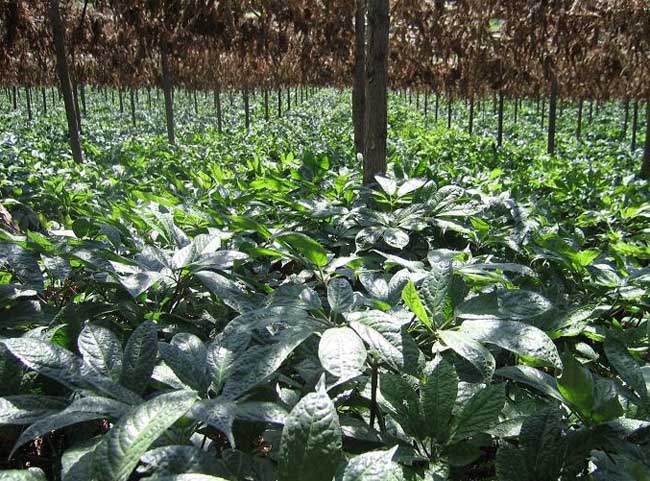
Panax notoginseng is a perennial upright herbaceous plant of the genus Panax in the family Araliaceae, distributed in Yunnan, Guangxi, Jiangxi, Sichuan and other places, growing at altitudes of 1200-1800 m. It has significant effects in promoting blood circulation to remove blood stasis, reducing swelling and relieving pain, and enjoys the fine reputation of "Jinbuhuan" ("not exchangeable for gold") and "Southern Divine Herb." It has extremely high cultivation value. Let's take a look below at how to plant Panax notoginseng seeds!
Germination Conditions for Panax notoginseng
The germination temperature for Panax notoginseng seeds is 10-30°C, with the optimal temperature being 20°C. The seed dormancy period is 45-60 days. During the dormancy process, the seedlings need to undergo a period of low-temperature treatment before they will germinate, and they are very sensitive to light. Traditionally, it is believed that 30% natural light is needed for normal growth and development, hence the saying about Panax notoginseng shade sheds: "three parts light, seven parts shade." According to the latest research, the most suitable light transmittance for Panax notoginseng sheds is 8-12%; once it exceeds 17%, the growth of Panax notoginseng will be adversely affected.
Seed Treatment for Panax notoginseng
For Panax notoginseng, seeds set by 3-year-old plants that are robust and free of pests and diseases are generally selected. When the fruits mature in November to December, they are harvested, the flesh is washed off, and they are sown promptly, because after the seeds are stored for one week the germination rate drops greatly. Before sowing, disinfect with 0.2-0.3% Baume degree lime-sulfur mixture for 10 minutes, or disinfect with 200-300 times diluted zineb for 15 minutes, and then sow.
Sowing Panax notoginseng Seeds
For sowing and raising Panax notoginseng seedlings, 2-3 months before planting, plow the selected land repeatedly so that the soil is fully weathered and finely broken up. Before sowing, plow and harrow once more, then make beds 18-20 cm high and 1 m wide. Apply 3000-4000 kg of base fertilizer per mu, mix it evenly with the soil, level the bed surface, and open holes at a spacing of 6 cm × 6 cm, with a hole depth of 1.5 cm. Place l seed in each hole, cover with soil, and then cover with rice straw to prevent the bed soil from caking. For winter sowing in the south, seedlings emerge in 3 months and are fully emerged in 4 months. About 100,000 seeds can be sown per mu (weighing 8.5 kg), and after one year of cultivation they are ready to leave the nursery for transplanting.
Transplanting Panax notoginseng Seedlings
After growing in the seedbed for one year (commonly called "zitiao"), Panax notoginseng must be transplanted to a different location. The new land for transplanting must be prepared in the same way as the seedbed, and it is best to do this during Major Snow or Winter Solstice. Dig up the "zitiao" from the seedbed, cut off the stems and leaves (commonly called "kezi"), place them into holes, apply a pinch of mixed fertilizer, and cover with about one cun of local soil. Open furrows at a row spacing of 24×20 cm or 27 cm × 20 cm, with a furrow depth of 3-5 cun. When planting the seedlings, place them at an angle of 20-30 degrees to the bottom of the furrow, cover with soil as you plant, with the thickness judged by not exposing the sprouting head; it should not be too thick. Then cover with about 1-1.5 cm of chopped grass, following the principle that no soil is visible.