What are the growing conditions for Angelica sinensis? A detailed explanation of environmental requirements
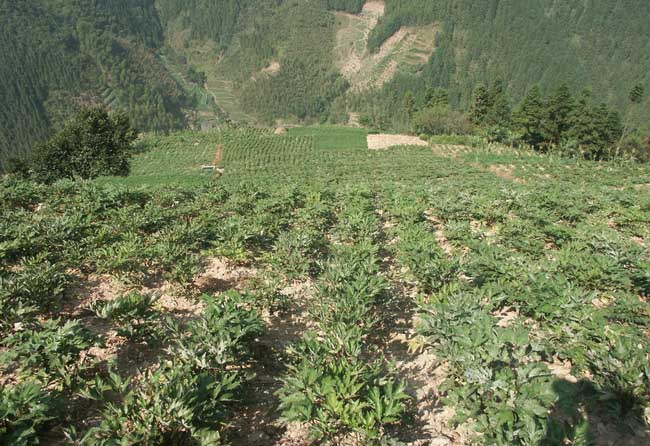
Angelica sinensis is a perennial herbaceous plant whose roots can be used as medicine, and it is one of the most commonly used traditional Chinese medicines. It is mainly distributed in Gansu, Yunnan, Sichuan, Qinghai, Shaanxi, Hunan, Hubei, Guizhou and other places, and is cultivated in all of them. Angelica sinensis can also be used as an ingredient in braised products; its main feature is removing gamey odors and enhancing aroma, adding meaty and medicinal fragrance to meat products.
Altitude requirements
At that time it was suitable for planting in higher-altitude areas. Therefore, seedling beds in places such as Minxian and Zhangxian are generally chosen at altitudes above 2400 m, and transplanting sites are often chosen in areas with an average altitude of about 2200—2300 m. When the altitude is too low, the yield of planted Angelica sinensis is low, the quality is also relatively poor, and it is also prone to bolting early.
Soil environment
Angelica sinensis is a fertilizer-loving crop. Deep, fertile, loose, well-drained sandy loam soil rich in humus is suitable. Applying more fertilizer at transplanting can promote the yield of Angelica sinensis at that time. Generally, fertile black soil is chosen for seedling raising, and a large amount of mountain ash farmyard manure is applied as base fertilizer. At transplanting, in addition to applying sufficient base fertilizer, nitrogen, phosphorus and inorganic fertilizers should also be applied. Nitrogen is the main component of proteins; it can promote the growth of the vegetative body, increase leaf area, thereby improving photosynthetic capacity and increasing the accumulation of organic matter. Phosphate fertilizer can strengthen root development, promote a strong root system, and improve the ability to absorb nutrients and water. Potassium fertilizer can promote the transport and storage of photosynthetic products to the roots, accelerate the fleshing of the roots, and improve the quality of Angelica sinensis. Therefore, applying more nitrogen fertilizer in the early stage of vegetative growth and more phosphorus and potassium fertilizer in the later stage can significantly improve the yield and quality of Angelica sinensis.
Temperature conditions
Angelica sinensis originated in the high mountain areas around Minxian and Dangchang. It has relatively strict temperature requirements and is suited to cold, cool highland climate conditions. At that time, under suitable moisture conditions, the emergence time of seeds shortened as the temperature rose. When the average temperature is 12—14°C, they emerge in 15—20 days; when the average temperature is 20—24°C, they emerge in 7—15 days; when the average temperature is above 14°C, the aboveground and underground parts grow rapidly; when the average temperature in August is above 16°C, the growth rate slows down; after September, when the temperature drops below 13°C, the aboveground parts begin to age, while the roots grow faster, and this is the main period of medicinal material growth.
Water requirements
Angelica sinensis has poor drought resistance and poor waterlogging resistance, which shows that its requirements for moisture conditions are relatively strict. A soil moisture content of about 25% is most suitable for the growth of Angelica sinensis. Therefore, abundant rainfall is one of the conditions for obtaining high yields of Angelica sinensis. When the soil moisture content exceeds 40%, waterlogging occurs, and Angelica sinensis is prone to root rot. When the soil moisture content is lower than 13%, drought damage occurs, and supplementary irrigation is needed. Therefore, timely irrigation and drainage are among the main means of obtaining high yields of Angelica sinensis at that time.
Light conditions
Angelica sinensis belongs to the high-cold long-day development type, so under long-day conditions it grows well, develops quickly, and bolts easily; this is a characteristic of the growth of Angelica sinensis. In order to reduce early bolting, it is often planted on shady slopes or flat land, and the seedlings are covered with grass. However, insufficient light during the medicinal material stage also prevents high yields. Therefore, in production, appropriate slope aspect, slope gradient, and planting density are selected to regulate light in order to favor root development.