A Detailed Guide to Polygonum multiflorum Cultivation Techniques and Planting Management Methods
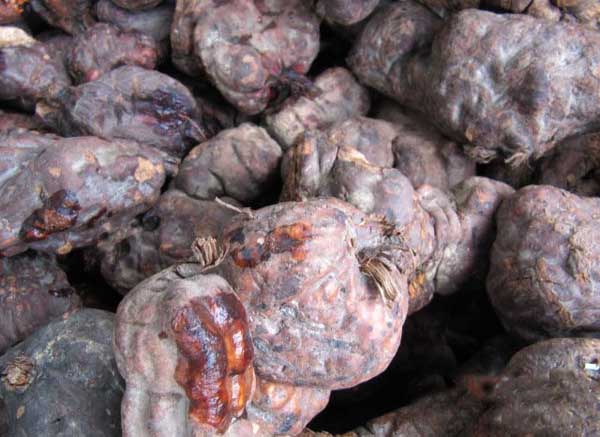
Polygonum multiflorum is a perennial twining vine climbing plant that grows slowly. It is generally believed that wild Polygonum multiflorum must grow for more than three years to form larger tuberous roots for medicinal use. In recent years, due to purchasing by medicine merchants and indiscriminate digging by farmers, wild Polygonum multiflorum resources have been severely damaged and are facing depletion. In order to protect and develop this precious Chinese medicinal herb resource, the cultivation techniques for Polygonum multiflorum are introduced as follows:
Sexual Propagation of Polygonum multiflorum
Seed collection and storage: First, collect superior individual plants with pure variety, no pests or diseases, and healthy growth as mother plants for seed collection. When Polygonum multiflorum seeds mature, with the exterior changing from white to brown and the interior turning black, they must be harvested promptly, otherwise the seeds will naturally fall off. The harvested seeds, due to their high moisture content, are prone to mold and pest infestation, thereby losing germination ability. Therefore, they must be sun-dried before being packed into hemp bags or sand cloth bags and stored in a ventilated and dry place. Never store seeds in plastic bags.
1. Site selection. Polygonum multiflorum seedling cultivation has relatively strict soil requirements. Plots with deep soil layers, loose and fertile soil, convenient water sources, and drainage and irrigation capability are ideal. After the seedbed site is determined, weeds should be completely removed before they flower in the previous year, to prevent weeds from competing with Polygonum multiflorum seedlings for nutrients and light in the second year. This is the key to successful seedling cultivation.
2. Land preparation. First, deep-plow the seedbed site and expose it to the sun for 15-20 days, which can reduce soil-borne pests and diseases. Where conditions permit, pile branches and pine needles on the soil clods and set them on fire once, which can greatly reduce weeds, alleviate pests and diseases, and improve soil fertility. Then carry out land preparation combined with applying base fertilizer. Apply 10 kg of high-quality farmyard manure per sq m, then turn and dig once, remove weed roots, and rake the bed surface fine and level.
3. Bed formation. Generally after sowing, due to severe spring drought, irrigation mainly relies on manual watering, so flat beds are preferable. The bed width should be 1.5 m, with soil ridges made around the perimeter, ridge width 30 cm, which helps retain water and fertilizer.
4. Sowing. Results from many years of experiments confirm that the optimal sowing period for Polygonum multiflorum is in March, at the time of “Jingzhe” (Awakening of Insects). If too early, the temperature is low and cannot meet the temperature requirements for seed germination, which will not only fail to produce seedlings but also cause seeds to rot. If too late, although seedlings emerge quickly after sowing, the optimal growth period is short, which is unfavorable for seedling growth. Because Polygonum multiflorum seeds are tiny, broadcast sowing is preferable. The sowing rate is 4-6 g per sq m. Before sowing, use a tool to gently pat the surface soil of the bed flat; soil gaps should not be too large, as sowing too deep will prevent seedling emergence. At the same time, it must be sown in the morning or evening when there is no wind, mixed with fine soil or plant ash for broadcasting. After sowing, cover the bed surface with sieved fine soil and a small amount of farmyard manure, with a thickness of 0.1-0.2 cm being appropriate, then scatter a layer of green pine needles, with a thickness such that about one-fifth of the soil is visible to the naked eye.
5. Seedbed Management
① Water thoroughly. Polygonum multiflorum seeds are tiny, so when watering, a watering can must be used to spray multiple times; do not flush with water directly or pour violently. Afterward, on sunny days, water lightly once daily at 10 AM or after 5 PM; after seedlings emerge in about 20-25 days, water once every 2-3 days.
② Weeding. After sowing Polygonum multiflorum, weeds emerge first and should be removed promptly with appropriate watering. Thereafter, weed once approximately every 10 days.
③ Topdressing. Sixty days after seedling emergence, spray with 100 kg of water mixed with 0.2-0.3 kg of compound fertilizer or urea. The concentration should be light and the frequency high, spraying once every 10-15 days. In the middle and late stages of seedling growth, spray with 0.5%-1% concentration of compound fertilizer or urea, or apply 50 kg of clean water mixed with 5-8 kg of manure water.
④ Thinning. To cultivate strong seedlings, overly dense and weak seedlings must be thinned out. The first thinning is carried out about 30 days after seedling emergence; the second about 50 days after seedling emergence; the third thinning, called control thinning, basically achieves a spacing of 3-4 cm per plant. Thinning should be done early rather than late, otherwise it will cause seedling spindling. After each thinning, water appropriately.
⑤ Pest and disease control. Currently, the main pest found in seedbeds is cutworm, which can be controlled by manual capture or by spraying with 1:2000 diluted decis. The main disease is powdery mildew. Before onset, spray with 1:1:200 Bordeaux mixture for prevention; when disease occurs, spray with 25% carbendazim 500-800 times solution.
Asexual Propagation of Polygonum multiflorum
1. Stem segment cutting propagation method
① Chemical treatment: In February-March, before wild or cultivated Polygonum multiflorum sprouts, cut the stem base and middle portions of young vines into 10-20 cm lengths, retaining 2-3 node buds. Bundle dozens into small bundles and treat by soaking roots with rooting powder No. 1, No. 2, No. 3, naphthalene acetic acid, or 2,4-D respectively. Refer to the instructions for specific concentrations. Note: do not use iron or copper containers to hold the solution. Alternatively, in May-June after Polygonum multiflorum young vines sprout, use the above method for a second batch of cutting seedling cultivation. The survival rate of both batches of cuttings can reach over 80%.
② In February-March and May-June, treat young vine stem segments as above, then dip the stem segment bases in alcohol or plant ash. The survival rate is over 70% for both.
③ In May-June after young vines sprout, stem segments require no treatment, and direct cutting survival rate can reach over 50%. In summary, regardless of which cutting treatment is used, stem segments must be inserted into the seedbed on the same day, with a plant spacing of 10 cm × 20 cm. The seedbed soil should preferably be loose virgin soil or unfertilized. Water once every 2-5 days and manage normally.
2. Tuberous root propagation method
In August-September or February-March, dig up Polygonum multiflorum tuberous roots. Select small to medium-sized tuberous roots or the stem base of tuberous roots as seed material, and plant them in loose and fertile plots with a plant spacing of 10 cm × 20 cm. After planting, water once with settling water. After seedling emergence, manage normally.
For both cutting and tuberous root seedling seedbeds, cultivation and weeding must be intensified. When new seedlings grow to 20-30 cm, evenly apply 2-3 kg of compound fertilizer mixed with 100 kg of water.
Planting Time for Polygonum multiflorum
Regardless of which method is used to raise seedlings, the optimal transplanting period is mid-June at the time of “Xiazhi” (Summer Solstice). Because Polygonum multiflorum has above-ground stem vines reaching several meters long and vigorous plant growth, only reasonable close planting can fully utilize soil, light, heat, water, and air to achieve the goals of high quality, high yield, and high efficiency. Planting 9,000 to 11,000 plants per mu is appropriate. Transplanting with soil should be done whenever possible, with a plant spacing of 25 cm × 30 cm or 25 cm × 25 cm.
Field Management of Polygonum multiflorum
1. Fertilization. Apply 1,000-1,500 kg of farmyard manure plus 30-50 kg of phosphate fertilizer or 20-30 kg of compound fertilizer per mu to the transplanting plot. Generally, fertilizer is applied in the planting holes, mixed with soil, and then transplanting is carried out.
2. Topdressing. When transplanted seedlings grow to about 60 cm, in combination with cultivation and weeding, apply 30-40 kg of compound fertilizer or 30 kg of urea per mu, preferably mixed with water for application. Thereafter, weed as needed.
3. Pest and disease control. When powdery mildew, hairy caterpillars, etc. are found, they must be controlled with carbendazim, decis, and other chemicals.
4. Trellising. This is a special management measure for Polygonum multiflorum cultivation. Because Polygonum multiflorum is a climbing vine plant with vigorous above-ground growth, to further improve yield and quality, after transplanting, when plants grow to about one meter, bamboo poles or branches must be used to build trellises over 1 m high, and ventilation and light conditions should be improved to facilitate the growth and development of plants and underground tuberous roots.
5. Topping and vine pruning. When vines grow to 2 m high, remove the terminal buds to promote branching. After 30 days, prune overly dense branches and spindly branches sprouting from the base to reduce nutrient consumption. Remove leaves at the stem base and flower buds not retained for seed to facilitate ventilation and light penetration.
6. Hilling. In southern production areas, carry out hilling around the root zone at the end of December to increase propagation material and promote tuberous root growth; in northern areas, hill before winter to facilitate overwintering.
Pest and Disease Control of Polygonum multiflorum
1. Leaf spot disease. It begins to occur during high-temperature and rainy seasons, and is severe when field ventilation is poor. It damages leaves. Control methods: ① Maintain ventilation and light penetration, and prune diseased leaves; ② Spray 1:1:120 Bordeaux mixture at the early stage of disease, once every 7-10 days, for 2-3 consecutive times.
2. Root rot. It mostly occurs in summer and damages roots. Control methods: ① Pay attention to watering; ② Pull out diseased plants, sprinkle lime into the disease holes, cover and firm the soil; ③ Drench the root area with 50% carbendazim wettable powder 1000 times solution, which can provide protection.
3. Rust disease. It begins to occur in late February, with severe damage in March-May and July-August, damaging leaves. Control methods: ① Remove diseased leaves, diseased plants, and fallen leaves on the ground; ② Spray with 75% chlorothalonil 1000 times solution or 75% thiophanate-methyl 800-1000 times solution, once every 7-10 days, for 2 consecutive times.
4. Aphids. Spray with 40% dimethoate emulsifiable concentrate 1500-2000 times solution plus a small amount of laundry detergent to kill them, once every half month.
Harvesting and Processing of Polygonum multiflorum
Harvest can be done after 2-3 years of planting, and yields from cuttings are higher when harvested in the fourth year. Dig up after leaf fall in autumn or before sprouting in early spring. Remove stem vines, dig out roots, wash off soil. Cut large ones into thick slices of about 2 cm; do not cut small ones. Sun-dry or oven-dry and it is ready. Those with heavy weight, firm texture, and abundant starch content are considered superior.