What are the places of origin of Polygonatum? Introduction to the distribution of its main producing areas
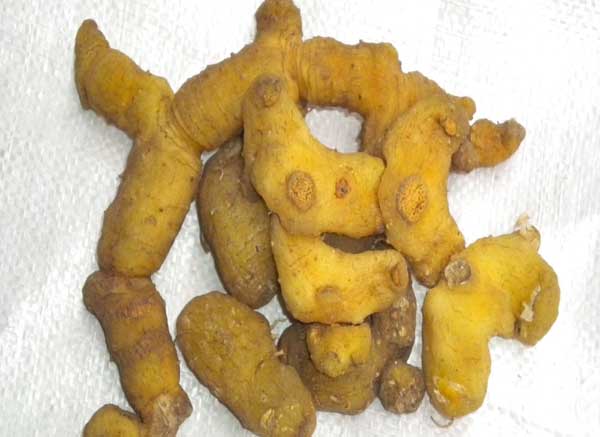
Polygonatum is a plant of the genus Polygonatum in the family Liliaceae. Ge Hong's Baopuzi records: “In the past, people believed that this product obtained the qi of the earth and the essence of heaven and earth, hence the name.” It is a perennial herbaceous plant. It can reach up to 1 m in height. The rhizome grows horizontally, like tender ginger, thick and fleshy, yellow-white, slightly flattened and round. The stem is upright, cylindrical, single, and the leaves are shaped like bamboo but shorter, with white flowers. The rhizome can be used as medicine. It has the functions of tonifying qi and nourishing yin, strengthening the spleen, moistening the lungs, and benefiting the kidneys.
What are the places of origin of Polygonatum?
1. Long-leaf Polygonatum is the root of the same genus plant Long-leaf Polygonatum. It grows under mountain forests, in thickets, or in semi-shaded places on hillsides. Its places of origin are mainly distributed in Northeast China, North China, and Shaanxi, Ningxia, Gansu, Henan, Shandong, Jiangsu, Anhui, Zhejiang, Fujian, Guangdong, Guangxi, Hunan, Jiangxi, Guizhou, and other places.
2. Many-flowered Polygonatum is the root of the same genus plant Many-flowered Polygonatum. It grows in mountain forests, thickets, and shaded, moist, fertile soil beside ravines, or is cultivated artificially. Its places of origin are mainly distributed in Central South China, as well as Jiangsu, Anhui, Zhejiang, Jiangxi, Fujian, Sichuan, Guizhou, Guangxi, Guangdong, Hunan, Hubei, Henan, and other places.
3. Rehe Polygonatum is the root of the same genus plant Rehe Polygonatum (also known as Many-flowered Solomon's Seal). Its places of origin are mainly distributed in Northeast China, Hebei, and other places.
4. Yunnan Polygonatum is the root of the same genus plant Yunnan Polygonatum. It grows under forests, in thickets, or on shaded and moist grassy slopes. Its places of origin are mainly distributed in Guangxi, Sichuan, Guizhou, Yunnan, and other places.
5. Curled-leaf Polygonatum, also known as Tiger Ginger and Hooked-leaf Yellow Stick. It is the root of the same genus plant Curled-leaf Polygonatum. Its places of origin are mainly distributed in Shaanxi, Gansu, Ningxia, Hubei, Sichuan, Yunnan, and other places.
6. Rose-red Polygonatum, also known as Purple-flowered Polygonatum. It is the root of the same genus plant Rose-red Polygonatum. Its places of origin are mainly distributed in **, Hebei, Shanxi, Hubei, Sichuan, and other places.
7. Gansu Polygonatum, also known as Yangjiao Shen. It is the root of the same genus plant Gansu Polygonatum. Its places of origin are mainly distributed in Northwest China.
8. Curved-style Polygonatum is the root of the same genus plant Curved-style Polygonatum. Its places of origin are mainly distributed in Ningxia.
9. Red-fruited Polygonatum is the root of the same genus plant Red-fruited Polygonatum. Its places of origin are mainly distributed in Qinghai, Gansu, and other places.
10. Long-stalked Polygonatum is the root of the same genus plant Long-stalked Polygonatum. Its places of origin are mainly distributed in Zhejiang and Fujian.
11. Deep-mountain Polygonatum is the root of the same genus plant Deep-mountain Polygonatum. Its places of origin are mainly distributed in Zhejiang, Jiangxi, and other places.
12. Naked-flowered Polygonatum is the root of the same genus plant Naked-flowered Polygonatum. Its places of origin are mainly distributed in Sichuan and other places.
13. Opposite-leaf Polygonatum, also known as Club-filament Polygonatum. It is the root of the same genus plant Opposite-leaf Polygonatum. Its places of origin are mainly distributed in Tibet and other places.
14. Spotted-stem Polygonatum is the root of the same genus plant Spotted-stem Polygonatum. Its places of origin are mainly distributed in Guangxi and other places.
What are the common aliases of Polygonatum?
Chicken-head ginseng, Saccate-filament Polygonatum (Bletilla-like Polygonatum). King's Polygonatum (Yunnan Polygonatum, Southwest Polygonatum, Debao Polygonatum, Jointed Bamboo), Many-flowered Polygonatum, Solomon's Seal Polygonatum, Ginger-shaped Polygonatum, Chicken-head Polygonatum, Ginger, Wild Ginger, Wild Fairy Ginger, Mountain Ginger, Tiger Ginger, Mountain Ginger, Rabbit Bamboo, Deer Bamboo, Immortal's Surplus Grain, Famine-relief Grass, Yellow Chicken Root, Wuji Zhi, Saving the Poor, Rice Shop, Yellow Zhi, Yellow Chicken Vegetable, Dragon Bit, Sun Grass, Hanging Pearl, Chicken Grid, Gou Grid. Horse Arrow, Earth Ganoderma, Yangque Hong, Mountain Pounded White, Bletilla, Brush Vegetable, Brush Tube Vegetable, Ginger Rui, Chonglou.
Morphological characteristics of Polygonatum
Polygonatum is a perennial herb. The rhizome grows horizontally, thick and fleshy, yellow-white, slightly flattened and round. It has several stem scars, and the stem scar areas are relatively thick, with the thickest part reaching up to 2.5 cm in diameter, and a few fibrous roots grow from it. The stem is upright, cylindrical, single, 50-80 cm tall, smooth and hairless. The leaves are sessile; usually 4-5 in a whorl; the leaf blades are linear-lanceolate to linear, 7-11 cm long, 5-12 mm wide, with acuminate and curled tips, green on the upper surface and light green on the lower surface. The flowers are axillary, drooping, with pedicels 1.5-2 cm long, forked at the tip, bearing 2 flowers; the bracts are small, much shorter than the pedicels; the perianth is tubular, 8-13 mm long, white, with 6 toothed lobes at the tip, tinged greenish white; stamens 6, inserted at the middle of the perianth tube, filaments smooth; pistil 1, equal in length to the stamens, ovary superior, stigma with white hairs. The berry is spherical, 7-10 mm in diameter, black when mature. The flowering period is May-June, and the fruiting period is June-July.