Detailed Explanation of Eucommia ulmoides Planting Techniques and Cultivation Management Methods
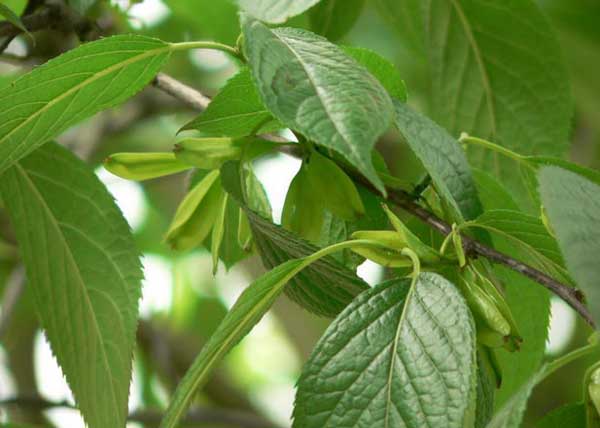
Eucommia ulmoides is native to central and southwestern China and is a species endemic to China. It has been introduced to botanical gardens in Europe and America, where it is called the "Chinese rubber tree," although it has no kinship whatsoever with the rubber tree. The bark of Eucommia ulmoides can be used as medicine, its seeds contain 27% oil, and its wood is used for construction and furniture making, making it a plant of great planting value.
Growing Environment
In its natural state, Eucommia ulmoides grows in low mountains at an altitude of 300-500 m, in valleys or sparse forests on low slopes. It is not strict about soil selection and can grow in barren red soil or on rocky cliffs. It prefers a sunny, mild and humid climate and is cold-resistant. It is not demanding about soil and can be planted in hills and plains, and can also be cultivated on scattered land or around the four sides of houses. Eucommia ulmoides is cold-resistant and can withstand low temperatures of at least −30℃.
Propagation Methods
Eucommia ulmoides can be propagated by seeds, cuttings, layering and grafting. In production, seed propagation is the main method.
1. Seed propagation: It is advisable to select fresh, plump, yellow-brown glossy seeds and sow them in winter from November to December or in spring when the average monthly temperature reaches above 10℃ in February and March. Generally, warm regions are suitable for winter sowing, while cold regions can sow in autumn or spring to satisfy the low-temperature conditions required for seed germination. Seeds should not be dried, so it is best to sow them while fresh. If spring sowing is needed, the seeds should be stratified after collection, with a seed-to-moist-sand ratio of 1:10. Alternatively, before sowing, soak the seeds in warm water at 20℃ for 2-3 days, changing the water 1-2 times daily. After the seeds swell, remove them, dry them slightly and then sow, which can increase the germination rate. Drill sowing with a row spacing of 20-25 cm, using 8-10 kg of seed per mu. After sowing, cover with grass and keep the soil moist to facilitate seed germination. After the seedlings emerge, remove the covering grass on cloudy days. Each mu can produce 30,000-40,000 seedlings.
2. Softwood cutting propagation: At the turn of spring and summer, cut one-year-old softwood branches into cuttings 5-6 cm long, insert them into the seedbed to a depth of 2-3 cm. At a soil temperature of 21-25℃, roots can form after 15-30 days. If the cuttings are treated with 0.05 ml/L naphthaleneacetic acid for 24 hours, the survival rate of the cuttings can reach over 80%.
3. Root cutting propagation: When seedlings leave the nursery, trim the seedling roots, take roots 1-2 cm thick, cut them into root segments 10-15 cm long and insert them for cuttings, with the thick end slightly exposed above the ground surface. New shoots can sprout below the cut surface, and the seedling formation rate can reach over 95%.
4. Layering propagation: In spring, select strong branches and press them into the soil to a depth of 15 cm. When the sprouts grow to a height of 7-10 cm, earth up and compact the soil. After 15-30 days, new roots can develop at the base of the sprouts. In late autumn or the following spring, dig them up, separate the sprouts one by one and plant them out.
5. Grafting propagation: Use two-year-old seedlings as rootstock and select one-year-old branches from superior mother trees as scions. In early spring, cleft-graft them onto the rootstock, and the survival rate can reach over 90%.
Sowing and Seedling Cultivation
1. Pre-sowing preparation
Put the seeds into a plastic woven bag, hang it in a ventilated and cool place, and sow directly into the bed in late December. After Eucommia ulmoides seeds are collected at the end of October, hang and store them. In late December, soak them in clean water for 1-2 days, changing the clean water once a day. At the last water change, add a small amount of copper sulfate or amobam (zinc) or carbendazim to kill pathogens. Remove and filter until the seeds can be scattered by hand without sticking when sowing, then sow directly into the bed. The lifespan of Eucommia ulmoides seeds is 1 year. The seed germination rate is closely related to maturity and freshness. Fully mature seeds have a low germination rate, and the germination rate for spring sowing is even lower.
2. Land preparation and fertilization
Select sandy fields or sandy loam fields, and plow and harrow repeatedly 2-3 times before sowing. Before the last plowing and harrowing, apply compound fertilizer as a "base dressing." Make beds 1 m wide, dig furrows 20-25 cm deep, apply barnyard manure in the furrows or scatter compound fertilizer and rapeseed cake, or use human and livestock urine and manure as a base. Cover with soil 1.5-2 cm below the bed surface.
3. Sowing into the bed
In the furrow where base fertilizer has been applied, place 1 seed every 5 cm or scatter them evenly and thinly in the furrow; if too dense, pick them up and place them in thinner spots. Cover with a mixture of plant ash and soil or fine soil 1.5-2 cm deep. Spread rice straw or thatch flat along the furrow direction on the bed for insulation. The covering grass need not be too thick, so as to avoid pulling out seedlings along with the grass when it is removed after the seedlings emerge evenly.
4. Rodent control, insect control and disease prevention
After rice straw covers the bed, it attracts rats very quickly, and rats gnawing and eating Eucommia ulmoides seeds is extremely serious. Poison bait must be placed immediately to kill the rats. 15-20 days before the seedlings emerge, mix carbofuran and loess at 1:3 and scatter it on the bed surface to poison cutworms. Once the seedlings have basically emerged evenly, remove the rice straw and thatch, then scatter once more a mixture of 1:4 Shouchenbaichong powder, plant ash and fine soil. For shriveled seeds, or seeds whose inner kernel turns black because Eucommia ulmoides encounters drought during the grain-filling period, do not harbor the luck mentality of "just sow and see," and even less should they be raised together with plump seeds, to prevent the plump seeds from being infected with damping-off disease after emergence.
Seedling Stage Management
1. Thinning
Thin out seedlings that emerge too densely and transplant them separately, keeping a plant spacing of about 8-10 cm. It is best to transplant after the seedlings have basically emerged evenly but before true leaves open, because before true leaves open the roots have almost no fibrous roots. On cloudy days or in the evening, gently lift them out with a hard bamboo piece (keeping as much soil as possible), transplant immediately as they are lifted (a handful at a time), water after planting, and 7-10 days later apply 1 light watering of very dilute human urine and manure or urea as fertilizer.
2. Spraying to protect seedlings
Throughout the seedling stage, spray pesticides to control locusts and the subsequently attracted pests such as jewel beetles and longhorn beetles.
Bordeaux mixture can prevent damping-off disease, but once seedlings have damping-off disease, spraying Bordeaux mixture is useless; instead, use kangkuling or carbendazim for irrigation. At the same time, shallow hoe the surface soil to increase ground temperature, and apply more dilute fertilizer to enhance soil fertility.
Downy mildew shows black spots on the leaves, a frost-like appearance on the underside, and leaf fall; sclerotinia disease manifests as root rot and stem rot. At a temperature of about 20 degrees Celsius, with prolonged rain, high humidity, insufficient soil fertility, and infection from disease sources in nearby young Eucommia ulmoides plantations, the above diseases are also easily contracted in the nursery. Amobam (zinc), mancozeb or carbendazim can be sprayed or irrigated. Loosen the soil to increase ground temperature, and additionally scatter 1:4 plant ash and quicklime powder at the base of the plants, remove diseased plants by deep burying or burning, and pay attention to field drainage.
3. Weeding and loosening the soil
After the seedlings emerge, pull weeds as soon as they appear to prevent weed infestation; after 4 true leaves, loosen the soil and hoe weeds. Early hoeing can raise ground temperature and resist disease sources. The first 1-2 times should be shallow loosening. Loosen the soil and hoe weeds 4 times throughout the seedling stage. During the high-temperature period in August, only pull weeds without loosening the soil.
4. Fertilization
Fertilization during the seedling stage should be "small meals, more often," with farmyard manure and compound fertilizer being best. Fertilization should be light, and dilute irrigation after each soil loosening is preferable. Ammonium bicarbonate should not be used to prevent fertilizer damage. After the seedlings are 30 cm tall, urea can be scattered on rainy days, using 4-5 kg per mu each time. After the seedlings are 40 cm tall, light scattering of urea once every 15-20 days is sufficient. Eucommia ulmoides seedlings grow rapidly in autumn; with adequate fertilizer, the larger ones can grow 100-110 cm tall in the same year, thus producing high-quality seedlings.
Cultivation Techniques
1. Site selection and land preparation
Select sunny gentle slopes with deep, loose and fertile soil, soil from acidic to slightly alkaline, and good drainage. Deeply plow the soil, rake it level, and dig holes at a spacing of 2-2.5 m x 3 m, 30 cm deep and 80 cm square. Apply 2.5 kg of farmyard manure, 0.2 kg of cake fertilizer, 0.2 kg of bone meal or superphosphate, and burnt soil ash, etc., into the holes. After the seedbed is finely prepared and raked level, make wide beds 1.2 m wide.
2. Field management
① Seedling stage management: After the seeds emerge, pay attention to intertillage and weeding, watering and fertilization. Seedlings are averse to strong sunlight and should be properly shaded. During the dry season, spray irrigation should be done in time to prevent drought, and during the rainy season, attention should be paid to preventing waterlogging. Combine intertillage and weeding with topdressing 4-5 times, applying 1-1.5 kg of urea per mu each time, or 3000-4000 f of decomposed dilute manure. If the trunk of a seedling tree is crooked, in early spring remove all the aboveground part along the ground surface to promote new branches, then select and keep 1 strong, vigorous and straight new branch as the new trunk and remove all the rest.
② Planting out: When 1-2-year-old seedlings are over 1 m tall, they can be planted out after leaf fall and before bud break the following spring. According to the above row spacing, plant 1 per hole. Young trees grow slowly and should be tended intensively. Intertillage and weeding should be carried out in spring and summer each year, combined with fertilization. In autumn or the following spring, promptly remove basal branches and prune crossing and overly dense branches. Adult trees should also be topdressed as appropriate. In northern regions, stop fertilization in August to avoid excessive late growth that reduces cold resistance.