Detailed Explanation of Key Points and Methods of Angelica sinensis Cultivation Techniques
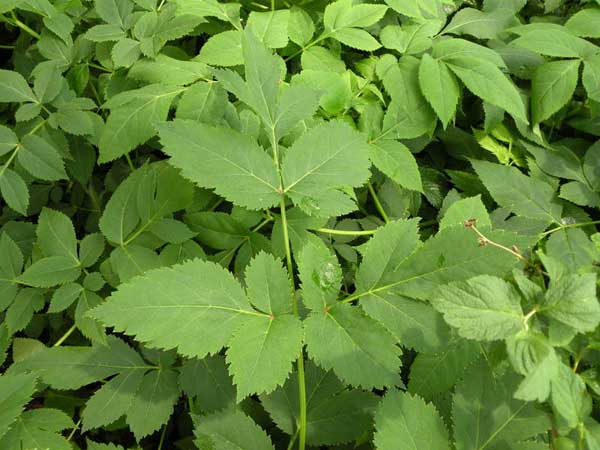
Angelica sinensis, also known as Qin Gui, is a commonly used traditional Chinese medicine with the effects of nourishing blood, promoting blood circulation, relieving pain and moistening the intestines. It is mainly produced in Gansu, Shaanxi, Yunnan, Sichuan and other provinces, and is cultivated in most areas of Shaanxi. Its cultivation techniques are introduced as follows.
Morphological Characteristics
Angelica sinensis is a perennial herb, 0.4-1 m tall. The root is fleshy, conical, and mostly branched after cultivation. In the second year after planting, it bolts, with an upright stem 1-1.2 m tall, light purple (a few are pale brown). The leaves are 2-3 times pinnately compound, with the leaf stalk base forming a sheath that clasps the stem. The terminal compound umbel bears small white flowers. The fruit is an elliptical schizocarp, splitting into two mericarps when mature. The flowering period is June-July, and the fruiting period is August-September.
Growth Habits
Angelica sinensis is an alpine plant that requires cool, humid climatic conditions and has the characteristics of favoring fertilizer, fearing waterlogging and fearing high temperatures. When cultivated in low-altitude areas, it is difficult for it to survive the summer, and it is prone to death when the temperature is too high. Seeds germinate well within the range of 10-25°C, and seedlings emerge in 10-15 days. Angelica sinensis has the phenomenon of early bolting, which should be overcome in production. Generally, seedling raising and transplanting are adopted, and digging can be carried out in the third year.
Cultivation Techniques
1. Site Selection and Land Preparation
Choose a gently sloping field facing south to north with half shade and half sun, requiring loose soil and good structure. Before Grain Full, plow deeply once, break up the clods to make a seedbed, with a bed surface width of 1 m and a length varying with the terrain. Between beds, open drainage ditches 30 cm wide and 15-20 cm deep. The planting site should be deeply plowed and finely harrowed, with 2500-5000 kg of base fertilizer applied per mu, evenly turned into the soil, and made into high beds 1.2-1.5 m wide. Between beds, open drainage ditches 30 cm wide and about 20 cm deep.
2. Propagation Methods
In production, seedling raising and transplanting are often adopted. The sowing period should be determined according to the altitude and temperature of each place: about July in Gansu, Sichuan and Yunnan, and around August in Shaanxi. The sowing method is broadcasting; mix the seeds with ash and scatter them on the bed surface, press lightly, cover with a small amount of fine moist soil, and cover with grass to achieve light transmission and moisture retention. The seedling age should not exceed 110 days. The sowing rate is 4-5 kg per mu. Transplanting is divided into winter planting and spring planting, with a plant-row spacing of 25 cm x 25 cm. Spring planting is around Qingming, and winter planting is suitable after Cold Dew and before Frost's Descent. Direct seeding production can be carried out in winter, spring or autumn, which can control early bolting of Angelica sinensis. Among these, winter direct seeding is slightly better, but the yield is not high.
3. Field Management
① Seedling stage management: After sowing, the soil must be kept moist to facilitate seed germination. After about 40 days, loosen the covering grass. When the seedlings are about 3 cm tall, loosen the soil once, remove weeds immediately, and after the dog days, choose a cloudy day to remove all the covering grass. During the seedling stage, pay attention to drought prevention and drainage.
② Lifting and storing seedlings: From Cold Dew to Frost's Descent, when the temperature drops to about 5°C and the seedling leaves begin to wither, dig up the seedlings, bring a little soil, tie them into small bundles, air off the moisture, and store them in a cellar or in piles. Seedlings that are too old should not be stored in piles. When storing in piles, pay attention to placing the heads outward and the roots inward.
③ Replanting and thinning: Under normal circumstances, about 20 days after transplanting, when the seedlings have all emerged, carry out thinning and replanting. It is advisable to replant with small seedlings with soil on cloudy and rainy days. About 3 months after planting, finalize the stand, pull out diseased and weak seedlings, and keep 1 plant per hole.
④ Intertillage and weeding: In mid-May, carry out the first weeding, preferably by shallow hoeing, without burying the seedlings with soil. In mid-June, carry out the second weeding, which may be deep hoeing, to promote root development.
⑤ Removing bolting plants: After transplanting, plants that flower and bear fruit in the same year are called early-bolting plants; their roots cannot be used medicinally and should all be pulled out.
⑥ Topdressing: Angelica sinensis is a fertilizer-loving plant. In late June during the peak leaf stage and in early August during the root growth stage, phosphorus, potassium and nitrogen fertilizers should be applied as topdressing.
Pest and Disease Control
1. Mallow mouth disease
After transplanting of Angelica sinensis, the peak incidence periods are mid-April, mid-June, early September and early November. It damages the roots, and an abundance of underground pests is conducive to the disease.
[Control methods]
① Mix 3 kg of 3911 granules per mu with 15 kg of fine soil, or mix 0.5 kg of 20% isofenphos-methyl emulsifiable concentrate with 2.5 kg of water and spray it onto 15 kg of soil, mix well, broadcast and turn into the soil;
② Regularly drench the roots with a broad-spectrum, long-acting insecticide. Use 250 g of 40% carbendazim suspension concentrate or 600 g of thiophanate per mu, add 150 kg of water, and drench each plant with 50 g of the diluted solution, once in early May and once in mid-June.
2. Sclerotinia disease
Sclerotinia disease damages the leaves and occurs easily under conditions of low temperature and high humidity, with more severe damage in July-August.
[Control methods] Do not carry out continuous cropping. About half a month before the disease occurs, spray with 1000-fold 50% thiophanate-methyl about every 10 days for 3-4 consecutive times.
3. Insect pests
The main insect pests are adult wireworms and small cutworms.
[Control methods] Remove green grass inside and around the field, pile it into small heaps, replace with fresh grass every 7-10 days, and use poisoned bait to trap and kill them.
Harvesting and Processing
After transplanting of Angelica sinensis, cut off the aboveground part 15 days before Frost's Descent in the same year, and expose it to the sun to speed up maturity. When digging, strive to keep the root system complete without damage, shake off the soil, pick out diseased roots, scrape off residual stems, place in a ventilated place, and after the moisture evaporates and the roots become soft, tie them into small bundles according to specifications and sizes, pile them in bamboo baskets, and use wet grass as fuel to produce smoke for fumigation. Open flame is prohibited. After 2-10 days, when the surface is golden yellow, stop the fire and let them dry naturally. During processing, Angelica sinensis must not be sun-dried or shade-dried.
Seed Retention Techniques
For seedling-raised and transplanted Angelica sinensis, at harvest in late autumn, select a fertile-soil, well-growing, pest- and disease-free, relatively shady section as the seed retention field, do not dig it up, and after new leaves emerge the next year, pull out weeds. When the seedlings are about 15 cm tall, apply root topdressing. In autumn, when the flower axis of Angelica sinensis droops and the seed coat is pink, harvest in batches, tie into small bundles, hang indoors in a ventilated, dry, smoke-free place, and after full drying, thresh and store for later use. When selecting and retaining good seeds from directly seeded Angelica sinensis, developmental conditions must be created to promote early bolting and form plump, full, highly mature seeds, but such seeds can only be used for direct seeding and cannot be used for seedling raising and transplanting.