How to Grow Chinese Medicinal Herbs? A Detailed Explanation of Key Cultivation Techniques
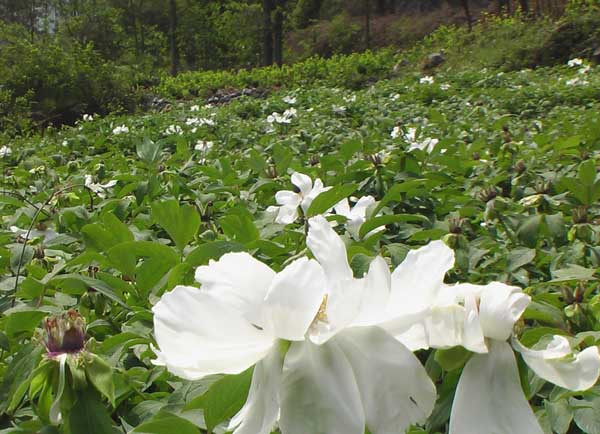
Due to the scarcity of natural resources for Chinese medicinal herbs, artificial cultivation has become a trend. Every grower, whether large-scale or small-scale, should carefully grasp the cultivation characteristics of medicinal plants from the perspective of plant cultivation science, including varieties, water and fertilizer, meteorology and geography, market forecasting, labor and management, etc. Various regions across the country are striving to raise the level of scientific farming in order to achieve high efficiency in medicinal herb cultivation.
Selection of Planting Site
The quality of soil conditions directly affects the quality and yield of medicinal herbs. Most Chinese medicinal herbs are suitable for growing in soil with deep layers, high fertility, and neutral pH. Root and rhizome medicinal herbs are suitable for sandy loam soil; deep-rooted ones such as Astragalus (Huangqi) and Licorice (Gancao) also require deep plowing. However, if the soil quality is unsuitable, even deep plowing will cause poor root growth and affect commercial quality. When selecting land, attention should also be paid to the content of heavy metal elements in the soil such as arsenic, mercury, lead, and copper, referring to the standards for green vegetable production, and they must not exceed the limits. Saline-alkali, low-lying, and flood-prone plots should be avoided.
1. Try to avoid selecting high-yield farmland. This is not only to reduce land costs, but more importantly, these fields may have relatively serious pesticide and other pollution, making them unsuitable for growing green medicinal herbs.
2. If not growing woody medicinal herbs, do not choose mountainous land with steep slopes. The state strictly prohibits cultivation on slopes above 25 degrees except for forestry. Most Chinese medicinal herbs can only grow well on land with a slope below 15 degrees.
3. Choose places with no pollution or little pollution, such as virgin land and abandoned land that has not been cultivated for many years, avoiding industrial “three wastes” and avoiding main highway routes. The soil layer should be deep and drainage should be good, because most medicinal herbs prefer such soil. Except for a few varieties, land that is too clayey or too acidic or too alkaline should not be selected.
4. In the transitional zone between plains and mountainous areas, there are relatively abundant land resources of this type. For example, in the Fanchang area of Anhui, there are contiguous stretches of barren hill land, tens of thousands of mu in size. With small slopes, deep soil layers, good drainage, years of no cultivation, and basically no pollution, it can be called an ideal place for building a large-scale green Chinese medicinal herb base.
5. Root and rhizome medicinal herbs are suitable for planting in deep, fertile, sandy loam or loam soil on relatively high terrain with good drainage;
6. Flower, grass, and leaf medicinal herbs are suitable for planting in fertile, moist land with convenient irrigation and drainage;
7. Fruit and seed medicinal herbs are suitable for planting in courtyards and on hillside land.
Selection of Planting Soil
Soil with high fertility is the foundation for stable and high yields. Therefore, through measures such as building water conservancy facilities, deep plowing and fine cultivation, and rational fertilization, soil fertility can be continuously improved, and potential fertility can be promoted to transform into available fertility. Chinese medicinal herbs each have a certain range of adaptation to soil pH; beyond that range, they grow poorly or even die. Most Chinese medicinal herbs are suitable for growing in neutral to slightly alkaline soil. Soil pH is not immutable and can be gradually changed through appropriate measures.
1. Pure sandy soil: without water, nothing grows well. Even the passionate desert can be developed if there is a bit of water, such as ** licorice.
2. Sandy soil: sandy soil, riverbanks, and seasonal riverbeds. If crops can be grown there, Chinese medicinal herbs can be planted too, mainly root-type medicinal herb varieties such as Platycodon (Jiegeng), Saposhnikovia (Fangfeng), Belamcanda (Shegan), Anemarrhena (Zhimu), Scutellaria (Huangqin), Astragalus (Huangqi), Isatis root (Banlangen), etc. Many varieties like sandy soil, which is beneficial for root growth; with more fertilizer, yields are high.
3. Loess soil: generally suitable for all varieties; root types, flower-leaf types, and others can all be planted. There is much loess in the north, and it is best if irrigation conditions are available.
4. Northeast black soil: this is humus-rich soil formed over many years. Many Chinese medicinal herb varieties grow wild there, such as Platycodon (Jiegeng), Astragalus (Huangqi), Guandong Saposhnikovia (Guanfangfeng), Bupleurum (Chaihu), Scutellaria (Huangqin), Polygala (Yuanzhi), etc. You can select varieties with good market prices to develop.
5. Clay soil: not conducive to root growth, so it is better not to plant varieties whose roots are used as medicine. Varieties whose above-ground parts are used medicinally can be chosen, such as those using stems, flowers, leaves, and fruits as medicine, including Perilla (Zisu), Dandelion (Pugongying), Safflower (Honghua), Honeysuckle (Jinyinhua), Goji (Gouqi), Agastache (Huoxiang), Dianthus superbus (Jumai), Viola (Diding), etc.
Tillage and Soil Preparation
The root systems of Chinese medicinal herbs are 50% distributed in the 5-20 cm plow layer and 30% distributed in the 20-50 cm soil layer. Deep plowing has a yield-increasing effect. However, deep plowing varies by variety. Deep-rooted types such as Astragalus (Huangqi), Licorice (Gancao), and Achyranthes (Niuxi) should be plowed to a depth of more than 30 cm. Fritillaria (Beimu), Anemarrhena (Zhimu), and Pinellia (Banxia) have shallow root systems and should be plowed to a depth of about 15 cm. Other varieties should be plowed to a depth of about 20 cm.
Perform appropriate plowing. On the premise of not delaying planting, it is best to let the soil bleach in the sun, then level and harrow it finely, so that the ground is level, the soil is loose, and it is loose on top and firm below.
In conjunction with land preparation, disinfect the soil with lime or Junduqing. Apply 1.5 kg of 50% phoxim emulsifiable concentrate per hectare, mixed with 375 kg to 450 kg of fine sand or fine soil, and apply the medicated soil to control various underground pests. Apply herbicides to control weeds and prevent weed damage. Apply sufficient base fertilizer, with more decomposed farmyard manure, compound fertilizer, and bio-organic fertilizer.
Seed Collection and Propagation of Seeds and Seedlings
The propagation methods of Chinese medicinal herbs are divided into sexual and asexual types. Sexual propagation uses seeds for sowing, has a high propagation coefficient, and is the main propagation method, such as for Astragalus (Huangqi), Scutellaria (Huangqin), Cassia occidentalis (Wangjiangnan), Safflower (Honghua), Perilla (Zisu), Coix (Yiyi), Angelica dahurica (Baizhi), Bupleurum (Chaihu), Saposhnikovia (Fangfeng), and many medicinal herbs of the Brassicaceae and Amaranthaceae families. Asexual propagation uses vegetative organs such as stems, leaves, buds, and roots for propagation. It is a continuation of the maternal stage of development, can maintain the excellent traits of the mother plant, can flower and set fruit earlier, and has a germination rate above 95%. About 35% of Chinese medicinal herbs use asexual propagation, such as Fritillaria (Beimu) and Lily (Baihe) propagated by bulbs; Saffron (Zanghonghua) propagated by corms; Coltsfoot (Kuandong) and Mint (Bohe) propagated by rhizomes; Pinellia (Banxia) and Rehmannia (Dihuang) propagated by tubers and tuberous roots; Peony (Shaoyao) and Scrophularia (Xuanshen) propagated by root division. Their planting period is generally during dormancy or before young buds begin to grow. In addition, branches can also be used for cuttings, layering, and grafting. Planting during dormancy is easy to handle, and after planting, when suitable temperature and humidity are encountered, roots and sprouts can develop in time, and seedlings emerge robustly. If planted after rooting and sprouting, roots and buds are easily damaged, operation is inconvenient, seedlings are weak, and because of late planting, the growth period is short and yield is not high. Generally, asexual propagation grows faster than seed propagation, has higher yields, shorter growth years, and can maintain the excellent characteristics of the mother plant. For example, Ginkgo propagated by seed takes about 20 years to bear fruit, but if grafted with a good variety, it can bear fruit in about 5 years. Cornus officinalis propagated by seed takes about 10 years to bear fruit; with grafting, it generally can flower and bear fruit in 3-5 years, and the fruit is larger and the yield is higher. It is recommended that beginners in medicinal herb cultivation use seedlings for planting as much as possible to avoid economic losses caused by seeds failing to germinate. Under natural conditions, some Chinese medicinal herbs can only reproduce sexually, such as Ginseng (Renshen), American Ginseng (Xiyangshen), Platycodon (Jiegeng), White Mustard Seed (Baijiezi), and Cassia Seed (Juemingzi), while some can only reproduce asexually, such as Saffron (Fanhonghua) and Ligusticum chuanxiong (Chuanxiong). There is also a portion of Chinese medicinal herbs that can reproduce both sexually and asexually, such as Rehmannia (Dihuang), Scrophularia (Xuanshen), Tree Peony (Mudan), Peony (Shaoyao), Licorice (Gancao), Anemarrhena (Zhimu), and Fritillaria (Beimu).
1. Sowing rate should be flexibly controlled according to sowing method, planting density, thousand-grain weight, germination rate, soil conditions, etc.
2. Sowing period: most Chinese medicinal herbs are suitable for spring or autumn sowing. Annual and less cold-tolerant ones, such as Coix (Yiyi), Perilla (Zisu), Cassia Seed (Juemingzi), Safflower (Honghua), and Schizonepeta (Jingjie), are suitable for spring sowing. In the north, perennial herbs such as Licorice (Gancao), Astragalus (Huangqi), Platycodon (Jiegeng), and Scutellaria (Huangqin) are suitable for spring sowing, and can also be sown in summer.
3. Sowing methods include drilling, broadcasting, and hole sowing. In production, drilling is mostly used. Its advantages are consistent covering depth, neat emergence, good permeability, and convenience for field operations. Hard seeds can be machine-sown, saving labor and giving good sowing quality.
4. Sowing depth determines the success or failure of sowing. Most Chinese medicinal herb seeds are small and have weak ability to push through the soil, so shallow sowing is appropriate. The general principle: covering thickness should be 3-5 times the seed diameter, about 1-2 cm. After sowing, be sure to press firmly and water for seedling emergence.
Disinfection Treatment of Seeds and Seedlings
In order to increase the seed germination rate, enhance germination vigor, and prevent disease and pest damage, it is necessary to select new seeds produced in the current year, and seed treatment should be carried out before sowing.
1. Fine selection and sun-drying of seeds. Seeds with low purity and many impurities should be finely selected to ensure the seeds are pure and plump and to reduce disease, pest, and weed damage. Sun-drying seeds 1-2 days before sowing can also promote enzyme activity and increase seed vigor.
2. Methods such as seed soaking for germination, mechanical damage, and chemical treatment can break seed dormancy, increase seed coat permeability, promote seed water absorption, and cause early germination.
3. Disinfection. It can prevent disease and pest damage. Mix seeds with 25% or 50% carbendazim at 0.2%-1% of the seed weight, or soak in a medicinal solution and dip asexual propagation materials.
Types of Fertilizers
1. Organic Fertilizers
Organic fertilizers, also called farmyard manures, such as compost, cake fertilizer, green manure, etc., have rich and extensive sources and contain large amounts of nitrogen, phosphorus, potassium, and various other nutrient elements. Long-term application can improve the granular structure of the soil, improve soil properties, and increase the soil's ability to retain fertilizer and water as well as its aeration. They have the characteristics of combining slow release, quick effect, and long-lasting fertilizer efficiency, and have better effects when applied to perennial and root and underground stem Chinese medicinal herbs such as Chinese Yam (Shanyao), Asarum (Xixin), Ginseng (Renshen), and Platycodon (Jiegeng). Several organic fertilizers are introduced separately below:
① Cake fertilizer. Cake fertilizer has a relatively good effect on the quality of Chinese medicine. Decomposed cake fertilizer can be used appropriately in larger amounts. Generally, high-nitrogen oil cakes do not contain toxic substances, and as fertilizer they only need to be crushed before application. Oil cakes with low nitrogen content often contain saponins or other toxic substances, and when used as fertilizer they must first be fermented to remove toxins. Toxic oil cakes include rapeseed cake, tea seed cake, tung seed cake, castor bean cake, arborvitae seed cake, cocklebur seed cake, dried prickly ash cake, and toon tree seed cake, etc.
② Human and livestock manure and urine. Human and livestock manure and urine must be stored and decomposed before they are suitable for application. It is strictly forbidden to pour undecomposed human and livestock manure and urine on Chinese medicinal herb plants. There are three reasons: first, fresh human and livestock manure and urine contain various bacteria and viruses; second, fresh human and livestock manure and urine are difficult for plants to absorb and utilize, and are not easily retained by the soil; third, the salt and nutrient concentrations contained in fresh human and livestock manure and urine are too high, which can cause uneven nutrient distribution in the soil and affect crop growth.
③ Green manure. China has abundant fertilizer sources. At present, there are more than 200 species of green manure plants that have been cultivated and utilized or can be cultivated and utilized. They are an important natural fertilizer source to be developed and utilized in GAP cultivation of Chinese medicinal herbs. In the southern provinces of China, winter fallow fields are mainly used to cultivate Chinese milk vetch, bur clover, arrowleaf vetch, fodder radish, as well as broad bean, pea, and rapeseed as fertilizer sources for the main crops of the following year, while in the northern provinces and regions, annual green manures are mostly used, including arrowleaf vetch, sweet clover, mung bean, etc.
④ Straw fertilizer. Straw fertilizer is one of the important organic fertilizer sources. Crop straw contains a considerable amount of nutrient elements necessary for crops. Under suitable conditions, through the action of soil microorganisms or digestion by livestock, the nutrient elements can be returned to the soil and absorbed and utilized by crops, which is called straw return. Straw return can take many forms, such as composting and returning, passing through livestock and returning (livestock manure and urine), direct plowing and returning, and mulching and returning. During operation, the straw should be directly turned into the soil, taking care to fully mix it with the soil and avoid creating air pockets around the root system, and add nitrogen-rich human and livestock manure and urine; some nitrogen fertilizer can also be used to adjust the carbon-to-nitrogen ratio after return to 20:1.
⑤ Microbial fertilizer. Microbial fertilizer is a live microbial preparation produced by culturing specific microbial strains. It is non-toxic and harmless and does not pollute the environment. It has a clear effect on reducing the nitrate content of Chinese medicinal herbs and improving their quality, and can be used for seed dressing, as base fertilizer, or as topdressing.
⑥ Foliar fertilizer. Foliar fertilizer is fertilizer sprayed on plant leaves and capable of being absorbed and utilized by them. It may contain a small amount of natural plant growth regulators (chemically synthesized plant growth regulators must not be used). It is generally made from natural organic extract or fermentation liquid inoculated with beneficial bacteria, combined with vitamins, algae, amino acids, and other nutrient elements, and some are also trace element fertilizers. It can be applied once or multiple times, but the last application must be sprayed 20 days before harvest.
⑦ Other fertilizers. Such as sawdust, wood shavings, wood waste, preservative-free fish residue, bone meal, bone glue waste residue, poultry and livestock processing waste, sugar factory waste, urban domestic garbage, etc. Before use, they must undergo harmless treatment and only be used after meeting standards. Moreover, the restricted annual application per hectare of farmland is no more than 45 tons for clay soil and no more than 30 tons for sandy soil.
2. Inorganic Fertilizers
Inorganic fertilizers, also called chemical fertilizers, such as urea, superphosphate, ammonia water, etc. These fertilizers contain only one or two inorganic fertilizer components, have high available nutrients and quick fertilizer effects, but easily cause soil compaction, and some fertilizers are also selective toward plants and soil. Whole-plant, leaf, fruit-seed, and flower Chinese medicinal herb plants can be appropriately fertilized with chemical fertilizers, but they must be used in combination with organic fertilizers.
3. Trace Element Fertilizers
Such as boric acid, zinc sulfate, copper sulfate, etc., mostly used for seed soaking or foliar application. When using this type of fertilizer, attention should be paid to selecting the appropriate concentration and dosage. While ensuring fertilizer and pesticide effects, they can be sprayed mixed with pesticides in combination with disease and pest control.
Topdressing is mainly based on quick-acting fertilizers and is best applied on non-rainy days. In order to promptly and fully meet the nutrient needs of Chinese medicinal herbs during their growth and development, they must be applied in stages and batches at different periods of growth and development. Perennial Chinese medicinal herbs are often applied at different stages such as greening, tillering, budding, and flowering. For Chinese medicinal herbs whose seeds and fruits are used as medicine, topdressing at the bud stage and flowering stage is better; for those whose roots, rhizomes, and bulbs are used as medicine, topdressing during the underground expansion period can achieve high yields. Chinese medicinal herbs harvested multiple times a year should be topdressed promptly after each harvest. When topdressing, pay attention to the fertilizer variety, concentration, and dosage to avoid fertilizer damage.
Fertilization Techniques
The growth and development of Chinese medicinal herbs require various nutrient elements, with large demand for the three elements nitrogen, phosphorus, and potassium. Different types also have different rules for fertilizer preference. The general principles of fertilization are: for 1-2-year whole-plant medicinal herbs, apply more nitrogen fertilizer at the seedling stage to promote stem and leaf growth; for seed and fruit medicinal herbs, apply phosphorus and potassium fertilizer; for perennial and root and underground stem medicinal herbs, apply sufficient organic fertilizer during land preparation; during the growth period, topdressing is needed three times, the first after spring sprouting, the second at the flower bud differentiation stage, and the third after flowering and before fruiting, and before entering dormancy in winter, a heavy overwintering fertilizer should also be applied.
1. Appropriate deep plowing. The minerals in the soil mostly contain the nutrients needed by medicinal plants in an insoluble form. Only through appropriate plowing and sun-drying of the soil to accelerate weathering can the nutrient elements be released for absorption by medicinal plants.
2. Increase application of organic fertilizer. Organic fertilizer can make the soil fertile, loose, and moisture-retaining. In particular, applying coarse fertilizer with much fiber can prevent soil compaction and salinization. Formula fertilization uses soil fertility testing to reasonably formulate nitrogen, phosphorus, and potassium, while also paying attention to scientifically supplementing trace elements such as zinc, molybdenum, boron, calcium, and selenium. Foliar spraying: while using formula fertilization, foliar spraying is advocated, as it not only makes soil salinization and acidification less likely, but also supplements nutrients to improve soil fertility.
3. Scientific planting. Adapt measures to the soil, carry out reasonable crop rotation, intercropping, and relay intercropping, combine land use with land nurturing, and utilize soil nutrients in a balanced way, so that the land remains “forever young”.
4. Reasonable irrigation and drainage. After sun-drying the field, irrigation makes organic nitrogen easily decompose and ammonium nitrogen increase markedly. In dry land, waterlogging is harmful, while water shortage makes it difficult for nutrients in the soil to be absorbed by medicinal plants. Only reasonable irrigation and drainage can give play to soil fertility.
5. Do good cultivation. Cultivation can strengthen the activity of soil microorganisms, facilitate the release and transformation of available soil nutrients, and increase soil fertility. Therefore, cultivation is indispensable.
6. Straw return. Cut straw and crop stems and leaves into short pieces and scatter them on the soil surface, then deeply plow them into the soil so that they rot, decompose, transform, and release available nutrients, thereby improving soil fertility.
7. Nurture the soil and preserve moisture. Use no-deep-plowing to nurture the soil and preserve moisture. At the same time, through soil tempering, that is, sun and rain, dissolve salts from the surface soil into deeper layers; use drip irrigation under film to prevent soil compaction. In combination with improvement, for gleyed fields, open ditches for drainage, increase application of phosphorus and potassium fertilizer, and carry out paddy-upland rotation for improvement; for acidic soil, apply lime to neutralize it, promote microbial activity, accelerate the decomposition and transformation of organic matter, and promote fertility improvement.
8. Fertilization methods differ for different soils:
① Sandy soil: attach importance to organic fertilizers such as barnyard manure, compost, green manure, and miscellaneous soil manure, mix in clay, thicken the soil layer, and enhance its water and fertilizer retention capacity. Topdressing should be applied in small amounts many times to avoid excessive single application and loss.
② Clay soil: apply more organic fertilizer, combine with adding sand, and apply furnace ash and slag to loosen the soil, create conditions for water permeability and aeration, and use quick-acting fertilizer as seed fertilizer and early topdressing to help seedlings emerge and plants grow.
③ Loam soil: this type of soil has the advantages of both sandy soil and clay soil and is the most ideal soil for cultivating most Chinese medicinal herbs. Fertilization should combine organic and inorganic fertilizers and be applied reasonably according to the needs of each growth stage of the cultivated variety.
Common Medicinal Herb Planting Schedule
Month | Varieties That Can Be Planted | Remarks January | Atractylodes (Baizhu), Platycodon (Jiegeng), Scrophularia (Xuanshen), White Peony (Baishao), Tree Peony (Mudan), Honeysuckle (Jinyinhua), Adenophora (Shashen), Pinellia (Banxia), Vitex fruit (Manjingzi), Bupleurum (Chaihu), Mint (Bohe), Salvia (Danshen), Saposhnikovia (Fangfeng), Aconitum (Chuanwu), etc. | Not suitable for planting in the north February | Eucommia (Duzhong), Magnolia officinalis (Houpo), Honeysuckle (Jinyinhua), Papaya (Mugua), Scrophularia (Xuanshen), Pinellia (Banxia), Houttuynia (Yuxingcao), Phellodendron (Huangbai), Ginkgo (Yinxing), Vitex fruit (Manjingzi), Taro (Shanyu), Evodia (Wuzhuyu), Gleditsia (Zaojiao), Gardenia (Zhizi), Prickly Ash (Huajiao), etc. | Not suitable for planting in the north March | Asparagus (Tiandong), Papaya (Mugua), Gardenia (Zhizi), Dianthus (Qumai), Salvia (Danshen), Belamcanda (Shegan), Houttuynia (Yuxingcao), Saposhnikovia (Fangfeng), Platycodon (Jiegeng), Trichosanthes (Gualou), Atractylodes (Baizhu), Scrophularia (Xuanshen), Pinellia (Banxia), Arisaema (Tiannanxing), Scutellaria (Huangqin), Astragalus (Huangqi), Adenophora (Shashen), Cynanchum (Xuchangqing), Ginger (Shengjiang), Rehmannia (Shengdi), etc. | Golden season, suitable north and south April | Monk fruit (Luohanguo), Hunan lotus (Xianglian), Salvia (Danshen), Pinellia (Banxia), Arisaema (Tiannanxing), Scutellaria barbata (Banzhilian), Chrysanthemum (Juhua), Rehmannia (Shengdi), Anemarrhena (Zhimu), Belamcanda (Shegan), Aster (Ziyuan), Trichosanthes (Gualou), Platycodon (Jiegeng), Scutellaria (Huangqin), Astragalus (Huangqi), Bupleurum (Chaihu), Polygala (Yuanzhi), Atractylodes (Baizhu), Trichosanthes (Gualou), etc. | Golden season, suitable north and south May | Coptis (Huanglian), Isatis root (Banlangen), Coix (Yimi), Garden Balsam seed (Jixingzi), Chrysanthemum (Juhua), Scutellaria barbata (Banzhilian), Schizonepeta (Jingjie), Black Soybean (Heidou), Bupleurum (Chaihu), Platycodon (Jiegeng), Licorice (Gancao), Scutellaria (Huangqin), Astragalus (Huangqi), Saposhnikovia (Fangfeng), Salvia (Danshen), etc. | Suitable north and south June | Coptis (Huanglian), Isatis root (Banlangen), Coix (Yimi), Garden Balsam seed (Jixingzi), Schizonepeta (Jingjie), Alisma (Zexie), Black Soybean (Heidou), Bupleurum (Chaihu), Platycodon (Jiegeng), Cassia Seed (Juemingzi), Anemarrhena (Zhimu), Dandelion (Pugongying), Belamcanda (Shegan), Ranunculus ternatus (Maozhuacao), Chrysanthemum (Juhua), Saffron (Xihonghua), etc. | Suitable north and south July | Isatis root (Banlangen), Alisma (Zexie), Platycodon (Jiegeng), Prunella spike (Xiakuiqiu), Salvia seedling (Danshen), Achyranthes (Niuxi), Schizonepeta (Jingjie), Saffron (Xihonghua), etc. | Suitable north and south August | Polygonatum (Yuzhu), Pseudostellaria (Taizishen), Asparagus (Tiandong), Daylily (Huanghuacai), Alisma (Zexie), Saffron (Xihonghua), Anemarrhena (Zhimu), Prunella spike (Xiakuiqiu), Angelica dahurica (Baizhi), Tree Peony (Mudan), White Peony (Baishao), etc. | Suitable north and south September | Polygonatum (Yuzhu), Lily (Baihe), Belamcanda (Shegan), Asparagus (Tiandong), Daylily (Huanghuacai), Dianthus (Qumai), Angelica dahurica (Baizhi), White Peony (Baishao), Tree Peony (Mudan), Platycodon (Jiegeng), Fenugreek (Lubazi), Aster (Ziyuan), Atractylodes (Baizhu), Salvia (Danshen), Vaccaria seed (Wangbuliuxingzi), Platycodon (Jiegeng), Safflower (Honghua), Pseudostellaria (Taizishen), Anemarrhena (Zhimu), Tree Peony seedling (Mudanmiao), Prunella spike (Xiakuiqiu), etc. | Golden season, suitable north and south October | Polygonatum (Yuzhu), Corydalis (Yuanhu), Lily (Baihe), Belamcanda (Shegan), Daylily (Huanghuacai), Gardenia (Zhizi), Honeysuckle (Jinyinhua), Dianthus (Qumai), Angelica dahurica (Baizhi), White Peony (Baishao), Tree Peony (Mudan), Pseudostellaria (Taizishen), Saffron (Xihonghua), Platycodon (Jiegeng), Atractylodes (Baizhu), Fenugreek (Lubazi), Safflower (Honghua), Vaccaria (Wangbuliuxing), Prunella spike (Xiakuiqiu), Aconitum (Chuanwu), Anemarrhena (Zhimu), etc. | Golden season, suitable north and south November | Seedlings: Polygonatum (Yuzhu), Corydalis (Yuanhu), Scrophularia (Xuanshen), Belamcanda (Shegan), Papaya (Mugua), Gardenia (Zhizi), Honeysuckle (Jinyinhua), Atractylodes (Baizhu), White Peony (Baishao), Tree Peony (Mudan), Pinellia (Banxia), Salvia (Danshen), Platycodon (Jiegeng), Anemarrhena (Zhimu), etc. Seeds: Safflower (Honghua), Fenugreek (Huluba), Prunella spike (Xiakuiqiu), Platycodon (Jiegeng), Vaccaria (Wangbuliuxing), Scutellaria (Huangqin), Bupleurum (Chaihu), etc. | Suitable north and south December | Seedlings: Polygonatum (Yuzhu), Scrophularia (Xuanshen), Belamcanda (Shegan), Aconitum (Chuanwu), Mint (Bohe), Vitex fruit (Manjingzi), Honeysuckle (Jinyinhua), Platycodon (Jiegeng), Pinellia (Banxia), Atractylodes (Baizhu), White Peony (Baishao), Tree Peony (Mudan), Salvia (Danshen), Arisaema (Tiannanxing), Polygonum multiflorum (Heshouwu), Bolbostemma (Tubeimu), etc. Seeds: Platycodon (Jiegeng), Bupleurum (Chaihu), Glehnia (Beishashen), Atractylodes (Baizhu), Saposhnikovia (Fangfeng), etc. | Suitable north and south