Where are the main producing areas of Lingzhi (Ganoderma) distributed? A detailed explanation of the distribution
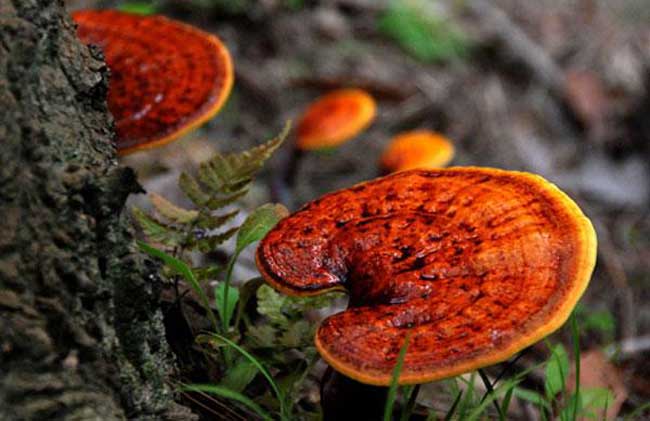
The producing areas of Lingzhi are mainly distributed in China, the Korean Peninsula and Japan. Wild Lingzhi has already become very rare, and its quality is not easy to control. Today, Hainan Island in China has the largest output and the richest variety of strains. Most of the products on the market are artificially cultivated. The more famous producing area of artificially cultivated Lingzhi in China is Xiamen, Fujian Province. In addition, the Lingzhi producing areas in Taiwan, China that are more famous for Lingzhi research include Taipei, Shiding and Hualien.
The species of the Ganodermataceae in the world are mainly distributed in the tropical and subtropical zones of Asia, Australia, Africa and the Americas, with a few distributed in temperate zones. Europe, located in the temperate zone of the Northern Hemisphere, has only 4 species of the genus Ganoderma, while North America has about 5 species. China spans from the tropics to the cold temperate zone, and the Ganodermataceae has many species and a wide distribution.
The general characteristic of the natural distribution of Lingzhi fungi in China is that there are many in the southeast and few in the northwest. If a diagonal line is drawn from the Greater Khingan Mountains in the northeast toward southeastern Tibet in the south, the distribution of Lingzhi can be divided into two completely different major regions, which exactly shows that the distribution of Ganodermataceae species matches China's topography, landforms and ecological environment. It is known that west of this line, due to reasons such as drought or severe cold, there is a lack of natural conditions for the reproduction and growth of Lingzhi, and only two species, tree ear and Lingzhi, are distributed there. In Qinghai, ** and Ningxia, the common Lingzhi (red Lingzhi) has almost not been found. Red Lingzhi is mainly distributed in the Changbai Mountains and the Taiwan region, and the most famous are Changbai Mountain Lingzhi and Taiwan's Antrodia camphorata.
1. The producing areas of Lingzhi are distributed in East China, Southwest China and Jilin, Hebei, Shanxi, Zhejiang, Jiangxi, Guangdong, Guangxi and other places, with artificial cultivation. Sold all over the country.
2. The producing areas of Purple Lingzhi are distributed in Zhejiang, Jiangxi, Hunan, Sichuan, Fujian, Guangxi, Guangdong and other places, and there is also artificial cultivation.
"Compendium of Materia Medica" and the "Revised Zhenghe Jingzhi Zhenglei Beiyong Bencao" written by Tang Shenwei of the Song Dynasty both record in detail the geographical environments of six kinds of Lingzhi. There is a saying that "red Lingzhi grows in Huo (Lu) Mountain, green Lingzhi grows in Mount Tai, yellow Lingzhi grows in Mount Song, white Lingzhi grows in Mount Hua, black Lingzhi grows in Mount Chang, and purple Lingzhi grows in the high mountains of Xia Valley." And "Huo Mountain" in ancient times was the Dabie Mountain area at the junction of today's Hubei, Henan and Anhui provinces, so Mount Lu and the Dabie Mountains are the birthplace of red Lingzhi. Mount Lu and the Dabie Mountains are located between East China and the Central Plains, in the upper reaches of the Huai River, on the north-south dividing line of China's climate.