Detailed Explanation of Dogwood Cultivation Techniques, Planting Methods and Management Points
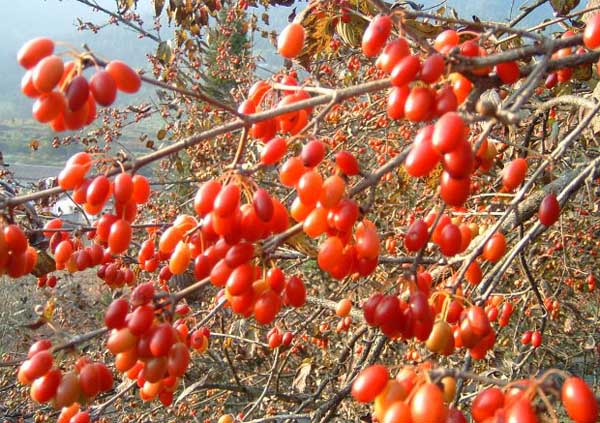
Dogwood is also known as medicinal jujube, dogwood flesh, and jujube skin. It belongs to the genus Cornus in the family Cornaceae. It is mainly produced in Zhejiang. It is distributed in Anhui, Shaanxi, Henan, Shandong, Sichuan and other provinces. It is relatively concentrated in the Funiu Mountain area, Tianmu Mountain area and Qinling Mountains. Its vertical distribution range is 250-1300 m, but growth and development are best at altitudes between 600-900 m. The fruit flesh contains 16 kinds of amino acids. In addition, it contains large amounts of elements essential to the human body. It also contains physiologically active saponin proto-sugars, polysaccharides, malic acid, tartaric acid, phenols, resins, tannins and vitamin A, C and other components. Its taste is sour and astringent, and it has effects such as nourishing, strengthening the stomach, promoting urination, tonifying the liver and kidneys, and benefiting qi and blood. It mainly treats high blood pressure, soreness and pain of the waist and knees, dizziness and tinnitus, impotence and seminal emission, excessive menstruation and other conditions.
Plant Characteristics
1. Plant characteristics: It is a deciduous tree or small tree, with a tree height of 3-10 m, dark green leaves, simple leaves opposite, ovate or elliptical, leaf length 4-12 cm, leaf width 2-6 cm, apex acuminate, base cuneate, sparsely hairy on the leaf surface and densely hairy on the underside. Lateral veins 6-8 pairs. The flowers are bisexual, yellow umbel-like inflorescences, each inflorescence composed of 20-30 florets, umbels axillary, blooming before the leaves, flowers yellow. Drupe elliptical, dark red when ripe.
2. Brief introduction to varieties: There are Cornus officinalis and Cornus chinensis. Medicinal cultivation is mainly Cornus officinalis. Although there are currently no cultivars, investigations show that intraspecific economic traits have significant variation, making it easy to breed new cultivars.
Biological Characteristics
1. Growth and development requirements
Fertile soil, deep soil layer, well-drained loam and sandy soil. Dogwood can overwinter safely in the Beijing area, and mature trees can also overwinter safely in the central and southern Shanxi areas.
2. Requirements for environmental conditions
① Climate: suitable for areas with an annual average temperature of 8-17.5°C, strong cold resistance, able to withstand a brief low temperature of -18°C, and annual rainfall of 600-1500 mm.
② Terrain: mostly distributed on shady slopes, semi-shady slopes and sunny slopes in mountain valleys and lower mountain areas. Cultivation is more common in low mountains at altitudes of 250-800 m.
Propagation Methods
1. Sexual propagation
① Seed collection: In autumn when the fruit is ripe, select large and strong fruits, remove the flesh and wash clean. Because the seed coat is thick and hard, germination must be promoted before sowing.
② Seed treatment. Place the seeds in a 1%-2% alkali solution, rub by hand for 3-5 minutes, then add boiling water to scald them, stirring while pouring the boiling water until the water submerges the seeds. Let cool for a while, then rub again for 3-5 minutes, then soak in cold water for 24 hours, then remove the seeds and place them on a cement floor to sun-dry for 8 hours. Repeat this for 3 days. When 90% of the seed shells have cracked, mix wet sand and seeds at 4:1 and store them in sand.
③ Sowing and seedling raising. Around the Spring Equinox, pick out the seeds that have already cracked and germinated and sow them. Before sowing, open shallow furrows about 5 cm deep on the seedbed at a row spacing of 25 cm, evenly scatter the seeds into the furrows and cover with 3-4 cm of soil, maintain soil moisture, and seedlings can emerge in 40-50 days. 15 hectares require 750-1050 kg of seeds. When the seedlings grow 2 true leaves, thin them to a seedling spacing of 7 cm, remove weeds, cultivate in early June, water once before winter, and earth up around the seedling roots so they can overwinter safely.
④ Transplanting. In the second spring, when the seedlings are 60 cm tall, they can be transplanted. Transplanting before bud break is best. It is suitable to plant 450-750 plants per hectare, and for plots with intercropping, about 300 plants per hectare. After planting, carry out timely maintenance and management. The requirements for water, fertilizer, light, air and heat are important measures to ensure high and stable yields.
2. Asexual propagation
Asexually propagated plants can bear fruit 6-8 years earlier and maintain the characteristics of excellent mother trees. Select mother plants with large fruit, many fruits, thick flesh and high peel yield. In low-temperature areas, attention should be paid to selecting late-flowering individual plants so that the flowering period avoids low-temperature and rainy weather.
① Layering propagation. After harvesting the fruit in autumn or before the ground thaws and buds sprout, bend 2-3 year old branches near the ground to the ground, bury into the soil already treated with rotted manure the part of the branch cut to 1/3 of its woody part, cover with 15 cm of sandy loam, and leave the tip of the branch exposed above the ground. Water frequently. In the second winter or third spring after layering, dig open the soil around the rooted layer, cut off the part connected to the mother plant, and plant the rooted seedling elsewhere.
② Cutting propagation. In mid to late May, cut branches from excellent plants into 15-20 cm lengths, retain 2-4 leaves on the upper part of the branch, and insert them into a seedbed made of mixed humus soil and fine sand, with row spacing and plant spacing of 20 cm × 8 cm, depth 12-16 cm, cover with 12-16 cm of soil, and press firm. Water thoroughly, cover with agricultural film, maintain an air temperature of 26-30°C and relative humidity of 60%-80%, and set up a shade shed above with 25% light transmittance. In mid-June adjust the light transmittance to 10% to avoid strong light exposure. Remove the shade shed before overwintering and water thoroughly. The next year, loosen the soil and pull weeds appropriately, strengthen water and fertilizer management, and lift the seedlings for planting in late autumn and early winter or early the following spring.
Field Management
1. Seedling stage management
Keep the soil moist before emergence. Remove weeds after emergence. At the seedling stage, when the seedlings are 15 cm tall, hoe weeds and apply topdressing once. If the seedlings are too dense, thin them when they are 12-15 cm tall. Loosen the soil and fertilize the seedlings 2-3 times. If the current-year seedlings do not reach planting height, water once with winter water before winter, and cover with weeds or cow and horse manure to help preserve heat and moisture for safe overwintering.
2. Management after planting
① Irrigation. There should be 3 major irrigations per year. The first before sprouting and flowering at the Spring Festival, the second during the summer fruit-filling period, and the third before winter.
② Weeding and fertilizing. Cultivate and weed 4-5 times each year. Apply topdressing once each in spring and autumn. For trees over 10 years old, apply 5-10 kg of human excrement and urine per plant. The best effect is when topdressing in mid-April at the early young fruit stage. Topdressing at full bloom and fruit set stages, and spraying 0.1% boron solution also has a relatively good effect.
③ Pruning. When young trees are 1 m tall, remove the terminal shoot in February to promote lateral branch growth. During the young tree stage, cut off the clustered branches at the base of the tree each early spring to promote trunk growth. Pruning should mainly be light pruning to promote the rapid transformation of vegetative branches into fruiting branches. Cut off overly thin, overly dense branches and water sprouts from the base to improve ventilation and light penetration and increase the fruit-setting rate. For auxiliary branches on the inner side of the main branches, carry out ring barking, pinching and branch twisting in June to weaken growth vigor and promote early fruiting and early high yield. Earth up young trees 1-2 times each year, and mature trees once every 2-3 years. If roots are exposed, mound soil around the roots promptly.
Pest and Disease Control
1. Diseases include gray plaster disease, which is likely to occur in mature plants and is transmitted by scale insects. Spray 1:1:100 Bordeaux mixture for protection at the early stage of the disease. Anthracnose occurs in early June and damages the fruit; for control methods, refer to gray plaster disease. Powdery mildew damages the plants; spray 50% thiophanate-methyl 1,000 times solution at the early stage of the disease.
2. Pests include the fruit-boring moth, which damages the fruit. Spray 2.5% deltamethrin at the peak emergence period of adults. Site selection and land preparation: choose well-drained, fertile and loose sandy loam or loam. If pH is below 4.5, growth is poor. At present, the soils with the best growth and fruiting of dogwood in various production areas are black leached limestone soil developed from limestone and mountain red-yellow soil developed from granite. Apply 60,000-75,000 kg of fertilizer per hectare, plow deeply, harrow finely and level, and make beds 10 m wide ready for sowing.
Harvesting and Processing
The fruit ripens in October. After harvesting, remove the pits, dry the fruit peel promptly, and purple-red is preferred.