Mobile payments have entered everyday life - have you used them today?
By: DaDa
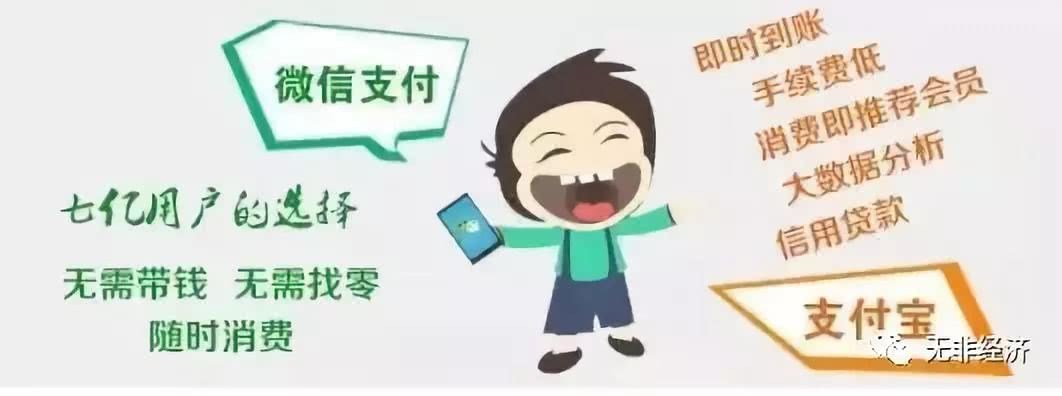
There was a time when we saw less and less cash, replaced by one payment code and receipt code after another. Anyway, DaDa says that ever since Alipay and WeChat Pay rose to prominence, this editor has not touched cash for a very long time - it is rarely even seen, and POS machines are used far less too. A joke once circulated on Weibo: when a beggar was panhandling along the street, a passerby told him he had no cash to give, and the beggar calmly pulled out a receipt code. Although it was meant purely for entertainment, it is enough to reflect just how widespread mobile payments have become. And that is not all - have you heard? QQ has also launched a payment function (usable only at vending machines), and JD.com has also launched an online payment function (limited to self-service vending machines). Mobile payment has now become an all-too-common phenomenon.
Mobile payment is also called phone payment - as long as you carry a phone, you can take care of everything. People often say that in the past, travelling far from home meant carrying all kinds of items; today, you do not even need to bring cash - a single phone easily handles everything. Consumers send payment instructions directly or indirectly to banking financial institutions through mobile devices, the internet, or short-range sensing, generating currency payments and fund transfers, thereby realizing the mobile payment function. Mobile payment is mainly divided into two forms: one is remote payment and the other is near-field payment. Near-field payment is the way we usually swipe a code with our phones to ride transport, buy things, and so on, bringing us convenience; remote payment is a payment method carried out by sending payment instructions or with the help of payment tools. For example: online banking, telephone banking, remittances, and so on. According to a report by the data company IDC, in 2017 the global mobile payment amount exceeded 1 trillion US dollars. Such a powerful figure means that in the next few years the global mobile payment business will show a trend of continued strengthening. Mobile payment is a type of electronic payment method; it integrates closely with mobile communication technology, internet technology, and radio frequency technology, and has its own characteristics.
Mobile payment mainly has the following characteristics:
Mobility
The mobility of carrying it wherever you go eliminates the limits of distance and region; combined with mobile phone communication technology, it allows you to obtain the services, applications, information, and entertainment you need anytime and anywhere.
Timeliness
Because it is not limited by time or place, information can be obtained more promptly, and users can query their accounts, transfer funds, or make purchases and other consumption activities at any time.
Customization
Based on advanced mobile communication technology and a simple mobile phone operation interface, users can customize their own consumption methods and personalized services, and account transactions also become simpler and more convenient.
Integration
With a mobile phone as the carrier, information interaction can be carried out through short-range identification by terminal devices. Operators can integrate various types of information such as mobile communication cards, bus cards, metro cards, and bank cards into the mobile phone carrier for centralized management, and build a supporting network system, thereby providing users with payment and identity authentication and ensuring the security of funds.
Li Yinghao, founder of QFPay, once said that the birthplace of mobile payment is mainland China, but the spread of mobile payment relies on the "Belt and Road." In mainland China, he experienced the entire development of mobile payment from 0 to 1. Back in 2011, people still paid with cash. CCTV also once reported on a "code-scanning street": a street of stalls where, as long as you scanned a code, you could eat, drink, and play for free. But at the time most consumers said they would not accept it. Yet now, in many places today, the other party does not ask whether you are paying cash, but asks whether you use WeChat or Alipay. This is the 1.0 era of mobile payment. Li Yinghao's team prioritized bringing mobile payment technology into Hong Kong, China, introducing aggregated payment there, and the annual transaction volume growth rate was astonishing, driven mainly by tourists from mainland China. On such a foundation, it can then be expanded across Asia, starting with "Belt and Road" countries - after policies opened up, exchange promoted the development of mobile payment. Carrying out mobile payment in these parts of Asia is not only a change in payment methods, but has also become the key to inclusive finance development under the "Belt and Road." It is precisely with this kind of mobile payment, with merchants and consumers behind it holding such e-wallets, that all micro-loans become possible to cover.
Alright, that is all for today's sharing!