The entire production and sales process of sweet potatoes from farm to table
The year-end sea breeze is piercingly cold. Looking out along Beigang River toward the border of Yunlin and Chiayi, a rare clear winter sun gradually rises. The ambiguous glow reflects the abundance of the Lidong season. In the early morning farmland of Shuilin, it is bustling despite the cold wind.
Large machinery rumbles into the field, turning over soil, and strings of sweet potatoes are unearthed from the soil mounds. As the machine moves forward, they roll down into the field. Even though many steps have replaced human labor with machines, many rural women are still needed to help sort the sweet potatoes, kneeling or sitting, or bending over. Bending down to work for hours on end is a sign of deep reverence for the land. With keen eyes and quick hands, they sort the sweet potatoes: top-grade, medium-grade, small-grade, and off-grade, packing them in bags of 50 Taiwan jin each by grade. The price and fate of the sweet potatoes are thus classified accordingly.
Transporters and dealers: the envoys escorting agricultural products
The "fan-ah" nearby has long been sitting on the truck waiting, ready to buy sweet potatoes and sell them downstream, such as to wholesale markets, processing plants, and hangkou. Most sweet potato farmers cultivate their own land, with an individual planting area of about three hectares. Because the harvest volume is relatively small and they lack bargaining power, transporters and dealers buy in bulk, sparing them the trouble of finding sales channels. This is the customary practice of most traditional farmers.
Prices fluctuate according to the auction process at wholesale markets, varying from three to more than ten yuan per Taiwan jin, and the superimposed logistics and cleaning costs during transport further compress profit margins. In today's era of advanced internet, many young farmers choose to produce and sell on their own through the internet, operating e-commerce independently, bypassing transporters and wholesale market auctions. Prices are higher and profits are fuller, with logistics costs shifted to consumers, but farmers must bear other work such as planting, harvesting, marketing, and logistics, making the threshold relatively high.
Hangkou: the stepping stone for fresh fruits and vegetables
At three in the morning, Taipei First Fruit and Vegetable Market is already bustling with voices, with auction calls rising and falling. Transporters and dealers ship sweet potatoes from Shuilin to Taipei, movers unload the goods, and the auctioneer, with a discerning eye, has roughly settled the price. At this time, "hangkou" also rush over to inspect the goods. Hangkou are bosses who operate wholesale businesses and are responsible for bidding on crops. From roadside vendors to large hypermarkets, all buy fruit from them. Because all transactions in the auction market are in cash, interpersonal trust is highly valued, and the position of hangkou even adopts a "hereditary" system.
Bidding on crops makes it easy for the quality of the crops sold by hangkou to be unstable depending on the day's conditions and bidding situation. In addition to bidding, many hangkou have fixed cooperating farmers at the production area. Without any written contract, their relationship is maintained entirely by trust. Sometimes when prices fluctuate sharply, hangkou will still purchase because of goodwill. Through personal delivery or entrusting transporters and dealers to ship, they build their own reputation through the stable quality of the crops, but they do not manage farmers' cultivation or pesticide use. They simply choose to cooperate with sweet potato farmers whose crop quality is better, which offers relatively more security for smallholder farmers with lower yields.
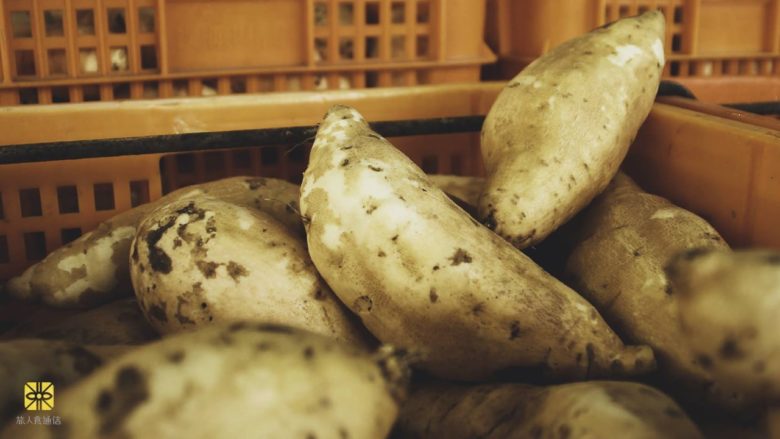
Small farmers, large output
Sweet potato farmers who cultivate their own land can usually manage only about three hectares of farmland each. The cost per hectare is about 14,000 yuan, and the yield is about 5,000 to 7,000 Taiwan jin, but market prices fluctuate up and down, making income relatively unstable. Therefore, the sweet potato farmers of Shuilin Township jointly established the "Guaranteed Responsibility Yunlin County Qiongpu Cooperative Farm" and the "Dagou Fruit and Vegetable Cooperative," or joined the "Shuilin Township Farmers' Association." Through collective production and collective sales, they improve from the source of quality: breeding healthy sweet potato seedlings, zero-pesticide control, and passing on related agricultural knowledge for cultivation, increasing bargaining power, selling at stable and better prices to large restaurants and hypermarkets, providing stable income for contract farmers, and developing processed products with fixed prices and longer shelf lives, such as sweet potato chips, frozen roasted sweet potatoes, and sweet potato starch. In response to increases or decreases in fresh sweet potato output, they increase product diversity and enhance added value.
Transportation and marketing, the farmers' backing
Professor Hsu Wen-fu's book "Agricultural Marketing" points out: "Marketing is all kinds of activities that transport products or services from the place of production to the place of consumption at the appropriate time and in the appropriate form, in order to satisfy consumers' desires."
As the supporting pillar of agriculture, transportation and marketing should create an environment that allows farmers to focus single-mindedly on production, and allow the general public to eat fresh vegetables and fruits as if just harvested, deliver crops into consumers' hands, and enable farmers to obtain the income they deserve!
Travel companion notes | Lin Tzu-chun; travel companion sketch | Yu Hsin-ying; this article is authorized by Traveler's Food Communication
Get the Traveler's Food Communication magazine right away:
Related Articles
- How to prevent and control rabies in dogs? Timely vaccination of puppies ensures safety
- How to Explore Keelung's Fishing Port Docks? Practical Tips for Picking Fresh Seafood
- The Slow Food movement advocates that how you eat matters more than what you eat, helping you eat your way to health
- How to Identify Inferior Cooking Oil? Key Points for Quality Control from Cultivation to Purchase
- Which agricultural activities require tax payment? The ranch court case clarifies the boundary of tax exemption
- Ractopamine, a lean meat agent, is banned; scientific pig farming to increase lean meat percentage is the right path
- Horizontal Windbreak Nets for Welsh Onion Cultivation in Winter Reduce Losses
- Top Ten Fungicides Ranking Released, a Useful Reference for Farmers Choosing Products