What exactly is the market outlook for licorice cultivation?
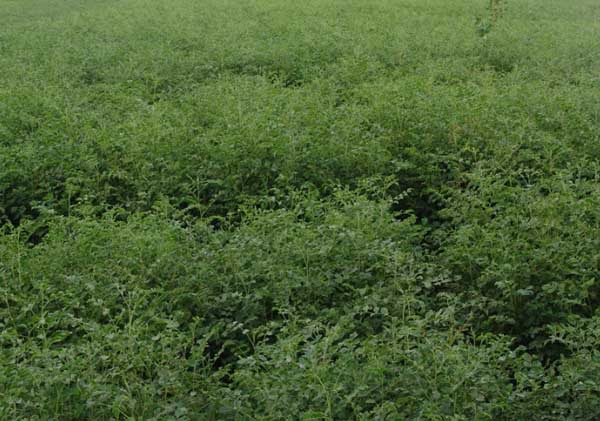
Experts in traditional Chinese medicine say that 9 out of 10 traditional Chinese medicine prescriptions contain licorice, and without licorice there would be no traditional Chinese medicine. But recently, relevant scientists have once again issued a warning that licorice in China is endangered. Industry insiders believe that if licorice can be produced and harvested in a regulated way and artificial cultivation is developed reasonably, it should have very good market prospects.
Licorice in China is mainly produced in Inner Mongolia, **, Gansu, Ningxia and other places. For many years, due to uncontrolled digging and reckless harvesting, not only have vegetation resources been severely damaged and large areas of soil desertified, but the area of wild licorice nationwide has also declined sharply. Relevant experts predict that at the current harvesting rate, in 5 years it will be very difficult to find a single surviving wild licorice plant on China's land.
According to relevant statistics, China's current domestic demand is about 60,000 to 70,000 tons per year, and exports are also continuing to grow. In terms of price, the market purchase price of licorice is 7 yuan to 8 yuan per kg, the retail price is more than 10 yuan per kg, and the cost for farmers to grow one mu of land is about 600 yuan. If one mu of land produces 1,000 kg in 3 years, farmers can earn an annual income of more than 1,000 yuan per mu, so the prospects are promising. At present, the urgent problem that needs to be solved is to quickly control the uncontrolled digging and reckless harvesting of wild licorice.
Protecting the environment and developing the economy are a pair of contradictions in China's economic life. Developing the economy must at the same time pay attention to environmental protection, and environmental protection cannot be separated from economic development. Environmental protection without economic development is likewise difficult to sustain. At present, domestic and international market demand for licorice products is very large. Experts believe that to resolve the contradiction between the export of licorice products and China's environmental protection, the most critical thing is to develop artificial cultivation of licorice.
From the history of the development of China's traditional Chinese medicine industry, bulk Chinese medicinal materials must all follow the path of artificial cultivation, that is, using artificially cultivated varieties to replace wild varieties. China's artificial cultivation of licorice has already gone through a fairly long period of exploration. Returning farmland to forest and returning farmland to grassland mean that artificial cultivation of licorice cannot follow the path of reclaiming wasteland to plant grass. Judging from the current actual situation of developing artificial cultivation of licorice, vigorously promoting the coordinated progress of cultivation and fenced breeding, as well as reasonably developing the path of base construction, is relatively practical and feasible. In addition, the areas for developing cultivation must also shift from desertified areas where ecological vegetation is relatively weak to farming areas where ecological vegetation is relatively solid.
At present, 80% of the licorice on the market is wild, and only 20% is artificially cultivated. In fact, licorice is not a difficult plant to grow; as long as the soil and moisture are suitable, it can be grown on a large scale. Some people believe that the key to solving the problem of artificial cultivation of licorice is now mainly not a funding problem, nor a land problem, but rather improving the quality of artificially cultivated licorice and truly ensuring the replacement of wild varieties by artificially cultivated varieties of licorice. This requires increasing investment in scientific research and conducting in-depth research on all aspects, including variety selection, seed collection, rational application of water and fertilizer, harvesting years, internal quality and appearance, and so on, in order to find suitable solutions.
At present, the Chinese government has already issued the "Notice on Prohibiting the Trade of Nostoc flagelliforme and Prohibiting the Uncontrolled Harvesting and Reckless Digging of Licorice and Ephedra", and has brought the harvesting and processing of licorice under state management. Therefore, the market prospects for artificial cultivation of licorice in China are promising.