What is the market prospect for planting Pseudostellaria heterophylla?
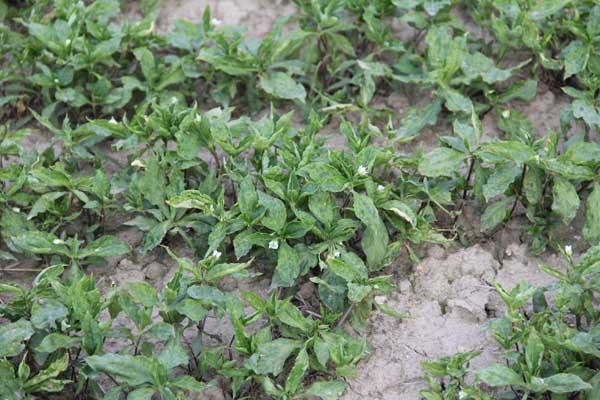
Pseudostellaria heterophylla, also known as haiershen or tongshen, is the root tuber of the perennial herbaceous plant Pseudostellaria heterophylla. It prefers warm and humid environments and is afraid of high temperatures. It is distributed in East China, Central China, North China, Northeast China and Northwest China, and the medicinal material is mainly produced in Fujian, Guizhou, Jiangsu, Shandong, Anhui and other places. It has now been listed by the Ministry of Health in the “List of Chinese Medicinal Materials Usable in Health Foods”.
Market Prospects for Planting Pseudostellaria heterophylla
Because of its mild medicinal properties and its ability to tonify qi and nourish yin, Pseudostellaria heterophylla is highly favored by the traditional Chinese medicine community and the health products industry as a substitute for ginseng and even American ginseng, which has led to increased usage. In recent years, many catering units and pharmaceutical factories have developed and produced Pseudostellaria heterophylla health beverages, and overseas regions such as Hong Kong, China and Taiwan, China even use this medicine as a tea drink, causing its social usage and export volume to surge. In particular, in the spring of 2003 when "SARS" was raging, it was indispensable as a yin-nourishing adjunct Chinese medicine in prevention and treatment, appearing with high frequency in many formulas. Therefore, the social demand for Pseudostellaria heterophylla soared and export volume increased sharply. There was a shortage of supply on the medicinal materials market and prices soared. After the "medicinal materials market storm," the market price of Pseudostellaria heterophylla was still far higher than before the "storm," which shows that its inventory is already low.
In recent years, from 2000 to 2002, successive droughts and floods caused severe reductions in output, and combined with low market prices, medicinal herb farmers earned very little and had low enthusiasm for planting. Some even dried the seed tubers for medicinal use, seriously damaging the seed sources. In the autumn of 2002, the market price of Pseudostellaria heterophylla rebounded, and farmers wanted to plant on a large scale but suffered from a shortage of seed roots. With several consecutive years of low output, large-volume goods became increasingly scarce year after year. In the spring of 2003, every time a large lot moved through the Bozhou medicinal materials market, the market price surged once, which fully shows that large-volume supplies of Pseudostellaria heterophylla are in short supply and that development and planting are urgently needed. Therefore, the market prospects for Pseudostellaria heterophylla are bright.
Economic Benefits of Planting Pseudostellaria heterophylla
Pseudostellaria heterophylla has a short growing period and quick returns. It can generally be harvested after 8 months of growth, with a yield of about 200 kg per mu. Calculated at the lowest Bozhou market price of 12 yuan/kg, the income is generally about 2400 yuan per mu.
Before planting Pseudostellaria heterophylla, apply 2000-2500 kg of farmyard manure, 40-50 kg of decomposed cake fertilizer, 50 kg of phosphate fertilizer and 25 kg of potassium sulfate per mu. Among these, farmyard manure is not included in production costs. The cake fertilizer is calculated at 50 yuan/kg. 50 kg of superphosphate is calculated at 25, totaling 75 yuan for fertilizer. Plowing generally requires 35 yuan. At planting, 25 kg of seed roots are used per mu. Calculated at 18 yuan/kg, this requires an input of 450 yuan for seed seedlings. One watering is needed at planting, and possibly 2 waterings during management. Calculated at 3 waterings, this requires 45 yuan. Pest and disease control requires 20 yuan for pesticides. In total, each mu requires an input cost of 625 yuan. After deducting costs, each mu can yield a profit of 1750 yuan.
Standardized Planting According to GAP Requirements
Previously, Chinese medicinal materials were mostly planted in a scattered way, not concentrated and not at scale. The medicinal materials produced were blocked from export due to excessive pesticide residues and heavy metal content. Planting was not concentrated or standardized, and the active ingredient content of the medicinal materials produced varied, bringing much trouble to pharmaceutical factories. For this reason, the State Drug Administration issued the Good Agricultural Practice for Chinese Crude Drugs (abbreviated as GAP), requiring medicinal materials to be planted in a standardized way strictly according to GAP requirements, and establishing medicinal materials production bases with unified planting environments (including air environment, soil environment and irrigation water environment), unified planting, unified management and unified harvesting, so as to ensure stable and reliable quality of raw medicinal materials and concentrated, unified quantities. High quality and large quantity attract merchants, thereby bringing sales advantages. Therefore, large-scale planting of Pseudostellaria heterophylla is an inevitable trend for its future production.
Select Good Varieties, Seize the Opportunity, and Quickly Build Pseudostellaria heterophylla Production Bases
In recent years, the Pseudostellaria heterophylla varieties planted in old production areas have degenerated and have poor disaster resistance. Affected by disasters, post-disaster output is less than half that of normal years, and the Pseudostellaria heterophylla produced is also relatively thin and small, affecting its price. After more than 2 years of effort, the Bozhou City Rare Medicinal Materials Planting Research Institute and the Wendeng City Agriculture Bureau cultivated the "Kangdu No. 1" hybrid Pseudostellaria heterophylla. This variety is large, thick and strong, with strong disaster resistance and relatively high yield (in normal years, ordinary varieties yield only 100 kg, while "Kangdu No. 1" can yield 200-300 kg).
With excellent varieties, seizing the golden planting period, technical support provided by the Rare Medicinal Materials Planting Research Institute, and signed buyback contracts to ensure sales channels, establishing Pseudostellaria heterophylla production bases and carrying out large-scale planting is very feasible.