Detailed Explanation of Isodon serra Planting Techniques and Management Methods
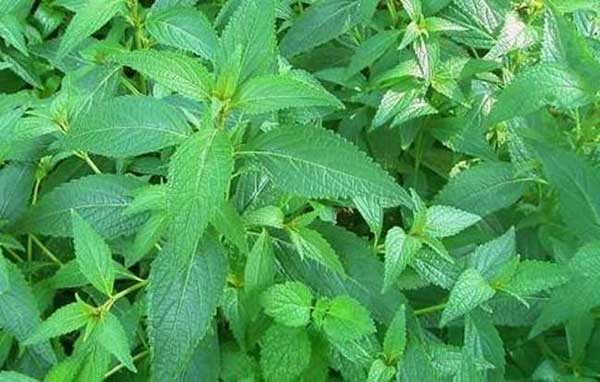
Isodon serra (Rabdosia serra) is a folk herbal medicine, commonly known as bear gall grass, blood wind grass, yellow juice grass, stream ditch grass, fragrant tea vegetable, local coptis, etc. It is mainly produced in Hunan, Sichuan, Yunnan, Jiangxi, Guangdong, Guangxi and other provinces and regions south of the Yangtze River. Isodon serra has the effects of clearing heat and draining dampness, reducing jaundice and eliminating dampness, cooling blood and dispersing stasis, and is used to treat acute icteric hepatitis, acute cholecystitis, dysentery, enteritis, traumatic bruising and pain, and other conditions. Isodon serra is widely used in clinical practice throughout Guangdong, and a variety of health products for preventing and treating hepatitis with it as the main raw material have been developed, such as Isodon serra granules, Isodon serra teabags, etc., with very large market potential.
Isodon serra has strong adaptability to the environment and can grow in areas below 1500 m altitude. It often grows wild in wetland by streams, village edges, ditch edges, field edges and under forests. Isodon serra is a long-day plant and likes sunlight. Under sufficient sunlight, seeds germinate well and plants grow robustly. Isodon serra is afraid of waterlogging and afraid of soil compaction, and is suitable for cultivation in loose, fertile, well-drained sandy loam soil. Low-lying water-accumulating soil easily causes root rot.
Seedling Raising and Transplanting
Choose a sunny, conveniently irrigated and drained, moist and fertile sandy loam soil as the seedling raising site. After clearing debris, fully plough or half plough, thoroughly break up the soil, and disinfect it. Because Isodon serra seeds are tiny, if the bed soil is relatively firm, fine river sand should be mixed in evenly to improve it during land preparation. The soil clods of the seedbed must be fine, the bed surface soil must be level, and ditches should be opened around it. Generally the bed width is 1.2 m and the ditch depth is 20-30 cm. Isodon serra can be propagated and raised by seed propagation, cutting propagation and division propagation.
1. Seed propagation: The sowing time should be chosen in spring when rain is sufficient and temperature rises, or in autumn when the fruit is ripe. Broadcast sowing or drill sowing are both acceptable. When sowing, fine mud powder or fine sand must be mixed evenly with the seeds at a ratio of 5-6:1 before sowing. After sowing, cover with a layer of fine river sand, then cover with rice straw on top to keep warm and moist. Water immediately after sowing, spraying evenly and thoroughly with a fine-hole watering can. After emergence, apply dilute fertilizer water 1-2 times. When the seedlings grow to more than 10 cm and have 8-10 leaves, they can be transplanted.
2. Cutting propagation: Generally softwood cuttings are used. Cuttings can be cut from the seed reservation field or the main field. Select robust branches, cut them into 10-15 cm lengths with 3-4 nodes, remove the leaves at the base, keep 1-2 pairs of leaves at the top tip, and cut the lower end diagonally into a horseshoe-shaped incision. Soak the prepared cuttings in rooting powder to ensure a relatively high survival rate. Prepare the seedbed, open horizontal ditches, place the cuttings obliquely against the ditch wall, with the upper end exposed above the soil surface at 1/4-1/3 of the cutting length, then cover with soil and press firmly. Insert the second row in sequence, with a plant-row spacing of 4 cm × 5 cm. After cutting, water thoroughly, then cover with a shade net of 50% shading to prevent direct sunlight. After cutting, water frequently to keep moist. Generally rooting begins after one week, and transplanting can be done after 15 days.
3. Division propagation: For division propagation, the creeping rhizomes (old crowns) after harvest in the same year can be gathered and densely planted as a seed reservation field, and in winter cold protection and moisture retention are needed. In spring of the following year, many tillered new shoots grow from the creeping rhizomes, and these tillers are used as seedlings for transplanting.
4. Transplanting: Apply sufficient base fertilizer to the main field, with 3000-4000 kg of farmyard manure per mu. Rake the bed surface fine and level. After the land is prepared, transplanting can be done. When transplanting, the main root of the seedling should be cut off, which can cause the seedling to produce more lateral roots and form a developed root system, benefiting its growth. Transplanting should be carried out on a cloudy and windless day or in the evening of a sunny day. Generally, plant at a row-plant spacing of 15 cm × 20 cm or 20 cm × 20 cm, by hole planting or ditch planting. After planting, cover with soil and press firmly, then water thoroughly to settle the roots.
Field Management
Throughout the entire growth and development period of Isodon serra, attention should be paid to uniform fertilizer and water management. Topdressing should be "promote in the early stage, control in the middle stage", drain water in time to prevent waterlogging, keep the soil moist, and promptly prevent and control pests and diseases.
1. Topdressing: 10 days after transplanting and settling, the plants begin to grow new roots. At this time, apply N fertilizer once, with 5 kg of urea per mu or a light application of diluted human and animal manure and urine, to promote early and rapid root growth. 15-20 days after transplanting, apply dilute human and animal manure and urine once more, about 1000 kg per mu. After that, apply organic fertilizer 1-2 times per month. After the plants close the rows, granular compound fertilizer can be applied 1-2 times instead, at 30 kg per mu. After each harvest, loosen the soil and apply fertilizer, which is beneficial for the plant's sprouting, branching and survival.
2. Water management: After transplanting, the seedlings need to be watered in the morning and evening. In early spring, plastic film mulching should be used to keep warm and moist. During the seedling stage, attention should be paid to watering to protect the seedlings, prevent drought, and promote downward root growth, so as to facilitate vigorous seedling growth. After the plants close the rows, water consumption increases, so irrigation should be frequent to keep the soil moist. In the rainy season, especially after heavy rain for several consecutive days, field water should be drained in time to reduce the occurrence of pests and diseases and root rot.
3. Intertillage and weeding: Generally, intertillage is done 3-4 times per year to keep the soil loose, keep the field free of weeds, reduce water and fertilizer consumption, keep the field clean, and prevent the breeding and spread of pests and diseases. Intertillage and weeding are generally carried out before the rows close, choosing sunny or cloudy days when soil moisture is not too high. The root system of Isodon serra is relatively shallow, so intertillage should be shallow. After the rows close, the plants have many branches and lush stems and leaves, so the number of intertillage and weeding operations should be reduced to avoid damaging the plants.
4. Pest and disease control: The main pests and diseases of Isodon serra are powdery mildew and aphids. Powdery mildew is more serious in autumn. If infected plants are found early, they should be pulled out and burned in time, and pesticide should be sprayed promptly to prevent the disease from spreading. It can be controlled by spraying 70% thiophanate-methyl 800 times solution, or 25% carbendazim wettable powder 600 times solution, or 15% triadimefon powder 800 times solution, spraying once about every 10 days, for 2-3 consecutive sprays. Aphids reproduce quickly and spread rapidly, so they must be controlled in time. Choose pesticides with contact, systemic and fumigant triple action for spraying and killing. Pirimicarb, chlorpyrifos, profenofos, aphid killer and other pesticides can be used in rotation for spray control.
Harvesting and Processing
Isodon serra can be harvested 2-3 times per year in the south, and the first harvest can be taken 90 days after spring planting. If managed properly with sufficient fertilizer and water, the second harvest can be taken 70-80 days after the first harvest, and the third harvest is taken when the plants stop growing before winter. At each harvest, use a sickle to cut the plants at the stem base 2-3 cm above the ground, which is beneficial for tillering and sprouting. Harvesting is usually chosen to be carried out on sunny days. After harvesting, dry promptly by sun drying, shade drying or oven drying. After sun drying, wait until the leaves soften again, then bundle and press into pieces, and it becomes the commodity.