Detailed Explanation of Ophiopogon Japonicus Planting Techniques and Management Methods
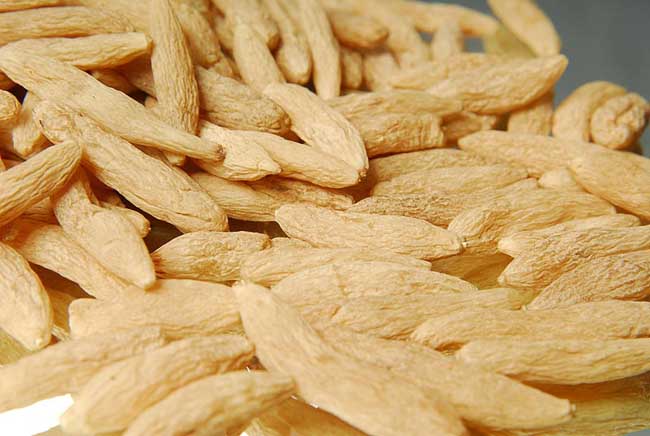
Ophiopogon japonicus, also known as dwarf lilyturf, snakebeard grass, maidong, and cundong, is a perennial evergreen herbaceous plant of the genus Ophiopogon in the family Liliaceae. Its fibrous roots are relatively thick, and the tips or middle sections of the roots often swell into spindle-shaped fleshy tubers. The tuberous roots are used as medicine.
Site Selection and Land Preparation
It is advisable to choose loose, fertile, moist, and well-drained sandy loam soil, or sloped land can also be selected for cultivation. Ophiopogon japonicus is not suitable for continuous cropping. After the previous crop is harvested, land preparation should be carried out promptly. Plow 20-25 cm deep and harrow multiple times to achieve a loose, fine, and level soil surface. In Sichuan production areas, beds are generally not made; if the field is too large and the soil surface is uneven, small earth ridges can be built separately for drainage and irrigation. In Zhejiang production areas, flat beds are made, with a bed width of 1.5-1.7 m and a ditch width of 40 cm. Apply sufficient base fertilizer during land preparation. Generally, 1500-2000 kg of compost per mu is used, or 50-70 kg of superphosphate, or 1000-1500 kg of barnyard manure. It can be spread into the furrows at planting time, or spread into the soil during land preparation.
Planting Methods
1. Seedling preparation and treatment. Ophiopogon japonicus is propagated by division. In Sichuan, around Qingming; in Zhejiang, from Lixia to Mangzhong, when digging Ophiopogon japonicus, select plants with dark green color and robust growth, cut off the tuberous roots and fibrous roots, divide into individual plants, trim off residual fibrous roots, cut off part of the stem base (to the extent that a white core appears at the rhizome cross-section and the leaves do not scatter), and plant immediately. If timely planting is not possible, "seedling nursing" is required: soak the stem base of the seedlings in clean water to allow them to absorb enough water, then stand them upright together on loosened soil already dug in a shady place, and cover with soil around them for preservation. If the temperature is too high, water once a day or every other day. Seedling nursing time should not exceed 7 days.
2. Planting. In Sichuan, planting is done in April; in Zhejiang, in May. Choose a sunny or cloudy day. In Sichuan, open-furrow strip planting is adopted, with a row spacing of about 15 cm and a depth of about 5 cm. First apply dilute pig manure water into the furrow, then plant seedlings at a plant spacing of 6-9 cm, with 3 plants per clump. After planting, cover with soil, press firmly, and tamp down so that the seedlings stand upright and stable, achieving level ground and upright seedlings. In Zhejiang, hole planting is adopted, with a hole depth of 3-5 cm, a row spacing of 25 cm, and a plant spacing of 15 cm, planting 9-10 seedlings per hole. Cover the base and press firmly.
Field Management
1. Intercropping. Ophiopogon japonicus requires a shady and moist environment, and intercropping is practiced in all main production areas. In Sichuan, corn is usually intercropped in summer and autumn. For spring corn, on the second day after planting Ophiopogon japonicus, interplant 1 row of corn every 5 rows of Ophiopogon japonicus, with a plant spacing of 50 cm. After emergence, keep 1-2 plants per hill, preferably 1 plant, and harvest before Liqiu. Before Dashu, in other rows of Ophiopogon japonicus, interplant 1 row of autumn corn every 5 rows of Ophiopogon japonicus, and harvest at Qiufen. In winter and early spring, which is the tuberous root growth period of Ophiopogon japonicus, no crops are generally interplanted to avoid affecting the yield of Ophiopogon japonicus. In Zhejiang, Ophiopogon japonicus has wide row and plant spacing and a long growth period, and intercropped crops are mostly watermelon, kohlrabi, red onion, summer corn, broad bean, etc. Intercropping is generally done in the 1st and 2nd years. In the 3rd year, no intercropping is done to avoid affecting the yield and quality of Ophiopogon japonicus.
2. Cultivation and weeding. About half a month after planting seedlings, weed once and loosen the soil to a depth of about 3 cm. From May to October, weeds grow vigorously, and weeding and shallow loosening of the surface soil should be done once a month on a sunny day.
3. Fertilization. In Sichuan, topdressing is generally applied 3-4 times. The 1st time is in July, applying 1200 kg of human and livestock manure water per mu, plus 25 kg of decomposed rapeseed cake. The 2nd time is in early to mid-August, applying 1500-2000 kg of human and livestock manure water per mu, plus 40-50 kg of decomposed rapeseed cake and 75 kg of wood ash. The 3rd time is in early November, applying 1500-2000 kg of human and livestock manure water per mu, plus 25 kg of rapeseed cake and 75 kg of wood ash or 20-25 kg of superphosphate. The 4th time is in late February of the 2nd year after planting, applying 2000-2500 kg of pig manure water per mu, plus 5 kg of urea, 7 kg of superphosphate, and 5 kg of potassium chloride. Fertilization in Zhejiang is slightly different from that in Sichuan. There is a habit of "applying root-promoting fertilizer early and applying heavy fertilizer in spring and autumn." When Ophiopogon japonicus turns green half a month after planting, in combination with drought resistance, apply 700 kg of light human and livestock manure per mu and 10 kg of superphosphate to promote early root development, multiple roots, and early tillering. After July, apply 1200 kg of human and livestock manure and urine per mu, plus 15 kg of superphosphate. Spring and autumn are periods of tuberous root enlargement and massive tillering, so heavy application of phosphorus and potassium fertilizers should be made. Apply once each in March and September, applying 50 kg of superphosphate or 100-120 kg of cake fertilizer, 1200 kg of human manure and urine, and 150-200 kg of plant ash per mu. Thereafter, fertilize 2-3 times each year.
4. Irrigation. After Lixia, the weather gradually becomes hotter, and water evaporation is high, so timely irrigation is needed. If drought occurs in winter and spring, irrigate 1-2 times around Lichun to promote tuberous root growth. In summer, rainfall is concentrated, so accumulated water in the field should be drained promptly to prevent diseases and pests caused by high temperature and humidity, which would affect production.
Pest and Disease Control
1. Diseases
① Black spot disease: The pathogen is a type of imperfect fungus, which damages leaves. The pathogen overwinters on seedlings, begins to occur in mid-April each year, and develops rapidly under suitable temperature and humidity, causing patches of dead plants.
[Control methods] Select seedlings with green leaves that are robust and disease-free; in the early stage of the disease, when morning dew has not dried, spread 100 kg of plant ash per mu; drain accumulated water promptly during the rainy season to reduce field humidity; soak seedlings for 5 minutes in 1:1:100 Bordeaux mixture or 800-fold liquid of 65% amobam wettable powder, or spray over a large area. In Zhejiang production areas, when the disease is severe, cut off the aboveground parts of affected plants to allow them to resprout.
② Root-knot nematode disease: Root-knot nematodes can occur throughout the year in Guangxi. They mainly damage the roots.
[Control methods] Practice crop rotation; where conditions permit, practice paddy-upland rotation, and avoid rotation with crops such as flue-cured tobacco, Chinese milk vetch, cowpea, taro, sweet potato, Trichosanthes kirilowii, monk fruit, Atractylodes macrocephala, Salvia miltiorrhiza, and belladonna; select disease-free seedlings and trim off all old roots; select disease-resistant varieties; carry out soil disinfection.
2. Insect pests
White grubs, mole crickets, cutworms, wireworms, etc. damage the rhizomes.
[Control methods] Rotate with rice; after flooding in paddy fields, they can all be eliminated in one season; or use conventional pesticide methods to kill them.