How to grow Arnebia/Lithospermum for high yield? Detailed explanation of cultivation techniques
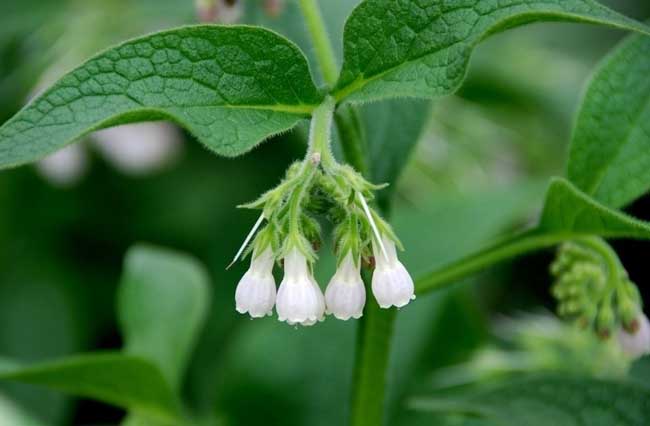
Arnebia/Lithospermum is a plant of the genus Lithospermum in the family Boraginaceae. This herb has purple flowers and purple roots and can be used to dye things purple, hence its name. Also known as mountain Arnebia, purple cinnabar, and Arnebia root, it is mainly distributed in the United States, the southeastern coastal regions, Central America, Europe and temperate regions, and the islands of the Pacific and Indian Oceans. In China, Arnebia-producing areas are also found in Liaoning, Shanxi, Hunan, Gansu, Shandong, Hubei, Guangxi, Sichuan, Shaanxi, Guizhou, Jiangxi, Hebei, Henan and other places, as well as Japan and Korea. It grows in areas at altitudes from 50 m to 2,500 m, mostly on mountain slopes and grasslands, and artificial introduction and cultivation have now begun. It mostly grows on mountain slopes and grasslands and is a plant native to China (not introduced from abroad). It is a kind of Chinese herbal medicine. In spring and autumn, the roots are dug up, the remaining stems and soil are removed (do not wash with water, to prevent fading), and they are sun-dried or dried over a low fire for raw use. Both the roots and flowers of Arnebia contain pigments, acetylshikonin, shikonane, isobutyrylshikonin, etc.
Climate
Arnebia is cold-tolerant, averse to high temperatures, and afraid of waterlogging. Calcareous loam, sandy loam, and clay loam are best for the soil.
Land preparation
After deep plowing and leveling the soil, open small furrows with a spacing of 20-30 cm. Apply manure or green manure in the furrows.
Planting
1. Seedling-raising method: Sow in early April. First water the seedbed, and after the water seeps down, broadcast the seeds, cover with more than 1 cm of soil, and keep it often moist. Seedlings emerge in 15-22 days. When the seedlings are 6-10 cm tall, transplant them to the field with a row spacing of 30 cm and a plant spacing of 10-15 cm. Press lightly and then water.
2. Direct sowing method: Sow around Qingming, in drills, opening shallow furrows with a row spacing of 30 cm, sow the seeds evenly, and press the soil after sowing. Thin the seedlings when they are about 6 cm tall, with a plant spacing of 10-15 cm.
Management
During the seedling stage, prevent high temperatures and direct sunlight, and pay attention to watering, weeding, and loosening the soil. Drain promptly during the rainy season. When the seedlings are 20-25 cm tall, apply 20-25 jin of superphosphate per mu, then cover with soil and water.
Fertilization
It is advisable to choose loose, fertile sandy loam or loam with high terrain and good drainage for planting. Before sowing, apply 75,000 kg of farmyard manure per hectare, deep plow more than 30 cm, rake fine and level, and make beds 100 cm wide, ready for sowing.
Propagation methods
Propagate by seed, divided into autumn sowing and spring sowing. Autumn sowing runs from after seed harvest until the ground freezes in early November. Autumn-sown seeds begin to germinate in early April of the second year, and full seedlings emerge from late April to early May. Spring sowing is carried out from March to early April, and seedlings emerge from late April to early May. Spring-sown seeds must undergo low-temperature treatment to allow the embryo to develop and mature. If the seeds are sown dry, they will not emerge that year. Sowing methods are divided into two types: drilling and broadcasting.
1. Seed treatment: From late October to early November, mix the seeds evenly with wet sand at 1:3, then store them in a pit. Dig a soil pit 45 cm deep and 30 cm long and wide on a sunny slope, place a small amount of branches at the bottom of the pit, lay a layer of leaves on top, put the seeds in, and cover with 10 cm of soil. During sand storage of the seeds, pay attention to preventing rodent damage. Around Qingming of the following year, when most of the seeds have sprouted, sow them.
2. Drilling: Open shallow furrows 3 cm deep with a row spacing of 15-20 cm, sow the seeds evenly, cover with 3 cm of soil after sowing, and press after sowing. The amount used per hectare is 22.5-30 kg.
3. Broadcasting: Spread the seeds evenly over the bed surface, cover with 2-3 cm of soil, and after sowing make the seeds contact the soil and press lightly. The sowing rate per hectare is 30 kg.
After the seeds are treated and sown in spring, with sufficient temperature and humidity, emergence begins in about 10 days.