How to grow Anemarrhena asphodeloides for high yields? Detailed cultivation techniques
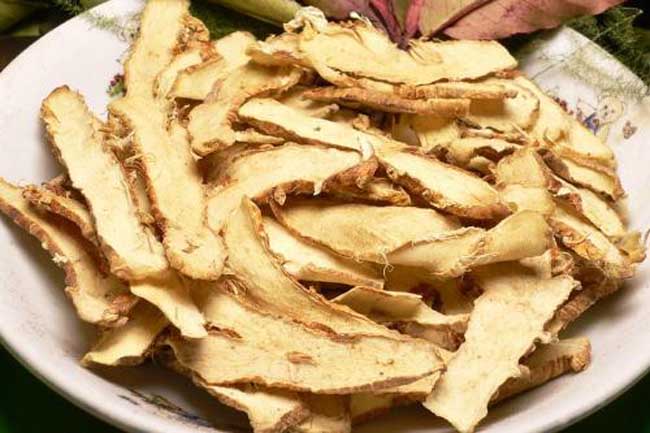
Anemarrhena asphodeloides, also called hairy Anemarrhena, is cultivated throughout China. It has strong drought and cold resistance and is a perennial herbaceous plant. It can grow in arid, rain-scarce barren hills, deserts and wastelands, and is the preferred species for greening mountainous areas and wastelands. It can be sown in all seasons of the year, but mainly in spring or summer. Anemarrhena asphodeloides is a commonly used Chinese medicinal material and is widely used by society.
Site selection and land preparation
Choose humus soil or sandy loam that faces the sun, has good drainage and loose texture. Apply 2000-3000 kg of decomposed barnyard manure, 40-50 kg of cake fertilizer and 30 kg of phosphate fertilizer per mu, spread them evenly into the field, plow 20 cm deep, level and make beds 130 cm wide.
Planting methods
1. Seed propagation: Anemarrhena asphodeloides seeds mature successively around Great Heat. After harvesting, thresh and remove all impurities, then store in a ventilated and dry place for later use. Seed propagation can be done in spring or autumn. Spring sowing is in April; autumn sowing is from October to November. In the prepared bed, open furrows 2 cm deep at a row spacing of 30-35 cm. Sow the seeds evenly into the furrows, cover with soil, rake level, press lightly and water. Keep the ground moist, and seedlings emerge in about 20 days. About 1-1.5 kg of seeds are needed per mu. Autumn sowing has a high germination rate and uniform seedling emergence.
2. Root division propagation: Spring planting is done after the soil thaws and before sprouting, and autumn planting is done after the aboveground stems and leaves turn yellow and wither. In the prepared bed, open holes at a row spacing of 30-35 cm and a plant spacing of 15-20 cm, with holes 7 cm deep. Cut off the residual stems, leaves and fibrous roots from the dug-out underground rhizomes of Anemarrhena asphodeloides, break the rhizomes with buds into small sections 4-7 cm long, place one section in each hole with the bud facing up. Cover with soil and water. It is also possible to irrigate heavily once before planting, then prepare the land and make beds for planting, but the bed surface should not be too wet to prevent root rot. About 90 kg of rhizomes are needed per mu.
Field management
After sowing, keep the soil moist, and seedlings emerge in about 20 days. When the seedlings are 3-4 cm tall, loosen the soil and weed; when the seedlings are 7-10 cm tall, thin to a plant spacing of 15-20 cm. If the climate is dry during the seedling stage, water appropriately. Anemarrhena asphodeloides grown by rhizome division grows slowly in the previous year, so water lightly. In the second year, growth is vigorous, so the frequency of watering should be appropriately increased. For root-division planting in the same year and for direct seed sowing in the second year, when the seedlings are 15-20 cm tall, apply 20 kg of superphosphate plus 10 kg of ammonium sulfate per mu as a topdressing. Open furrows between the rows, and after applying, bury the fertilizer into the soil while loosening the soil. If seeds are not needed, promptly cut off the flower stems. In hot and rainy seasons, pay attention to draining excess water.
Pest and disease control
Anemarrhena asphodeloides has strong disease resistance and generally does not require special control with pesticides. The main pest is white grubs, which damage seedlings and rhizomes. Use conventional methods for control.
Harvesting and processing
1. Harvesting
Both cultivated and wild Anemarrhena asphodeloides are dug in spring and autumn. In spring, after the soil thaws and before sprouting; in autumn, after the aboveground stems and leaves turn yellow and wither and before the ground freezes. Use a pickaxe to dig out the underground rhizomes, remove the stems, leaves, fibrous roots and soil; this is fresh Anemarrhena asphodeloides. Fresh Anemarrhena asphodeloides dug at the appropriate time in spring and autumn has a high drying ratio and good quality. Wild Anemarrhena asphodeloides is generally best harvested in autumn. This is because it is not easy to find before sprouting in spring, and digging after sprouting has a certain impact on commodity quality. The harvest period for cultivated Anemarrhena asphodeloides is 4-5 years when propagated by seed, and generally 3-4 years when propagated by rhizome.
2. Hairy Anemarrhena
(1) Sun-drying method. Place the harvested fresh Anemarrhena asphodeloides on a sunny open ground or drying platform, stacking and beating it as you go, turning it once every 7 days, repeating this many times until it is sun-dried; this is hairy Anemarrhena. It generally takes about 60-70 days.
(2) Oven-drying method. Place the fresh Anemarrhena asphodeloides on a heated brick bed in a drying room, turning it while drying so that it is heated evenly. When it is half dry, take it out and put it on a drying platform to sun-dry. Pick out the ones with higher moisture and continue drying until they are 80-90% dry, then sun-dry again and sort again. After two rounds in and out, it can be dried. Do not hurry the drying process, to prevent scorching.
3. Anemarrhena flesh
Scrape off the outer skin while fresh and sun-dry; this is Anemarrhena flesh. If there is sufficient sunlight, it generally dries in 2-3 days.