Detailed explanation of high-efficiency Reishi mushroom cultivation techniques, master all the key cultivation points
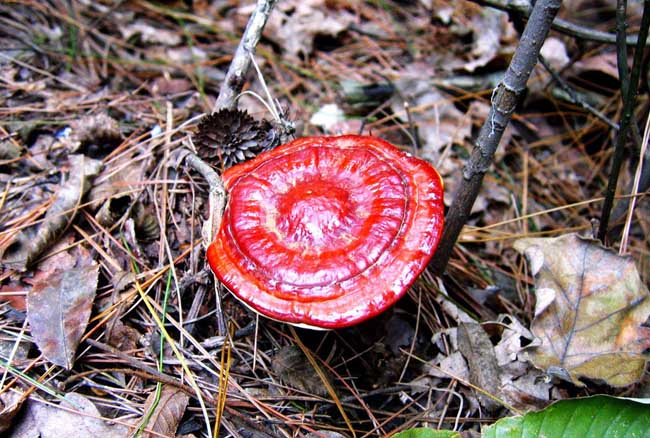
Reishi mushroom, also known as Lingzhi grass, divine mushroom, lingzhi herb, immortal grass, and auspicious grass, is the whole plant of Ganoderma lucidum or Ganoderma sinense of the Polyporaceae family. According to the Compendium of Materia Medica: "Reishi mushroom is neutral in nature, bitter in taste, and non-toxic. It governs chest congestion, benefits heart qi, tonifies the middle, increases wisdom, prevents forgetfulness. Taken over a long period, it lightens the body, prevents aging, and extends life like an immortal."
Cultivation techniques
1. Production of spawn
The raw material formula is 60% cottonseed hulls, 20% mixed sawdust, 20% wheat bran, plus 1% sugar, 2% soybean cake, 1.5% gypsum, 1.5% lime, and 0.4% magnesium sulfate. When preparing, first dry-mix the main ingredients evenly, then dissolve the sugar, lime, and magnesium sulfate in water, spray onto the main ingredients and turn to mix. Once the moisture content is uniform (60-65%), inoculation can begin. The spawn bags should preferably use 17×35CM polypropylene tubing, tied off at both ends, with inoculation at both ends. Each bag can hold 0.5 kg of dry material. When filling, the tightness should be uniform, and both ends of the bag must be tied tightly.
After bagging, carry out atmospheric (or high-pressure) sterilization promptly. When the temperature reaches 100°C, maintain it for 8-9 hours. After stopping the fire, let it sit for another 5-6 hours before removing to cool the bags. Once the bag temperature drops below 30°C, inoculation can begin. During inoculation, strict control is required, ensuring sterile operation to reduce contamination. During the mycelium running stage, keep the light dim, control air humidity below 70%, and maintain the temperature at 24-28°C. Turn the bags once every 7-10 days, and promptly remove and handle any contamination found. Generally, after 25-30 days the mycelium will fully colonize the bags, and after 5-7 days they can be expanded for spawning; during expansion, mycelium culture is the same as for spawn.
2. Management of fruiting body formation
From late April to mid-October, fruiting body formation can be scheduled. When the Reishi mushroom bags are fully colonized by mycelium and begin to form primordia, management for fruiting body formation can begin. Because Ganoderma sinense has a short stipe or even no stipe, the bag should not be completely removed when casing with soil; leave 2-3CM of the bag at one end, remove the rest entirely, and then apply the casing soil. The soil should be applied to 0.5CM below the bag opening to prevent the fruiting layer from touching the soil, which would affect quality. About 50 bags per square meter, with about 2CM between bags. After casing, sprinkle water with a watering can to wash away excess soil at the bag ends, and cut off the bag openings after two days. The mushroom bed should not be too wide; 80CM is appropriate. After casing and leveling, begin temperature control. Keep it between 22-30°C, control air humidity at 85-90%, increase light, and aerate so that mushroom buds form early and differentiate quickly.
Under suitable conditions, it generally takes about 40 days from cultivation to harvest. The signs of maturity in Reishi mushroom are: the cap thickens from thin, the color changes from pale yellow to reddish-brown, the white growing ring around the cap disappears, and a small amount of spore powder disperses within the tubes. The cap develops a lacquer-like sheen. Mature Reishi mushroom has stopped growing, and its resistance to stress and contaminating microorganisms weakens. Combined with the high temperature and humidity in the mushroom shed, it is susceptible to contamination.
Therefore, it should be harvested in time. When harvesting, use a sharp knife to cut from the base of the stipe or twist off the stipe directly by hand. The harvested Reishi mushroom should be promptly placed on a clean cement yard to dry, strictly preventing debris from adhering. It can also be dried at 40-60°C to reduce moisture content to 12%.
Pest and disease control
1. Trichoderma green mold (Penicillium) and Neurospora
On the culture substrate, the growing points of the Reishi stipe and the hymenium beneath the cap are both easily damaged. In the early stage, Penicillium mycelium is white and loose cotton-like; after producing conidia, it becomes light green or blue-green. In the early stage, Trichoderma mycelium is grayish-white or white and densely cottony; soon after, it produces yellow-brown, black, or dark green conidia. Green mold has strong reproductive capacity. After infection during the mycelium running stage of Reishi, mycelial growth is inhibited, and in severe cases no fruiting bodies can form. After the fruiting bodies are infected, they may rot and die in severe cases. Neurospora is rampant in summer with high temperature and high humidity, spreading extremely quickly mainly at the bag openings of the culture substrate and at the base and edges of the fruiting bodies, producing large amounts of orange-red powdery spores. For the control of contaminating microorganisms, kemeling injection can be used; for fruiting bodies, kemeling plus lime can be used to wipe or cover; in severe cases, they can be removed, burned, or deeply buried.
2. Mushroom flies
Mushroom flies lay eggs on the surface of the culture substrate. After a few days, they hatch into maggots. The maggots burrow into the culture substrate and destroy the mycelium, and in the later stage damage the fruiting bodies by feeding on the tissue. For mushroom flies and other pests, prevention must be the main approach. Before the culture bags are brought into the shed, spray the inside and outside with 0.2% dimethoate or 0.2% deltamethrin to thoroughly kill the insects.