How to Grow Pinellia for High Yield? A Detailed Guide to Cultivation Techniques
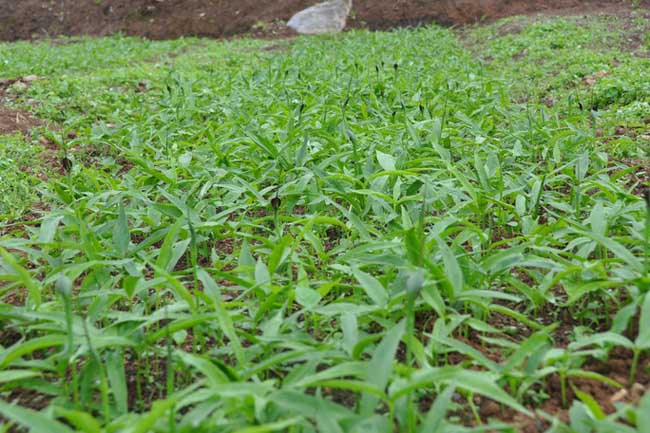
Pinellia is a medicinal plant of the Araceae family, and the medicinal part is the tuber. It is harvested in summer and autumn when the stems and leaves are lush, and after removing the outer skin and fibrous roots and drying in the sun or by heat, it becomes raw Pinellia. Because of its high toxicity, it is mostly used after processing, and depending on the processing method it is divided into Fa Pinellia, Jiang Pinellia, Qing Pinellia, and so on. Its taste is pungent, its nature is warm, and it is toxic; it enters the spleen, stomach, and lung meridians. Its functions are to dry dampness and transform phlegm, harmonize the middle and strengthen the stomach, direct qi downward and stop vomiting, and disperse masses and nodules; applied externally it can reduce swelling and relieve pain.
Pinellia Cultivation Techniques
1. Site selection and land preparation: Choose a sunny site with deep soil, a previous crop of leguminous or grass-family crops, no underground weeds, good drainage, and organic-rich sandy loam for planting. Plow deeply 20-25 cm and make beds 1.2 m wide, with furrow width 30 cm and depth 15-20 cm. Apply 1500-2000 kg of decomposed fine farmyard manure or soil-mixed manure and 20-25 kg of superphosphate per mu.
2. Timely sowing: Sowing can be done in spring, summer, or autumn, but sowing in spring from late February to early March is best. On the bed, open furrows 5-7 cm deep at a row spacing of 20-25 cm, with furrow width of about 15 cm, and sow the tubers in the furrows at a plant spacing of 2-5 cm, using about 60 kg of seed per mu. After sowing, scatter decomposed fine farmyard manure or soil-mixed manure to cover the seeds, then pour 1500-2000 kg of clear manure water, and afterward cover with soil level with the bed surface. The bed surface can be covered with thatch or rice straw 1-2 cm thick to keep the soil moist and prevent weeds from growing. Generally after 20 days, observe once every 2 days, and when the seedling emergence rate reaches about 60%, remove the covering after 6 p.m.
Field Management of Pinellia
A shady and moist cultivation environment can extend the growth period of Pinellia, delay seedling collapse, favor photosynthesis, and allow more dry matter to accumulate. Therefore, strengthening water and fertilizer management is the key to increasing Pinellia yield. In addition to applying sufficient base fertilizer, topdressing is done 4 times during the growing period.
1. Fertilization: About 20 days after the seedlings are fully out in early April, apply 1000 kg of human and livestock manure water at 1:3 per mu; inspect and manage the field at any time, and when weeds are found they should be pulled out promptly, with shallow hoeing between rows to a depth of about 2.5 cm to avoid damaging the roots. Because Pinellia roots grow around the tuber, and its root system is concentrated in the 12-15 cm surface layer, intertillage should be shallow and not deep.
2. Timely topdressing: In addition to applying sufficient base fertilizer, at the middle growth stage, about 70 days after planting, around late May during the bulbil formation stage, apply the 2nd fertilizer. Use 30 kg of oil cake per mu soaked in 60 kg of water for 3-5 days, then apply the soaking liquid with 1000-1500 kg of clear manure water as topdressing, or apply 10 kg of ammonium sulfate with 1000 kg of clear manure water as topdressing. The 3rd time is after seedling collapse in August, when Pinellia sprouts new buds and the mother Pinellia sheds its shell and grows new roots again; splash-apply manure water at 1:10 once every half month until seedlings gradually emerge after autumn; the 4th time is in early September, when all Pinellia seedlings are uniform, apply 25 kg of decomposed cake fertilizer, 20 kg of superphosphate, and 10 kg of urea per mu, mix evenly with ditch mud, and scatter it on the soil surface, which serves to earth up and favor grain filling.
3. Earthing up: The purpose of earthing up is to cover the bulbils so that they take root and sprout in the moist soil and form new plants as early as possible; this is an important high-yield technical measure. Generally, for sowing before early March, in early June the bulbils on the leaf stalks gradually mature and fall to the ground, and the seeds also mature one after another and fall with the withering of the plants, so earthing up should be done once around June 10. Use about 200 kg of fine plow-sole layer mud per mu, scatter it over the bed surface about 1.5 cm thick, cover the bulbils and seeds, and press lightly. Using fine plow-sole layer mud for earthing up can reduce weed growth and is a powerful measure for increasing Pinellia yield per unit area. Around July 15 and September 10, earth up once more each time.
4. Irrigation and drainage: Pinellia likes moisture and fears drought. If there is a long clear and dry spell, after 6 p.m., fill the bed to 3/5 and drain continuously for half an hour. If there is too much rain, drain promptly to avoid tuber rot caused by waterlogging in the field.
5. Flower bud removal: Except where seed propagation is needed, all flower buds produced during the growing period should be removed so that nutrients are concentrated on underground tuber growth, which favors higher yield.
Pest and Disease Control of Pinellia
1. Leaf spot disease
[Disease characteristics] When the disease occurs, there are purplish-brown spots on the leaves, and in the later stage many small black dots form on the lesions. When the disease is severe, the lesions cover the entire leaf, causing the leaves to curl, scorch, and die.
[Control method] In the early stage of the disease, spray 65% zineb 500-fold solution once every 8 days, for 2-3 consecutive times.
2. Tuber rot
[Disease characteristics] It mostly occurs in years with excessive rainfall during hot and humid seasons. It damages the underground tubers, causing rot, and then the aboveground parts turn yellow, collapse, and die.
[Control method] ① Drain ditches promptly during the rainy season and after heavy rain; ② In the early stage of the disease, drench the holes with 5% lime milk; ③ Control underground pests promptly to reduce damage.
3. Viral disease
[Disease characteristics] Viral disease mostly occurs in summer. The leaves of diseased plants curl and shrink into mosaic patterns, and the plants are short and deformed.
[Control method] ① Select disease-free plants for seed retention; ② Control pests promptly; ③ When diseased plants are found, pull them out immediately, burn them in a centralized manner or bury them deeply, and pour 5% lime milk into the diseased holes to prevent spread.
4. Red hawk moth
[Damage characteristics] The red hawk moth mostly occurs in summer. Its larvae bite and eat the leaves and have a very large appetite. When infestation is severe, they can eat all the leaves bare.
[Control method] In the young larval stage, spray 90% trichlorfon 800-fold solution or 40% dimethoate emulsion 1500-fold solution once every 5-7 days, for 2-3 consecutive times.