Detailed Explanation of Dahurian Angelica Planting Techniques and Management Methods
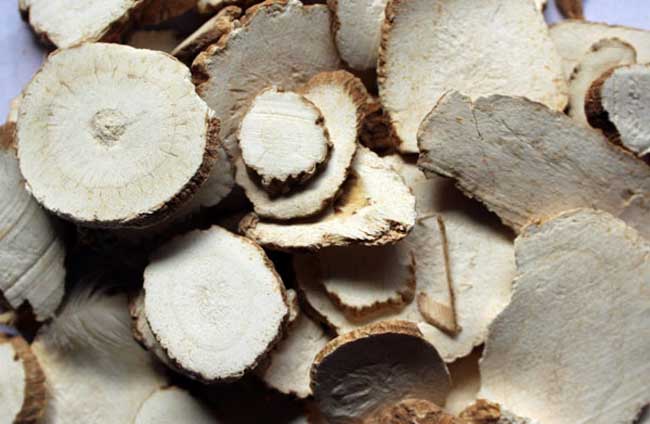
Dahurian angelica, also known as Qi angelica, Chuan angelica, Hang angelica, fragrant angelica, etc., is a plant of the genus Angelica in the Apiaceae family. Dahurian angelica prefers a mild and humid climate and a sunny environment, and grows poorly in shaded conditions. Its main root is deep and long, and it requires soil that is deep, loose, fertile, and well-drained sandy loam. There are many varieties of dahurian angelica, including Angelica dahurica var. formosana (Chuan angelica) mainly produced in Sichuan, and Hang angelica (fragrant angelica) mainly produced in Zhejiang, Fujian, Taiwan, China, and other provinces.
Dahurian angelica is a perennial herb with tall plants reaching 2-2.5 m. The root is thick and conical. The stem is thick, hollow, with fine longitudinal ridges. Dense soft hairs grow near the inflorescence. Leaves are alternate; the lower leaves are large, 2-3 times pinnately divided, with densely sharp serrate margins, and the final lobes are ovate to oblong-ovate, with sharp tips and decurrent bases, and the leaf stalk base expands into a large sheath; the upper leaf lobes gradually simplify into sheaths. Compound umbels, with 10-27 rays; florets are yellow-green; 5 petals, ovate-lanceolate, with recurved tips; filaments are slender and extend beyond the corolla.
Site Selection and Land Preparation
Dahurian angelica is best cultivated on flat land. Deep, loose, and fertile sandy loam is preferred. The previous crop is generally rice, corn, sorghum, cotton, etc.
After the previous crop is harvested, apply decomposed compost, or 3000-5000 kg of barnyard manure, 100 kg of cake fertilizer, and 50 kg of phosphate fertilizer per mu as base fertilizer. Then plow again to a depth of about 25-30 cm, level and harrow finely, and make raised beds. Generally, the beds are 1.2-1.5 m wide and 12-20 cm high. In Sichuan production areas, beds are generally not made.
Dahurian Angelica Planting Techniques
1. Seed cultivation. Dahurian angelica is propagated by seed, and can be done by selecting individual plants for transplanting and seed retention or by retaining seed in place; the former method is mostly used in production, generally carried out when harvesting dahurian angelica. In Sichuan, select purple-stemmed dahurian angelica with unbranched main roots that is robust and disease-free as seed plants. In Henan and Hebei, select dahurian angelica with slender roots, small rhizome heads, no fibrous roots, fine white skin, and robust growth as seed plants. Before transplanting, cut off the leaves and plant at a row spacing of 50-70 cm. Carry out weeding and fertilization in winter and the following spring. From June to July, the seeds mature successively; when the fruit peel turns yellow-green (yellow-white in Henan), harvest them together with the fruiting umbel. They can be harvested in batches, then spread in a ventilated and dry place, air-dried and threshed, and impurities removed for later use.
2. Sowing. The sowing period is divided into autumn sowing and spring sowing, with autumn sowing being better. In Henan, autumn sowing is around White Dew; in Hebei, between End of Heat and White Dew; in Sichuan, between White Dew and Autumn Equinox; in Zhejiang, 10 days before Cold Dew. In areas with higher temperatures, Autumn Equinox to Cold Dew is suitable. If sown too early, the dahurian angelica plants grow too vigorously in the current year, and some plants bolt and flower early the next year, and the roots become lignified and unusable for medicinal purposes. If sown too late, winter precipitation is low and temperatures are lower, so germination after sowing is difficult, affecting growth.
Sowing method. Both drilling and dibbling can be used. Zhejiang, Henan, and Hebei use drilling, with row spacing of 13-20-27 cm, furrow depth of 1-1.5 cm, and 1-1.5 kg of seed per mu. After sowing, rake the bed surface level, water, and keep the soil moist. Sichuan mostly uses dibbling, with row spacing of 30-33 cm, hole spacing of 23-27 cm, and the hole bottom should be flat. The sowing rate per mu is 0.5-0.8 kg. After sowing, do not cover with soil; immediately apply dilute human and animal manure water, about 1000 kg per mu, then cover with plant ash mixed with human and animal manure water, without exposing the seeds. Then press with a wooden board or tread lightly so that the seeds and soil are in close contact to facilitate germination. Seedlings emerge in 15-20 days.
Field Management for Dahurian Angelica Planting
1. Thinning. When the plants are 4-7 cm tall after emergence, thin the seedlings, which can be done 1-2 times. For dibbling, keep 5-8 plants per hole; for drilling, keep 1 plant every 7-10 cm or so. Final thinning is at a plant spacing of 10-12 cm. When thinning, keep strong seedlings with purple-green leaf stalks or flat plant bases, arranged in a triangle or plum-blossom shape, to facilitate ventilation and light penetration.
2. Loosening soil and weeding. Weeding is carried out together with thinning. During the seedling stage, weeding should be done by hand pulling or shallow hoeing; later, intertillage and weeding can be carried out to keep the field soil loose and free of weeds, facilitating growth.
3. Fertilization. Generally, topdressing is applied 3-4 times. The 1st and 2nd times are both after thinning and intertillage. Apply 1500-2000 kg of dilute human and animal manure water per mu each time. The 3rd time is after final thinning, applying 2000-3000 kg of human and animal manure water per mu, with 3 kg of urea added. Around Qingming, carry out the 4th topdressing, applying 2000-3000 kg of human and animal manure water per mu, spread 150 kg of plant ash, and earth up after application. In Zhejiang, the 1st time is after thinning in March, the 2nd time after weeding in April, and the 3rd time before Start of Summer. Generally, barnyard manure is applied in winter. In fertilization, note that it should be applied sparingly in the current year to prevent excessive vegetative growth and early bolting and flowering. In the 2nd year, more should be applied, supplemented with phosphorus and potassium fertilizer, to promote thick roots.
4. Drainage and irrigation. If the soil is dry after sowing dahurian angelica, irrigate in time to keep the soil moist to facilitate emergence. During the growing period, if the weather is dry, water in time to meet the plant's growth needs; when there is excessive rain or water accumulation in the field, drain in time to prevent disease or root rot.
Pest and Disease Control for Dahurian Angelica Planting
1. Diseases
① Leaf spot disease. Also known as white spot disease and leaf spot disease, it is a type of imperfect fungus. It damages leaves. The lesions are initially small, first dark green, and after expansion gray-white; in severe cases, the lesions merge into large angular spots. Later, dense small black dots (the pathogen's pycnidia) form on the lesions of diseased leaves, and the leaves die locally or entirely. It generally occurs in May and continues until harvest. Excessive nitrogen fertilizer and overly dense plants also make it more susceptible. Control method. Select robust, disease-free plants for seed retention. After harvesting dahurian angelica, remove diseased residual plants and diseased roots remaining in the soil, and burn them centrally. In the early stage of the disease, remove diseased leaves and spray 1:1:100 Bordeaux mixture 1-2 times.
② Violet root rot. It is a fungal pathogen. On the main root, purple-red hyphal strands are commonly seen entwining, causing the root epidermis to rot. In poorly drained or damp low-lying land, the disease is severe. Control method. Make raised beds to facilitate drainage; use 70% quintozene powder, 2 kg per mu, mixed evenly with 20 kg of plant ash and spread into the soil, and carry out multiple land preparations; alternatively, use 70% dexon wettable powder, 2 kg per mu, diluted in 2000 kg of water and splash-irrigated on the bed surface, then prepare the land and sow after the soil dries.
③ Damping-off. It is a type of imperfect fungus and mostly occurs in early spring under rainy conditions, with heavy clay soil and poor aeration. In the early stage of the disease, yellow-brown lesions appear at the base of the seedlings, after which the base becomes brown, ring-shaped, shrunken, and sunken, until the plant dies. Control method. Choose sandy loam for planting and drain accumulated water in time; in the early stage of the disease, irrigate with 5% lime water once every 7 days for 3-4 consecutive times, or use 1:25 quintozene fine soil and scatter it around the diseased plants.
④ Black spot disease. In autumn, black lesions appear on the leaves. Control method. Remove diseased leaves or spray 1:1:120 Bordeaux mixture 1-2 times.
2. Insect Pests
Yellow-winged fennel borer, yellow swallowtail butterfly, aphids, and red spiders damage the leaves. Control method. Spray with 90% crystalline trichlorfon 1000 times solution or 40% dimethoate emulsifiable concentrate 2000 times solution.
① Black snout. It damages the roots. Control method. Use 25% azinphos-methyl emulsifiable concentrate 1000 times solution to irrigate the soil around the plant roots.
② Fruit borer. It bites and eats the seeds and often causes a total loss of seed yield. Control method. Spray with 90% crystalline trichlorfon 1000 times solution.
③ Cutworm. It damages the young stems of plants. Control method. Use manual capture or poisoned bait trapping.