Detailed Explanation of the Cultivation Techniques and Planting Methods of Salvia miltiorrhiza
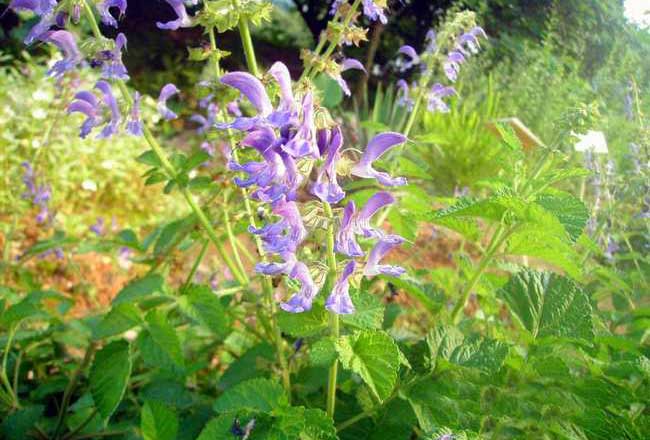
Salvia miltiorrhiza is a plant of the genus Salvia in the family Lamiaceae. Also known as: purple salvia, red root, blood ginseng, big red robe, etc. The root of Salvia miltiorrhiza is used medicinally and contains tanshinone, cryptotanshinone, salviol, neotanshinone, etc. It is bitter in taste and slightly cold in nature. It has the functions of activating blood and regulating menstruation, removing blood stasis and promoting tissue regeneration, calming the mind and soothing the nerves, cooling blood and reducing abscesses, and reducing swelling and relieving pain. It is used to treat irregular menstruation, dysmenorrhea, postpartum blood stasis with abdominal pain, joint soreness, neurasthenia and insomnia, palpitations, abscesses and sores, etc. Modern medical clinical practice has proven that Salvia miltiorrhiza has the effect of dilating blood vessels and increasing coronary artery blood flow, and is used to treat coronary heart disease, angina pectoris, myocardial infarction, tachycardia, etc., with significant efficacy; it is also used to treat chronic hepatitis, early cirrhosis, etc., also with good results. Salvia miltiorrhiza is an important raw material for the pharmaceutical industry and is in great demand; currently it is cultivated artificially throughout the country. It is mainly produced in Sichuan, Hebei, Anhui, Jiangsu, Shandong, Zhejiang and other provinces.
Morphological Characteristics
Salvia miltiorrhiza is a perennial herbaceous plant. The plant height is 30-70 cm. The root is fleshy, thick, branched, with a soil-red outer bark and a yellow-white interior, about 30 cm long. The stem is square and covered with long soft hairs. The odd-pinnate compound leaves are opposite, with 3-7 leaflets, ovate, with blunt serrations on the margins, and both surfaces covered with long soft hairs. The verticillate raceme is terminal or axillary, with pale purple or white flowers, labiate; 4 nutlets; elliptical, gray-black when mature. The flowering period is May to July, and the fruiting period is June to August.
Growth Habits
Salvia miltiorrhiza prefers a warm, humid environment with sufficient sunlight. It grows and develops well under conditions of an annual average temperature of 17.15°C and an average relative humidity of 77%. At a temperature of -5°C, the stems and leaves suffer frost damage; the underground roots are cold-resistant and can overwinter in the open field. During the seedling stage, if encountered with high temperature and drought, growth stagnates or the plants die. Salvia miltiorrhiza is a deep-rooted plant and grows and develops well in deep, fertile, well-drained, moderately fertile sandy loam soil. If the soil is too fertile, the roots grow poorly; in waterlogged, poorly drained low-lying land, root rot is caused. A soil pH near neutral is preferable. Salvia miltiorrhiza grows poorly in overly sandy or overly clayey soil.
After the Salvia miltiorrhiza plants turn green, the stems and leaves grow relatively quickly in March to April. After the fruits mature, the plants die, and after the stems fall, new buds and leaves grow again, entering a second growth period. The mother plant generally produces 3-5 tillers, begins branching in early April, and successively sends up flowering stems. There are fewer flowering stems in autumn, only one-third of those in spring. The long daylight hours in July to August are favorable for root growth.
Propagation Methods
Root division and root-crown propagation are the main methods; seed sowing and cutting propagation can also be used.
1. Root division propagation. When harvesting Salvia miltiorrhiza in autumn, select root strips with red color, no rot, full development, and a diameter of about 0.7-1 cm as seed roots, and store them in wet sand until planting the following spring. Alternatively, select and keep robust plants free of pests and diseases without digging them up, leaving them as seed plants, to be dug and planted at the time of planting. For spring planting, in early spring from February to March, on the leveled and finely raked planting bed surface, dig holes at a row spacing of 33-35 cm and a plant spacing of 23-25 cm, with a hole depth of 5-7 cm. Apply an appropriate amount of manure or farmyard manure at the bottom of the hole as base fertilizer, and mix evenly with the bottom soil. Then, cut tender roots with a diameter of 0.7-1.0 cm into small sections 5-7 cm long as seed roots, with the thicker end facing up, and plant 1 section upright in each hole. After planting, cover with burnt soil ash, then cover with fine soil about 2 cm thick. It should not be too thick, otherwise emergence is difficult; nor should it be planted upside down, otherwise it will not sprout. About 50 kg of seed roots are needed per mu. In the north, because the temperature is low, the method of mulching with plastic film to raise seedlings can be used.
2. Root-crown propagation. When digging and harvesting Salvia miltiorrhiza roots, select robust plants free of pests and diseases, cut off the thick roots for medicinal use, and cut off the thin roots with a diameter of 0.6 cm together with the root crown on the root base as planting material. Dig holes at a row and plant spacing of 33×23 cm, in the same way as the root division method, and plant into the holes. Finally, cover with fine soil 2-3 cm thick and press lightly.
3. Seed propagation. In late March, choose a sunny seedbed for sowing. The bed width is 1.3 m. Open furrows transversely at a row spacing of 33 cm for drilling. The furrow depth is 1 cm. Because Salvia miltiorrhiza seeds are very small, mix with fine sand and sow evenly into the furrows. The soil cover should not be too thick, just enough that the seeds are no longer visible. After sowing, cover with plastic film to preserve heat and moisture. When the soil temperature reaches 18-22°C, seedlings emerge in about half a month. After emergence, punch holes in the plastic film to release the seedlings. When the seedlings are 6 cm tall, thin them. After cultivation until late May, they can be transplanted. In the south, it is suitable to sow in June after the seeds mature, sowing as they are collected, which gives the highest emergence rate. Sowing can also be done around the Beginning of Autumn.
4. Cutting propagation. In the south, in April to May; in the north, in July to August. First irrigate the seedbed surface to moisten it, then cut robust stems and branches, cut them into lengths of 17-20 cm, and insert the cuttings obliquely into the soil to a depth of 1/2-1/3 of the cutting length. Insert immediately after cutting; do not leave them for long, otherwise the seedling survival rate is affected. After insertion, keep the bed soil moist and provide appropriate shade. Roots can form in about half a month. When the roots are 3 cm long, transplant to the field.
Among the above 4 propagation methods, using root crowns as propagation material gives the highest yield. Next is root division propagation.
Planting Techniques
1. Land selection and preparation. For the seedling nursery, choose a plot with relatively high terrain, loose soil, and convenient irrigation. Before sowing, plow and apply decomposed barnyard manure or compost as base fertilizer, then break up the soil and rake it level, and make raised beds for sowing. For the planting site, choose a plot with deep, loose, fertile soil, relatively high terrain, and good drainage. For mountain land, choose a sunny low hillside with a slope that is not too steep. Salvia miltiorrhiza has deep roots, penetrating more than about 33 cm into the soil. Therefore, after the previous crop is harvested, deep-plow the soil more than 35 cm. In combination with land preparation, apply 2500-3000 kg of decomposed barnyard manure or compost per mu, plus 50 kg of superphosphate, and plow into the soil as base fertilizer. Before planting, plow once more, break up the soil and rake it level, and make raised beds 1.3 m wide. Open deep drainage ditches around the perimeter to facilitate drainage.
2. Transplanting. After spring sowing, the seedlings can be transplanted after about 75 days of cultivation. Both spring planting and autumn planting are possible. Spring planting is done in mid-May, and autumn planting in late October. Earlier is better than later; early transplanting leads to early rooting and early greening the following year. When planting, dig holes on the bed surface at a row and plant spacing of 33×23 cm. The hole depth depends on the root length. Apply an appropriate amount of manure at the bottom of the hole as base fertilizer. After mixing evenly with the hole soil, plant 1-2 seedlings from seed propagation in each hole. The planting depth should be based on the original natural growth depth of the seedlings, with the heart buds slightly exposed. After planting, water thoroughly to settle the roots. For cutting seedlings, plant 1 plant per hole, using the same method and planting density.
Field Management
1. Cultivation, weeding, and topdressing.
After full emergence in early April, carry out 1 cultivation and weeding, with shallow loosening of the soil, and immediately apply 1 topdressing of thin human and livestock manure water, 1500 kg per mu; the 2nd time is from early May to early June, after cultivation and weeding apply 1 topdressing of decomposed human manure, 2000 kg per mu, plus 50 kg of cake fertilizer; the 3rd time is from late June to mid-to-late July, in combination with cultivation and weeding, apply 1 heavy topdressing of decomposed, slightly concentrated manure, 3000 kg per mu, plus 25 kg of superphosphate and 50 kg of cake fertilizer, to promote root growth and development. The fertilization method can be furrow application or hole application, and after application cover with soil to cover the fertilizer.
(1) Growth habits of Salvia miltiorrhiza roots. Salvia miltiorrhiza is a perennial herbaceous plant with a well-developed root system that can reach 60-80 cm in depth, so deep, loose sandy loam soil is most favorable for root growth. When the soil is too clayey, with poor aeration and drainage, root rot is often caused, leading to the wilting of the whole plant. The root sprouting ability is relatively strong, so the root division method can be used for propagation. The upper and middle sections of the root strips sprout and root faster than the lower section. Research shows that the roots of Salvia miltiorrhiza grow along with the growth of the aboveground parts. Later, as the temperature gradually decreases, the aboveground growth gradually slows, nutrients are transferred downward, and root growth becomes more rapid.
(2) Fertilizer requirements of Salvia miltiorrhiza. The fertilizer absorption capacity of Salvia miltiorrhiza plants is very strong. Relying on their powerful root system, they can absorb nutrients from the surface and deep layers of the soil. In generally moderately fertile soil, they can grow and develop well, and the effect is even better when more base fertilizer is applied together with nitrogen topdressing. When nitrogen, phosphorus, and potassium are severely deficient, Salvia miltiorrhiza plants show certain physiological abnormalities. In cases of severe nitrogen deficiency, the leaf color of the plants gradually changes from dark green to light green in the early stage, and plant growth is slow; in severe cases, the growing point does not develop or even necroses, no new leaves grow, old leaves gradually turn yellow and withered, the roots are small, and the medicinal yield is very low. When phosphorus is deficient, the leaves are green, sometimes reddish-brown; in the early stage there are obvious brown spots on the leaves, and later the spots expand and become scorched, the leaves sometimes twist and curl, and the heart leaves grow slowly. When potassium is deficient, the plant leaves are green to dark green, the leaves are broad and large, the petioles are slender, tender, and weak, showing excessive growth; sometimes the margins of old leaves have relatively large brown spots, the veins are dark green, other parts are light green, and obvious mottling appears.
(3) Fertilization techniques for Salvia miltiorrhiza. Because Salvia miltiorrhiza is a fertilizer-loving medicinal plant, sufficient base fertilizer must first be applied at sowing; the base fertilizer is mainly farmyard manure and miscellaneous fertilizers, such as decomposed pig or sheep pen manure or burnt mud ash, etc., with an application rate of 1000-1200 kg per 667 sq m (1 mu). After mixing evenly with the soil, break up the land finely and rake it level. In addition to applying base fertilizer, during plant growth at least 2-3 topdressings should also be applied. In the early growth stage, topdressing is mainly nitrogen fertilizer or human and livestock manure; in the middle growth stage, apply fertilizer according to the seedlings; after autumn, heavily apply root-growth fertilizer, preferably a phosphorus-potassium mixed fertilizer such as superphosphate.
2. Removing flowering stems. From late April to May, Salvia miltiorrhiza will successively bolt and flower. In order to concentrate nutrients on root growth, except for seed-production plots, all flowering stems should be cut off, and the earlier the better.
3. Drainage and irrigation. Salvia miltiorrhiza is most averse to waterlogging. During the rainy season, clear ditches and drain water in time; in drought weather, carry out furrow irrigation or watering in time, and remove excess accumulated water promptly to avoid waterlogging.
Pests and Diseases and Their Control
1. Root rot
In the early stage of infection, individual lateral roots or fibrous roots turn brown and rot, and later gradually spread to the main root, the outer bark turns black, and the whole root rots. Individual stems and branches of the aboveground part wither and die first, and finally the entire plant dies. It mostly occurs from May to November.
[Control Methods]
① Crop rotation.
② In the early stage of disease, irrigate with a 50% Topsin 800-1000 times dilution.
2. Leaf spot disease
Leaf spot disease is a bacterial disease. It damages the leaves, on which nearly round or irregular dark brown lesions form. In severe cases, the lesions expand and merge, causing the leaves to wither and die. It occurs in early May and continues until late autumn, and is most severe in June to July.
[Control Methods]
① Strengthen field management and implement crop rotation.
② Apply more phosphorus and potassium fertilizer, or spray 0.3% potassium dihydrogen phosphate on the leaf surface to improve the disease resistance of the plants.
③ In the early stage of disease, spray 50% carbendazim 500-1000 times dilution or 70% Topsin 800 times dilution, once every 7-10 days, for 2-3 consecutive times.
3. Sclerotinia disease
In affected plants, the stem base, root buds, and rhizome area gradually rot and become dark brown, and the plants wither and die. On the affected parts, inside the stem base, and in the nearby soil there are sclerotia, black and mouse-dropping-shaped, along with white mycelium.
[Control Methods]
① Keep the soil dry and drain accumulated water in time.
② Affected land can be planted as paddy field to drown the sclerotia, and then used as a Salvia miltiorrhiza cultivation field.
③ During the disease period, mix 0.5 kg of 50% chlornitrofen with 10 kg of lime to make a sterilizing agent, and scatter it on the stem base of diseased plants and nearby soil to prevent the spread of the disease.
④ Irrigate with 50% Sumilex 1000 times dilution.
4. Root-knot nematode disease
Root-knot nematode disease is a parasitic disease. This disease is caused by root-knot nematodes parasitizing the fibrous roots of plants, forming many tumor-like nodules. Generally, Salvia miltiorrhiza cultivated on highly sandy, well-aerated soil is susceptible to this pest.
[Control Methods]
① Do not practice continuous cropping; it can be rotated with gramineous plants such as wheat and corn.
② Use 2-3 kg of 80% dibromochloropropane added to 100 kg of water, apply into the soil in furrows 15 days before planting, and cover with soil to prevent evaporation of the liquid and improve the control effect.
5. Trichoplusia ni (cabbage looper)
Trichoplusia ni generally occurs in summer and autumn. The larvae bite and feed on leaves, and in severe cases eat all the leaves. Trichoplusia ni has 5 generations per year, and the second-generation larvae begin to damage Salvia miltiorrhiza leaves in June to July, with the most severe damage from late July to mid-August.
[Control Methods]
① After harvest, collect and burn diseased plants to kill overwintering eggs.
② Blacklight lamps can be hung in the field to trap and kill adult moths.
③ When larvae appear, spray with 10% fenvalerate 2000-3000 times dilution or 90% trichlorfon 800 times dilution. Once a week, for 2-3 consecutive sprays.
Harvesting, Processing, and Preparation
1. Root harvesting. Root harvesting can be carried out in different periods. For root division propagation, root-crown propagation, and cutting propagation, they can be dug in November of the same year after planting or before sprouting in the following spring; for seed propagation, they are dug in October to November of the second year after transplanting or before sprouting in early spring of the third year. Because Salvia miltiorrhiza roots are brittle and easily broken, they should be dug on sunny days when the soil is semi-dry and semi-moist. After digging, they can be sun-dried in the field, the soil removed, and transported back for processing. Never wash the roots with water.
2. Root processing. When the roots are sun-dried to 50-60% dry, gather the roots one plant at a time, tie them into small bundles, sun-dry to 80-90% dry, then gather them again. When the fibrous roots are also completely sun-dried, they become commercial medicinal material. In the north, the roots can be directly sun-dried. The fresh-to-dry ratio is 3.1-4.4:1. Some production areas in the south have the habit of piling them up for 'sweating' during processing. According to scientific research, processing by the piling 'sweating' method reduces the content of tanshinone, an effective substance in Salvia miltiorrhiza roots, so this method should not be used. Generally, the yield of dry goods is 200-250 kg per mu. Qualified products are those without root crowns, without fibrous roots, without mildew, and without broken sections less than 7 cm long; those with thick and strong root strips and purple-red outer bark are considered superior.
3. Seed collection. Plants in the seed-production field begin to flower in May of the second year and can continue until October. In June, the seeds mature successively; cut them off in batches, sun-dry and thresh out the seeds, then sun-dry until dry. Seeds do not store well; it is best to sow them in the same year.
4. Preparation
(1) Prescription names. Salvia miltiorrhiza, wine-processed Salvia miltiorrhiza.
(2) Source. This product is the dried root and rhizome of the Lamiaceae plant Salvia miltiorrhiza.
(3) Historical evolution. In the Tang Dynasty there was the processing method of 'boiling until purple' (Qianjin). In the late dynasties there were methods such as stir-frying, roasting (Zonglu), and baking (Baocan). In the Ming and Qing dynasties there were processing methods such as washing with wine (Rumen), soaking in wine (Yuanshi), stir-frying with wine (Bianyi), steaming with wine (Bihua), and stir-frying with pig heart blood (Haili). Currently, there are processing methods such as wine-roasting, rice stir-frying, stir-frying, and stir-frying with wine-moistened bran.
(4) Processing methods
① Salvia miltiorrhiza: Take the original medicinal material, remove impurities and residual stems, wash clean, moisten thoroughly, cut into thick slices, and dry. Sift out the fragments.
② Wine-processed Salvia miltiorrhiza: Take Salvia miltiorrhiza slices, add a measured amount of yellow rice wine and mix well. Let stand to moisten slightly. After the wine is fully absorbed, place in a frying container, heat over a gentle fire, stir-fry until dry, take out and cool. Sift out the fragments. For every 100 kg of Salvia miltiorrhiza slices, use 10 kg of yellow rice wine.
(5) Finished product characteristics. Salvia miltiorrhiza is in nearly round thick slices, with the slice surface red-yellow or yellow-brown, showing scattered yellow-white vein dots arranged radially, slightly yellow in the center, and the outer bark dark red-brown. The odor is slight, and the taste is slightly bitter and astringent. Wine-processed Salvia miltiorrhiza has a yellow-brown surface and a slight wine aroma.
(6) Processing effects. Salvia miltiorrhiza is mostly used in raw form. The raw product has a strong effect of removing blood stasis and relieving pain, and can promote the flow of blood vessels. It is good at regulating women's irregular menstruation. Because its nature is rather cold and cool, it is mostly used for sores and abscesses caused by blood-heat and blood stasis, postpartum stasis pain, abdominal pain due to amenorrhea, pain in the heart and abdomen, and limb pain, etc. For example, it is used for various pains of the heart and abdomen in cases of half-deficiency and half-excess in Danshen Drink (Yixue Jinzhen); for breast abscess swelling and pain in Xiaoru Decoction (Canxi Lu); or for warm-heat disease with heat entering the nutrient-blood in Qingying Decoction (Tiaobian). After wine processing, the cold and cool nature is moderated, the effects of activating blood, removing stasis, and regulating menstruation are enhanced, and it can promote the flow of blood vessels and is good at regulating women's irregular menstruation. It is mostly used for irregular menstruation, blood-stagnation amenorrhea, retention of lochia, heart and chest pain, abdominal masses and accumulations, etc. For example, it is used for irregular menstruation in modified Danshen Powder (Furen Mingli Lun) and for qi and blood stagnation with heart and chest pain in Huoluo Xiaoling Dan (Canxi Lu), as well as for rheumatic arthralgia in Duhuo Powder (Puji Fang).
(7) Processing research
① Effects on physicochemical properties. Analysis of water-soluble components before and after slicing Salvia miltiorrhiza proved that soaking the roots in water before slicing caused severe loss of water-soluble components. Total phenolic components decreased by about 97%, and protocatechualdehyde decreased by about 55%. Soaking for 24 hours and 72 hours gave basically the same results. Because phenolic components are easily oxidized and deteriorated, when softening by the moistening method, total phenolic components also decreased by nearly 50%. However, the total tanshinone content was higher in soaked samples than in unsoaked and moistened samples, because the loss of water-soluble components led to easier dissolution of fat-soluble components. The determination results of water-soluble total phenols in Salvia miltiorrhiza decoction pieces and their different processed products showed that after wine-roasting, vinegar-roasting, or stir-frying to charcoal, the extracted amount of water-soluble total phenols increased significantly, especially in Salvia miltiorrhiza charcoal, which was more than 5 times that of the raw product. This indicates that processing Salvia miltiorrhiza with auxiliary materials such as wine and vinegar can significantly increase the extraction amount of water-soluble total phenols, which is consistent with the literature that wine processing aids its blood-activating and menstruation-regulating effects and can enhance blood-activating and analgesic effects.
② Effects on pharmacological actions. Through comparative experiments, the effects of three different processed products of raw Salvia miltiorrhiza, wine-processed Salvia miltiorrhiza, and vinegar-fried Salvia miltiorrhiza were observed on changes in aRP (alanine aminotransferase) and liver pathological changes in rabbit models of acute liver injury and toxic hepatitis caused by carbon tetrachloride. The results showed that raw Salvia miltiorrhiza and wine-roasted Salvia miltiorrhiza had significant lowering effects on the elevated aRP in the rabbit model, with the raw product being superior, while vinegar-fried Salvia miltiorrhiza had no significant effect. The liver pathological observations were consistent with these results.
(8) Storage. Store in a dry container. Wine-processed Salvia miltiorrhiza should be kept sealed, placed in a ventilated and dry place, and protected from moisture.