How to Grow Polygala tenuifolia? A Detailed Guide to Cultivation Techniques
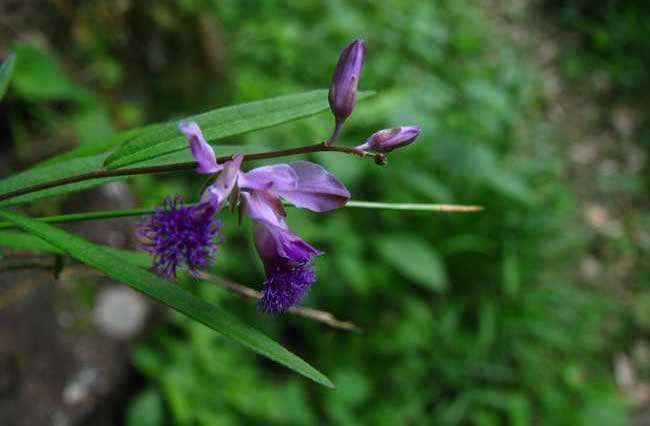
Polygala tenuifolia, also known as xiaocao, xiaojitui or xiaojicao, has the effects of resolving phlegm, calming the mind, and improving intelligence and memory. In traditional Chinese medicinal herb markets nationwide, Polygala tenuifolia has commanded high prices for many years. In recent years the price trend has been relatively stable, with general-grade goods at 24--30 yuan/kg, yet selected goods are still scarce on the market, large lots are few, and prices remain above 35--50 yuan/kg. Because wild varieties are protected, with digging and transport prohibited, and because wild Polygala tenuifolia is driven to extinction by a single harvest, the market is currently short of supply. Vigorously developing artificial cultivation provides unlimited room for growth for farmers growing medicinal herbs, and the market prospects look promising.
Polygala tenuifolia is a herbaceous medicinal plant that is highly cold-resistant and drought-resistant, with a very wide range of adaptation and low soil requirements. It can grow on barren hills, wasteland, forest belts, grasslands and plains, but grows poorly in low-lying waterlogged land. Polygala tenuifolia can be planted in three seasons of the year, and in arid regions planting after a thorough soaking rain is best; once the seedlings emerge, they will never die from drought again. Our trials show that dense planting of Polygala tenuifolia can significantly increase yield. Use 2--2.5 kg of seed per 667 sq m, adopt wide-row sowing with no need for thinning, which saves a lot of trouble; just pay attention to cultivating and weeding. In practice, Polygala tenuifolia can be harvested after 2 years of growth, and in the wild 3 years or perennial growth is also fine. The general yield is 200--250 kg/667 sq m, mixed-grade goods at 25--26 yuan/kg, first-grade goods at 45--55 yuan/kg, with returns of over 5000 yuan/667 sq m. The artificial cultivation techniques for Polygala tenuifolia are described below.
Botanical Characteristics of Polygala tenuifolia
Polygala tenuifolia seedlings are about 33 cm tall, with relatively long, cylindrical roots and a light brown outer bark. The stems grow in clusters, with the stem base essentially lignified. The leaves are alternate and linear. The raceme is one-sided, with small light blue flowers. The seeds are blackish brown; the flowering period is May--June and the fruiting period is June--July.
Growth Habits of Polygala tenuifolia
Polygala tenuifolia habitually grows in relatively dry fields, roadsides, hillsides, grassy areas and similar places. It prefers a cool climate, dislikes high temperatures, and tolerates drought. It is suitable for growing in fertile, moist, well-drained loam rich in humus, or sandy loam containing large amounts of humus. Moist or waterlogged land is not suitable for planting, as it causes the leaves to turn yellow and drop.
Cultivation Techniques for Polygala tenuifolia
1. Site Selection and Land Preparation
According to the growth habits of Polygala tenuifolia, choose loam or sandy loam with high, dry terrain and good drainage for planting; ordinary farmland can also be chosen. Since Polygala tenuifolia is a perennial plant, base fertilizer must be applied all at once when plowing. Apply 2500--3000 kg of fully decomposed barnyard manure per 667 sq m, deep-plow 25--30 cm, and apply 50 kg of superphosphate during plowing, then rake level and fine, and make flat beds.
2. Planting Techniques
Seed propagation, direct sowing. Generally, water the prepared plot thoroughly, and sow only after the water has completely seeped down. The sowing rate is 2 kg per 667 sq m. Before sowing, soak the seeds in water for 12 hours, remove them and mix with 3--5 times their volume of fine sand, open shallow furrows on the bed at a row spacing of 18--21 cm, evenly scatter the seeds into the furrows, and cover with soil. After sowing, press down lightly and water. About 15 days after spring sowing the seedlings emerge; after winter sowing the seedlings emerge the following spring.
3. Field Management
(1) Thinning and replanting. When the seedlings are 3--5 cm tall, thin them to a plant spacing of 3--6 cm, and replant promptly where seedlings are missing.
(2) Loosening soil and weeding. Polygala tenuifolia plants are short and grow slowly at the seedling stage, so attention should be paid to loosening the soil and weeding, pulling weeds as soon as they appear. Loosen the soil shallowly, using a rake to lightly and evenly loosen the ground surface, twice in succession, keeping the soil surface loose and moist and preventing weeds from smothering the plants.
(3) Watering and fertilizing. Polygala tenuifolia prefers dry conditions; apart from moderate watering needed during seed germination and the seedling stage, it generally does not need frequent watering in the later growth stage. Apply topdressing once each in winter and spring of each year and once during April--May, mainly phosphorus fertilizer, applying 20--25 kg of cake fertilizer or 20 kg of superphosphate per 667 sq m.
(4) Foliar topdressing. From mid-June to mid-July each year, spray 50--60 kg of 1% potassium sulfate or 80--100 kg of 0.3% potassium dihydrogen phosphate per 667 sq m, once every 10 days, for 2--3 consecutive sprays; spraying after 5 p.m. is best. Spraying potassium fertilizer can enhance the disease resistance of Polygala tenuifolia, promote root growth and swelling, and further increase root yield.
4. Pest and Disease Control
(1) Root rot. It occurs in the rainy season and damages the roots. Field management should be strengthened; diseased plants found should be pulled out and burned promptly, and in the early stage of the disease spray 1000-fold 50% carbendazim solution 2--3 times at intervals of 6--7 days.
(2) Leaf blight. It occurs easily in hot seasons and damages the leaves. The control method is to spray the foliage with 800--1000-fold mancozeb solution or 800-fold metalaxyl solution 1--2 times.
(3) Aphids. Spray with 1500-fold 40% omethoate solution, once every 6--7 days, for 2 consecutive sprays.
Harvesting and Processing of Polygala tenuifolia
1. Harvesting: The seeds should be harvested promptly when the fruits mature in July--August. The roots can be harvested in the second year; dig up the roots in autumn after the above-ground parts wither.
2. Processing: After digging up the roots, remove soil and impurities, and while the moisture has not yet dried, select the thick, uniform ones and rub them back and forth on a flat board until the bark and flesh separate from the woody core, pull out the woody core, and sun-dry to obtain "Polygala tube". Smaller roots are beaten with a wooden stick to soften them, the woody core removed, and sun-dried; because the bark does not form a tube shape, it is called “Polygala flesh”. Those too small to have the woody core pulled out are called “Polygala root”. The sun-dried Polygala tenuifolia is stored in a dry, ventilated place. Polygala tenuifolia with thick tubes, thick flesh, and completely removed woody core is considered the best quality.