Key Techniques and Methods for Cultivating Job's Tears (Coix lacryma-jobi)
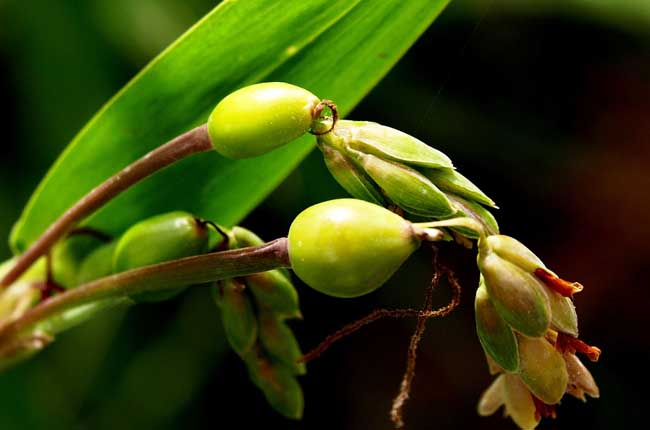
Job's tears (Coix lacryma-jobi) is an annual herbaceous plant of the grass family. The mature, dried seed kernel, originally called Coix seed, also known as job's tears or yi mi, was first recorded in the Divine Farmer's Materia Medica and listed as a superior-grade herb. In the past, it was mainly produced in Pucheng and Putian in Fujian, and was called Pumi ren. In recent years, it has also been planted on a large scale in Anguo and Fuping in Hebei and in Fuyang and Zhuanghe in Liaoning, where it is called Qimi ren and Guanmi ren respectively. It is now cultivated in every province across the country.
Job's tears contains fatty oil, coixenolide, sterols, amino acids, vitamin B1 and coix ester. It promotes diuresis and drains dampness, helps clear heat and discharge pus, treats muscular rheumatism, and also strengthens the spleen and stops diarrhea. It is sweet in taste and cold in nature, entering the spleen, stomach and lung meridians. It mainly treats edema, beriberi, poor appetite with diarrhea, damp impediment with muscle contracture, lung abscess and intestinal abscess; as an auxiliary medicine, it can be used for diuresis and anti-inflammation, removing dampness and relieving pain, and strengthening the spleen to stop diarrhea.
Growing Environment
Job's tears prefers a warm and humid climate. It can be cultivated on flat land or sloping land below 1200 m in elevation, and is especially suited to sunny sites that are easy to irrigate. During the heading and flowering stage, it is most vulnerable to drought; not only does it produce fewer seeds with more empty husks, but the grains are also not plump. The most suitable soil is fertile, moist, neutral or slightly acidic clay loam with good water retention. Dry, barren sandy soil or soil with poor water and fertilizer retention is unfavorable for growth. When grown in overly loose and fertile sandy loam, the stems and leaves grow luxuriantly, but the plants often lodge easily in summer and autumn, and the stems and leaves tend to grow excessively, resulting in fewer seeds. Continuous cropping is not advisable, nor is it suitable to use grass-family crops as the preceding crop. Cultivation in paddy fields can increase yield.
Cultivation Methods
1. Land Preparation
After the preceding crop is harvested, prepare the land promptly. First, plow deeply to a depth of about 30 cm, applying compost or mixed manure during deep plowing at about 2000 kg per mu. Before spring sowing, plow once more, harrow finely and level the soil, then make beds 1 to 3 m wide. When planting on hillsides, beds are generally not made, but drainage ditches and hillside retention weirs should be opened properly to prevent rainwater erosion during the rainy season.
2. Sowing
Seed treatment. Smut is the main disease of job's tears. To prevent damage, seeds must be treated before sowing. There are three commonly used methods: (1) Boiling water treatment: soak the seeds in clean water overnight, put them in a bamboo basket, drag the basket through boiling water while stirring quickly so that all seeds are scalded, with the immersion time at about 5 to 8 seconds, then immediately spread them out, dry off the moisture and sow. Do not treat too many seeds at one time, to avoid some seeds not being scalded; the scalding time must not exceed 10 seconds, lest the seeds be scalded to death and fail to germinate. (2) Quicklime treatment: soak the seeds in warm water at 60 to 65 °C for 10 to 15 minutes, remove them, wrap them in cloth, press them down with a heavy object into 5% quicklime water and soak for 24 to 48 hours, then take them out, rinse with clean water and sow. (3) Soak the seeds in Bordeaux mixture at 1:1:100 for 24 to 48 hours, then sow. To avoid missing plants caused by birds pecking after sowing, poison bait may be mixed with the seeds before sowing.
Sowing time. Mostly around the Spring Equinox (mid to late March); in higher-elevation areas, mostly during Qingming to Guyu (early to mid April). In places with summer drought, sow as early as possible; if too late, germination is fast and yields are severely reduced by the summer drought.
Sowing method. Dibbling is usually practiced, with a hole spacing of 30 cm and a hole depth of about 6 cm, sowing 6 to 8 seeds per hole, using 4 to 6 kg of seed per mu. After sowing, apply 300 to 400 kg per mu of wood ash mixed with human and livestock manure and urine into the holes, then cover with soil level with the ground.
Field Management
1. Thinning and stand establishment. Thin the seedlings when they have 3 to 4 true leaves, leaving 4 to 5 plants per hole. In large-scale production, if the seeding rate can be controlled and full emergence guaranteed, thinning may be unnecessary.
2. Cultivation and weeding. Usually carried out three times. The first is done together with thinning; the second when the seedlings are about 30 cm tall, with shallow hoeing, taking special care not to damage the roots; the third when the seedlings are 50 cm tall and before the plants close the beds, taking care not to break the stems, and hilling up soil at the right time to prevent lodging later.
3. Fertilization. In the early growth stage, to promote seedling growth, nitrogen fertilizer should be emphasized; in the later stage, to promote strong stems and booting, more phosphorus and potassium fertilizer should be applied. At the first cultivation and weeding, apply 1000 to 1500 kg per mu of human and livestock manure and urine, or 10 kg of ammonium sulfate; before the second cultivation and weeding, mix 100 kg of wood ash with human manure and urine, open holes 10 cm away from the plants and apply, then cover with soil during cultivation; at the third, before flowering, spray 1% to 3% superphosphate solution on the foliage, with the amount of superphosphate kept at 7.5 to 10 kg per mu.
4. Watering. If spring drought occurs after sowing job's tears, water and irrigate promptly to support germination. During the jointing, booting and flowering stages, if there is a long spell of clear weather without rain, irrigation should also be carried out to prevent insufficient soil moisture, poorly filled grains and empty husks. During the rainy season, also take care to drain excess water.
5. Artificial supplementary pollination. Job's tears is a wind-pollinated plant with few male flowers. Under windless conditions, if the female flowers are not all pollinated, blighted grains easily appear. Two people can pull a rope horizontally across the tops of the stems, shaking the plants so that pollen is transferred to the female flowers, once every 3 to 5 days until flowering ends.
6. Selection and breeding of superior seed. To prevent or delay variety mixing, degeneration and the spread of smut, selecting and breeding superior seed is the basis for ensuring high yield. Job's tears has two varieties, tall-stalked and short-stalked. The short-stalked type is 0.7 to 1.3 m tall, tillers more, has a shorter flowering period, sets seed more densely, matures earlier and yields higher, and is suitable for seed retention, especially in low-elevation areas often affected by summer drought, where early-maturing short-stalked varieties should be chosen for cultivation. Before harvest, select in the field individual plants that are short in plant type, vigorous in growth, have many and large heads, and are disease-free, harvest them separately, dry them in the sun, winnow them clean and store them as seed. It is also possible to select a certain area meeting the plant-selection standard and harvest it separately for seed. For large-scale planting areas, a dedicated seed field for propagating improved varieties should be established; according to the requirements for seed retention and selection of superior seed, sow the seed obtained by plant selection in the next year's seed field, and the seed harvested from the seed field is used for sowing in the next year's main field.
Pest and Disease Control
1. Diseases
(1) Smut. Also called smut fungus disease, it mainly damages the heads. The fungal spores attached to infected seeds reach the heads as the plant grows, causing newly set seeds to swell into spherical or oblate brown galls; after rupture, large amounts of black powder (the fungal spores) are released and continue to infect. When severe, the disease rate can reach over 90%, or even result in no harvest at all. Control methods: pay attention to seed selection and seed disinfection; persist in single-plant selection in the field for half a year, and where conditions permit, establish disease-free seed plots; since job's tears has a strong capacity to absorb nutrients and smut is severe, rotation should be practiced and continuous cropping avoided, with legumes, cotton, potato and similar crops being preferable as the preceding crop.
(2) Leaf blight. It damages the leaves, showing small pale yellow lesions, and the leaves turn yellow and wither. In the early stage of the disease, spray Bordeaux mixture at 1:1:100, or 65% wettable zineb at 500 times dilution.
2. Insect pests
The main insect pests are armyworms and corn borers. Armyworm larvae damage leaves, biting them into irregular notches, and also damage tender stems and tender heads; during major outbreaks, the leaves can be eaten bare. Control methods: spray 50% dichlorvos at 800 times dilution during the larval stage, and use sugar-vinegar poison bait to trap and kill adults; to eliminate armyworms fundamentally, dig the soil to destroy pupae. First- and second-instar corn borer larvae bore into the young whorl leaves and eat the leaf mesophyll or veins; at the heading stage, second- and third-instar larvae bore into the stems and cause damage, boring them into dead hearts or white heads, which break and droop in the wind. Control methods: burn corn and job's tears stalks in early spring to eliminate overwintering larvae; set up black light traps at night in May and August; when the whorl leaves unfold, pour 200 times dilution of borer-killing powder into the whorl; planting canna around the field can also trap and kill them.
Harvest and Processing
1. Harvest. The harvesting period varies with variety and region. Early-maturing varieties: from Minor Heat to before the Start of Autumn (July to early August); medium-maturing varieties: from End of Heat to White Dew (late August to mid September); late-maturing varieties: from Frost's Descent to before the Start of Winter (late October to mid November). In the south, generally around White Dew (early to mid September); in the north, generally around Cold Dew (early October). When 80% of the fruits are ripe, it is the suitable time to harvest; do not delay too long, to avoid seed shattering and yield reduction. When harvesting, choose a clear day to cut the whole plant or only the upper part of the stems, and thresh with a threshing machine or after drying in the sun.
2. Processing. After threshing, dry in the sun, winnow or air-blow away impurities, and use a rice milling machine to remove the outer husk and seed coat from the cleaned seeds; after screening or air-cleaning, it becomes the commercial medicinal material.
3. Quality identification. Job's tears is ovate or elliptical, slightly flat at the base and bluntly rounded at the apex. The surface is milky white and smooth. A small amount of light brown seed coat often remains; the base is sunken, with a dot-like hilum in the center, and there is a ventral groove on the side, light brown inside the groove. A longitudinal cut along the direction of the ventral groove shows a relatively large endosperm, white and farinaceous, with a narrow and long scutellum, light yellow, and a slender embryo located on one side of the ventral groove, with the radicle at the upper end and the plumule at the lower end. A cross-section of the seed kernel is kidney-shaped, hard in texture and sweet in taste. Those with large grains, white color, integrity, no broken grains and no powder or impurities are considered best.
4. Storage and preservation. Job's tears is prone to insect damage and mold during storage. It should be stored in a ventilated, cool and dry place, and dried in the sun at the right time and baked regularly.