Detailed Explanation of the Key Cultivation Techniques for Pseudostellaria heterophylla
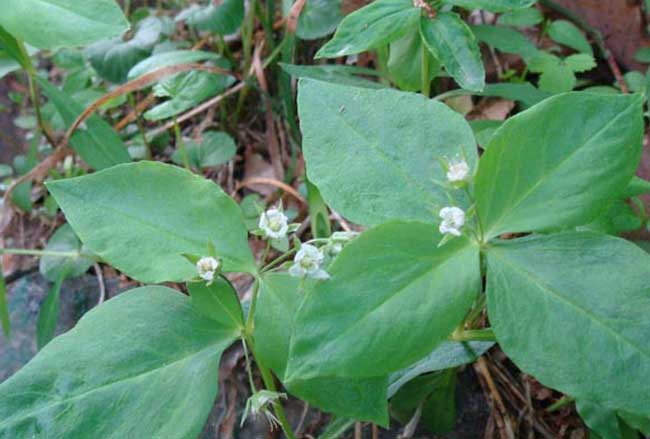
Pseudostellaria heterophylla is the dried tuberous root of the Caryophyllaceae plant Pseudostellaria heterophylla (also known as heterophyllous false stellaria), and it has the effects of tonifying qi and nourishing blood, promoting fluid production, and strengthening the spleen and stomach. It is suitable for weak conditions such as prolonged fever in children during summer that does not subside, poor appetite, lung deficiency, cough, and palpitations, as well as weakness and fatigue in children after illness, spontaneous sweating, night sweats, and thirst. It is distributed in Guizhou, Liaoning, Hebei, Shandong, Anhui, Jiangsu and other provinces. It is currently cultivated throughout the country. It is widely used in traditional Chinese medicine and has now been included by the Ministry of Health in the “List of Chinese Medicinal Materials That Can Be Used in Health Foods”. It can be said that Pseudostellaria heterophylla is a Chinese medicinal material that is both medicinal and edible. With the increasing demands people place on food in recent years, Chinese medicinal materials like Pseudostellaria heterophylla are bound to shine brightly.
Overview of Pseudostellaria heterophylla
1. Introduction to Pseudostellaria heterophylla
Pseudostellaria heterophylla is also known as Hai'er Shen, Tong Shen, Shuang Pi Qi, Si Ye Shen, and Mi Shen. It is mainly produced in Guizhou, Fujian, Jiangsu, Shandong, Anhui and other places. Among these, the Pseudostellaria heterophylla produced in Zherong County, Fujian is the most famous, and it is now cultivated throughout the country.
2. Origin of the Name
During the Spring and Autumn period, the son of the King of the State of Zheng was 5 years old, naturally intelligent, able to distinguish the loyal from the treacherous, and deeply loved by the king. However, this prince had a delicate constitution and fell ill from time to time, and the imperial physicians in the palace repeatedly treated him without effect. Later, the king posted a notice throughout the land seeking tonic medicines and offered a rich reward. For a time, people came in an endless stream to present treasures and recommend physicians, but all the medicines used were ginseng-type tonics, and none were effective. One day, a white-haired old man tore down the notice and presented a medicine, claiming that he was not doing it for the reward, but truly for the sake of the prince's noble health and the great affairs of the state. The king said to the old man: “Your sincerity is evident, but if the medicine is not effective, I fear you may be guilty of deceiving your superiors.” The old man laughed and said: “The prince's noble constitution is delicate and cannot tolerate strong tonics; it must be treated gradually and patiently. I have a medicine that will surely take effect after 100 days of use.” So the prince took as directed the slender, yellow-white grass root offered by the old man. Three months later, his body indeed became full and robust, and illness no longer touched him. Only then did the king believe what the old man had said. Overjoyed, he conferred the title of crown prince on his son, and urgently sought the old man to bestow rewards, but the old man was nowhere to be found. The king asked what the medicine the old man had presented was called, and everyone shook their heads, not knowing. A close minister advised: The medicine has the nature of ginseng-type medicines, and it saved the crown prince's life, so let it be called Tai Zi Shen (Crown Prince Ginseng). Thus the fine name “Tai Zi Shen” spread from that time on.
3. Morphological Characteristics
Pseudostellaria heterophylla is a perennial herb, 15-20 cm tall. Underground it has a fleshy, upright fusiform tuberous root, with sparse fibrous roots around it. The stem is single, unbranched, purple in the lower part, nearly square, green in the upper part, cylindrical, with obviously swollen nodes, smooth and hairless. Leaves are simple and opposite; the leaves at the lower part of the stem are the smallest, oblanceolate, with a pointed tip, gradually narrowing at the base into a petiole, entire, gradually enlarging upward; the leaves at the top of the stem are the largest, usually two pairs closely arranged in a whorl-like pattern of 4 leaves, long ovate or ovate-lanceolate, 4-9 cm long, 2-4.5 cm wide, with a gradually pointed tip, narrowed at the base into a petiole, with sparse hairs on the veins on the back of the leaf, and the margin slightly wavy. Flowers are dimorphic: the flowers near the ground are small and are cleistogamous flowers. The pedicel is purple with short pubescence, sepals 4, purple on the back, white and membranous at the margin, without petals; the flowers at the top of the stem are larger and open, with slender pedicels, 1-2 (-4) cm long, with short pubescence, upright at flowering and drooping after flowering, sepals 5, lanceolate, green, with long hairs on the back and margin; petals 5, white, with the tip shallowly toothed, 2-lobed or obtuse; stamens 10; ovary ovate, styles 3. The capsule is nearly spherical. It has a few seeds; the seeds are brown, flat-round or oblong-reniform, with wart-like protrusions. The flowering period is April, and the fruiting period is May-June.
4. Physiological Characteristics
Pseudostellaria heterophylla likes to grow in a warm and humid environment and fears high temperatures; growth and development stop above 30°C. It fears strong sunlight and scorching exposure, and is liable to wither and die under blazing sun, and it is relatively cold-tolerant. It can overwinter safely at -17°C. It can also germinate and take root under low-temperature conditions. It grows well under shady and moist conditions, prefers fertile, loose soil rich in humus, and grows well in sandy soil. It does not grow well in low-lying waterlogged land, clay loam, compact soil, poorly drained soil, soil with little humus, or barren soil.
5. Medicinal Properties
The dried tuberous root of Pseudostellaria heterophylla is slender and strip-shaped or long fusiform, about 2-6 cm long, about 3-6 mm in diameter, yellow-white on the surface, semi-transparent, with fine wrinkles and sunken fibrous root scars; the root head is bluntly rounded, often with residual stem scars on it, and the lower end gradually tapers like a rat tail. The texture is brittle and easy to break, and the cross-section is yellow-white and bright; the cross-section of the directly sun-dried product is white, farinaceous, with a slight odor and a slightly sweet taste. Those that are plump and glossy, yellow-white, and free of fibrous roots are considered best. The cortical parenchyma cells are in several layers, mostly tangentially elongated. The phloem is narrow; the phloem rays are wide. The cambium ring is obvious. The xylem occupies most of the root; the xylem rays are very broad; the vessels are single and scattered or in bundles of 2-3, arranged radially; the primary xylem is 3-4 protostelic. The parenchyma cells of this product are filled with starch grains, and some contain calcium oxalate cluster crystals, 12-60 μm in diameter, more easily observed in the xylem.
6. Industry Development Prospects
As a Chinese medicinal material used both as medicine and food, Pseudostellaria heterophylla can be used both in medicinal formulations and as an excellent food therapy ingredient. Well-known examples include stewed free-range chicken with Pseudostellaria heterophylla, stewed venison with Pseudostellaria heterophylla and white fungus, and Astragalus and red date soup with Pseudostellaria heterophylla, and so on. Pseudostellaria heterophylla has a mild medicinal nature, can strengthen the body, and improve immunity. It is especially suitable for children. At present, the relatively famous and large-scale Pseudostellaria heterophylla industry bases nationwide include Zherong Pseudostellaria heterophylla and Niudachang Town Pseudostellaria heterophylla. The national price of Pseudostellaria heterophylla is measured by the price of Zherong Pseudostellaria heterophylla. With the development of the Pseudostellaria heterophylla industry, deep processing of Pseudostellaria heterophylla, such as decoction pieces, extracts, and edible Pseudostellaria heterophylla, has also made considerable progress. As a traditional Chinese medicinal material, Pseudostellaria heterophylla was mainly circulated as a medicinal material in the past. At present, some Pseudostellaria heterophylla processing enterprises have set their sights on foreign markets, and it is believed that in the near future Pseudostellaria heterophylla will go abroad and make its due contribution to the modernization of traditional Chinese medicinal materials.
Cultivation Techniques
1. Variety Selection
Select varieties with strong adaptability, disease resistance, high quality, high yield, and good marketability for cultivation.
2. Propagation Methods
① Seed propagation. Because the seeds of Pseudostellaria heterophylla mature unevenly in the capsule, the capsule splits open and the seeds fall off naturally, making them difficult to harvest. Generally, after harvesting Pseudostellaria heterophylla, seedlings are raised on the spot: shallowly plow about 2 cm with a hoe, then apply human manure and urine, plant some autumn vegetables or medicinal materials such as Isatis indigotica, and after the autumn vegetables are harvested, apply human manure and urine once more; after 6-7 days, level the ground and cover it with rice straw or wheat straw. In April of the following year the seedlings emerge, and soon Isatis indigotica is also harvested for seed. Cut off the aboveground stems, remove the covering straw, carry out field management, and thin out excess seedlings. When the seedlings have 5 leaves, transplant them, choosing to do so in the evening or on cloudy days; place the stem nodes of the seedlings horizontally and bury them in the soil, leaving the top leaves exposed. Be careful to provide shade (cover with rice straw or set up a shade shed), and after new roots grow, remove the covering. In some places, the seeds are collected and stored in wet sand for autumn or spring sowing. In May-June, before the fruit is about to mature, cut it off together with the fruit stalk, place it in a ventilated and dry indoor area to dry in the shade, then thresh and select the seeds, and immediately store them in wet conditions, otherwise they will not germinate. The method is: mix 1 part seeds with 2-3 parts clean river sand evenly; the moisture of the sand should be such that it forms a ball when held in the hand and disperses when released. Then put the mixture together into a wooden box of suitable size, spread it flat, cover it with 2 cm of fine sand, do not put a lid on the box, and store it in a ventilated and cool indoor place until sowing in autumn or the following spring. Sowing and seedling raising: for spring sowing, from late February to mid-March; for autumn sowing, after the intense heat in September. On the prepared seedbed, open furrows transversely at a row spacing of 15-20 cm for drilling, with a furrow depth of 1 cm. Then mix the germinated seeds with plant ash and sow them evenly into the furrows, cover with fine soil about 1 cm thick, just enough that the seeds are not visible. Cover with rice straw or weeds, and water once thoroughly to preserve moisture and warmth. Broadcasting can also be used: make the bed into a high bed or flat bed 150 cm wide, loosen and level it, then mix 1 part germinated seeds with 10 parts fine soil and spread evenly over the bed surface, then level the bed surface with a toothed rake, and sprinkle fine fertile soil or plant ash on top to help preserve warmth and moisture, but it should not be too thick. After sowing, keep the bed moist at all times, and seedlings can emerge in about half a month. In dry weather, water to preserve soil moisture to promote seedling emergence. After emergence, remove the covering grass, strengthen seedbed management, and transplant when the seedlings have grown 2-3 pairs of true leaves.
② Tuberous root propagation. In large-scale production, division propagation is mostly used. For seed retention in the original field, select a plot where the plants grow vigorously and leave them in the ground; in April-May, interplant corn or beans between the rows. In the hot summer climate, the interplanted crops are precisely in their period of vigorous growth, providing shade for Pseudostellaria heterophylla and lowering the ground temperature so that Pseudostellaria heterophylla can pass the summer safely. When planting Hai'er Shen in autumn, dig up the tuberous roots for use as seed stock. Select tuberous roots with complete buds, plump and uniform bodies, no damage, and no pests or diseases as seed. Planting should not be too late, too deep, or too shallow, generally in October. Tuberous root cultivation method: at a row and plant spacing of 15 cm * 6 cm, plant obliquely or flat in the furrow. The planting depth should preferably be 6-9 cm. Pseudostellaria heterophylla has the characteristic of “roots forming at stem nodes”, and planting depth is related to yield: if too shallow, the tuberous roots concentrate and grow in the surface layer, and the roots are small and prone to branching; if too deep, although the tuberous roots are plump, the number of roots produced is small and the yield is low. Generally, planting 1 mother root can produce more than 10 daughter roots. The germination and growth of the seedlings depend on the mother root for nutrients; after the plant withers, the mother root has already rotted, and at this time the daughter roots grow scattered in the soil and enter summer dormancy.
3. Field Cultivation
① Plot selection. Dry land on a north-facing slope that is loose, fertile, and slightly sloping should be selected for planting, and virgin soil is especially best. To reduce sources of disease and lessen disease damage, crop rotation should be carried out once every 2-3 years. The previous crop should not be Solanaceae crops, tobacco, vegetables, and the like; plots that previously grew gramineous crops are still acceptable. Deeply plow the planting land 20 cm, make beds 0.8-1.4 m wide and 25 cm high, with the bed surface shaped like a turtle's back, and furrow width 30 cm.
② Land preparation. Clear the residual branches and leaves on the land, and cultivate carefully and meticulously so that the soil layer is loose. Fifteen days before planting, use 0.5 kg of 50% phoxim emulsifiable concentrate diluted to an 800-fold solution and spray it on the bed surface, then turn the surface soil into the soil layer to prevent underground pests. The plants of Pseudostellaria heterophylla are short, and the tuberous root is the economic target; to avoid damaging the roots or causing rot from contact between fertilizer and seed roots, intertillage and topdressing should not be done later. Applying sufficient base fertilizer and mastering the appropriate planting concentration are key measures for high yield, with heavy application of base fertilizer as the main approach. Open planting furrows 10 cm deep transversely on the bed surface, with a furrow spacing of 13-15 cm; per mu, use 1200 kg of plant ash, 40 kg of superphosphate, 10 kg of compound fertilizer, and 200 kg of human manure and urine, compost them, then spread them on the bottom of the furrow and cover with a thin layer of soil.
③ Timely planting. Select good cultivation seed stock and plant it at the right time, with reasonable close planting. Select seed roots that are plump, robust, with complete buds, no damage, and no disease, or use seed roots produced by seed sowing and propagation methods that carry no disease sources as production seed, so as to cultivate disease-free strong seedlings and lay the foundation for high yield. Plant around the time of Frost's Descent, with a seed rate of 20 kg/mu. Before planting, soak the seed with a 500-fold solution of 50% carbendazim for 30 minutes, drain it, rinse off the residual liquid with clean water, air-dry it, and wait to sow.
④ Field management. Twenty-five days after seedling emergence, weeds should be pulled and the surface soil lightly loosened. After the seedling stage, soil should not be loosened; pull weeds when the rows close, and stop soil moisture activities after the rows close, so as to promote the growth of the root body. During the growth stage, it is appropriate to keep it moist and prevent water accumulation on the bed surface; during the tuberous root enlargement period, water frequently to promote the growth and development of the tuberous roots. For plots with strong seedlings, fertile soil, and sufficient base fertilizer, topdressing should not be applied, to avoid excessive vegetative growth of branches and leaves. If the growth of the aboveground and underground parts is unbalanced, fibrous roots will increase and yield will decrease. However, for plots with insufficient base fertilizer, poor soil fertility, few branches at the seedling stage, and weak seedlings, around Qingming, apply 30-40 kg/mu of decomposed cake fertilizer mixed with soil into the bed, or use foliar topdressing such as “Yunda” and “brassinolide” to improve the light energy efficiency of the population, delay the withering of stems and leaves, prevent premature aging, and promote the proliferation and enlargement of tuberous roots. Scientifically applying balanced fertilizer is crucial to increasing yield.
Control of Diseases, Insect Pests, and Weeds
1. Disease Control
Common diseases of Pseudostellaria heterophylla include mosaic disease, leaf spot disease, root rot, and so on. Mosaic disease is a type of viral disease transmitted by piercing-sucking pests such as aphids. After onset, the leaves shrink and mottled mosaic symptoms appear. The main control method is to control the damage of aphids and use virus-free seedlings; physical measures such as yellow sticky boards to trap aphids and gray plastic film to avoid aphids can be used, and if there are too many aphids, low-toxicity and low-residue pesticides such as imidacloprid can also be used. Leaf spot disease damages the leaves, first attacking the lower leaves, then gradually spreading upward, producing necrotic spots on the leaves, and in severe cases the plant dies. Control methods: after harvest, thoroughly clean up dead branches and residues and burn them in a centralized manner. Strictly implement crop rotation; continuous cropping is not suitable. In the early stage of the disease, spray 1:1:100 Bordeaux mixture once every 10 days for 2-3 consecutive times; when the disease is severe, spray a 500-1000-fold solution of 50% carbendazim, or an 800-fold solution of 70% thiophanate-methyl, once every 7-10 days for 2-3 consecutive sprays. For root rot, in the early stage of the disease, the fibrous roots first turn brown and rot, then gradually spread to the main root. After the main root is affected, in severe cases the entire root rots. In the high-temperature and high-humidity weather of July-August, the disease is severe; in addition, when water accumulates in the field, root rot and death are serious. Control methods: after rain, drain the ditches in time. Before planting, soak the tuberous roots in a 200-fold solution of 25% carbendazim for 10 minutes, then air-dry and plant. During the disease period, irrigate diseased plants with an 800-1000-fold solution of 50% carbendazim, or a 1000-fold solution of 50% thiophanate-methyl.
2. Insect Pest Control
Insect pest control mainly targets underground pests such as white grubs, cutworms, mole crickets, and wireworms. The main signs of underground pest damage are gnawed holes in underground roots and stems, and the plants become thin and weak or even die. In mild cases yield is reduced; in severe cases there may even be no harvest at all. Control measures: the manure applied must be fully decomposed, and high-temperature composting is best. Use light trapping to kill adults. During the period when they occur in the field, irrigate with a 1000-fold solution of 90% trichlorfon, or a 1000-fold solution of 50% E605 emulsifiable concentrate, or a 700-fold solution of 75% phoxim emulsifiable concentrate; alternatively, use 5-6 ampoules of 40% fenvalerate emulsifiable concentrate in 2 ml ampoules, mix with 45 kg of water, and spray evenly on the seedling plants and the soil around their base. Poison bait trapping: mix 25-30 g of chlordane emulsifiable concentrate with 5 kg of fried fragrant wheat bran and an appropriate amount of water to make a poison bait, and scatter it in the field or on the bed surface in the evening to trap and kill pests.
4. Weed Control
Fifteen days before planting, a non-selective herbicide can be used to treat the field. After planting, manual weeding is mainly used to avoid damaging the seedlings.
Harvesting and Processing
When most plants have withered and fallen by early June to July, except for seed-retention plots, they should be dug up immediately; if harvesting is delayed, rotting is likely to occur when there is a lot of rain. When harvesting, first remove the stems and leaves, then dig out the tuberous roots, being careful not to bruise the root heads and keeping the root bodies intact. Wash the root bodies with clean water, rub off the fibrous roots, and spread them thinly on a drying yard or drying mat to dry directly in the sun. Alternatively, after transporting the roots back, spread them to air in a ventilated and dry indoor area for 1-2 days so that the roots lose water and soften, then wash them with clean water, put them into a pot of boiling water at 100°C, blanch for 2-3 minutes, take them out and immediately spread them on a drying yard or drying mat to expose to the sun, and dry them in the sun to obtain the commodity. Each hectare yields 750-2250 kg of dried goods; 1.5 kg of fresh goods is processed into 0.5 kg of dried goods.