Detailed Explanation of Polygonatum odoratum Cultivation Techniques and Planting Management Methods
Polygonatum odoratum is a perennial herbaceous plant of the Liliaceae family. The rhizome is horizontal, fleshy, yellow-white, and densely covered with numerous fibrous roots. The leaf surface is green, the underside gray. Flowers are axillary, usually in clusters of 1 to 3. It is native to the southwestern region of China, but its wild distribution is very wide. It is cold-tolerant and also shade-tolerant, prefers moist environments, and is suitable for growing in loose soil rich in humus. The rhizome of Polygonatum odoratum can be used medicinally, and its traditional Chinese medicine name is also Polygonatum odoratum. It is harvested in autumn, washed clean, sun-dried until soft, then repeatedly kneaded, air-dried and sun-dried until there is no hard core, then sun-dried; or steamed thoroughly, kneaded until semi-transparent, sun-dried, and cut into thick slices or segments for use.
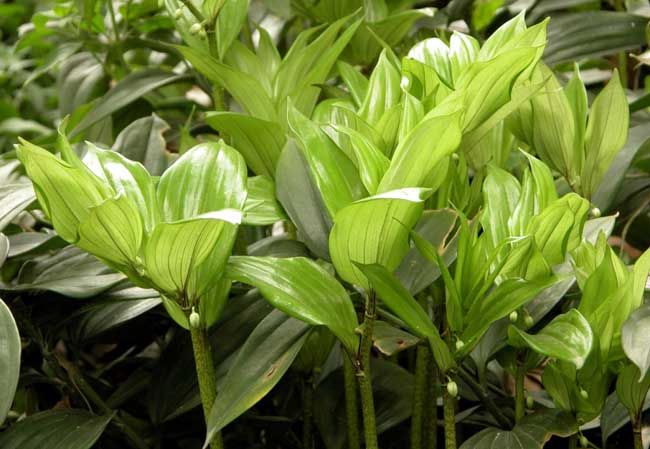
Growth Habits
Polygonatum odoratum seeds are of the epicotyl dormancy type. The after-ripening period of the embryo requires a temperature of around 25°C, and the epicotyl requires a low-temperature stage to break dormancy. After sowing, in the first summer only roots grow and no seedlings emerge; seedlings do not appear until April of the following year.
The rhizome of Polygonatum odoratum survives for 3 or 4 years; beyond this time it will rot. Polygonatum odoratum planted in autumn sprouts in March to April of the following year. From sprouting to emergence, growth is relatively slow and the stems are weak. From May to June, as temperatures gradually rise, stems and leaves grow rapidly and can form buds and bloom. In the high-temperature season of July, aboveground growth weakens while rhizome growth accelerates. In the second year after planting, the plants grow weakly and have poor adaptability to the environment, unable to withstand direct sunlight during the high-temperature season. In the third year, the plants grow taller, the stems increase somewhat, the rhizomes develop faster, and growth vigor is stronger. In the fourth year, the aboveground stems increase in number and grow very rapidly, the canopy density increases, and the rhizomes interlace underground.
Cultivation Techniques
1. Site Selection and Land Preparation
Polygonatum odoratum is cold-tolerant, tolerant of shade and moisture, and averse to direct strong light and wind. It prefers a shady, moist, and cool climate. The planting site should be chosen as a wind-sheltered, sunny place with good drainage, fertile and loose soil, and deep sandy loam. Cultivation is avoided in heavy clay, barren, low-lying, and easily waterlogged plots. Continuous cropping is avoided to prevent the occurrence of pests and diseases. The best preceding crop is a leguminous plant. After selecting the site, first apply organic fertilizer as a base fertilizer at 2500 kg to 3000 kg per mu, spread it evenly on the ground, deep-plow the soil 30 cm, and harrow finely to make beds. The beds are 1.0 to 1.30 m wide, with ditches 25 to 30 cm wide and 15 cm deep. Remove all weeds and let the hot sun expose the soil.
2. Planting Methods
Polygonatum odoratum is propagated by seeds and rhizomes, and propagation is very fast. Propagation by rhizomes is currently used in production because its heredity is more stable than that of seeds, it can ensure a high yield, and the growth cycle is short. At harvest time, select from plants with thick stems those plump rhizomes that are free of pests, black spots, pitting, and damage, yellow-white in color, with plump terminal buds, many fibrous roots, neat bud ends, and slightly concave inward, for use as seed stock. Thin, weak, small branches and old branches with pointed, outward-protruding bud ends cannot sprout and are not suitable for seed retention; otherwise, nutrition is insufficient, vitality is weak, the offspring are affected, quality is poor, and yield is low. The main stem is also not suitable for seed retention, because the main stem is large and long, the cost is too high, and removing the main stem would seriously affect quality, making it difficult to sell. It should be dug, selected, and planted promptly. When weather changes prevent timely planting, the root buds must be spread out in a wind-sheltered, cool indoor place. Generally, 200 to 300 kg of seed rhizomes are used per 667 sq m. Soak the selected seed rhizomes in a bucket containing a 500-fold dilution of 50% carbendazim; the liquid should submerge the seed rhizomes. After soaking for 30 minutes, remove and air-dry for later use. Planting is generally carried out from July to November. Use hole planting or furrow planting. Hole planting: plant 3 to 4 rows per bed, with a row spacing of 30 to 40 cm, a plant spacing of 30 to 40 cm, and a hole depth of 8 to 10 cm. In each hole, place 3 to 4 seed sets crossed so that the buds point in all directions and not in the same direction. Furrow planting: open furrows 6 to 15 cm deep on the bed surface at a row spacing of 15 to 30 cm. When planting, cut the Polygonatum odoratum rhizomes into small segments about 3 to 7 cm long, arrange them longitudinally at the bottom of the furrow at a plant spacing of 7 to 17 cm with the buds facing the same direction, and cover with pig manure or farmyard manure. The amount of rhizomes used is 250 to 300 kg per mu.
3. Field Management
No seedlings emerge in the year after planting. After emergence the following spring, weeds in the field should be removed promptly. When the soil is dry, pull them by hand; never use a hoe, to avoid damaging the rhizomes and causing rot. Weeding is not suitable after rain or when the soil is too wet. Thereafter, weed once each in May and July. In the third year, only hand-pulling of weeds is suitable. Apply sufficient base fertilizer; in combination with land preparation, apply 2000 to 3000 kg of decomposed farmyard manure per 667 sq m. After the seed sets are covered with soil, apply 200 kg of burnt mud ash or 30 to 35 kg of compound fertilizer per mu beside the holes. Fertilization is carried out before sprouting in spring to promote stem and leaf growth. When the seedlings are 7 to 10 cm tall, apply 800 to 1000 kg of dilute human waste or 10 kg of urea per 667 sq m. Fertilize when Polygonatum odoratum enters dormancy, applying decomposed pig manure and phosphate fertilizer, then cover with soil 5 to 7 cm thick. After Polygonatum odoratum has grown for 2 years, the rhizomes branch heavily and interlace, and are prone to being exposed on the soil surface and turning green, affecting the appearance and quality of the commodity and making them susceptible to freezing damage, so soil should be covered promptly. Polygonatum odoratum most dislikes waterlogging; before the rainy season arrives, clear the ditches to facilitate drainage. For earthing up, each winter in combination with fertilization, take soil from the bed ditches and earth up 3.0 to 4.5 cm. Polygonatum odoratum seed sets should be covered with rice straw, leaves, or thatch. In the early winter of each subsequent year, when the stems and leaves of Polygonatum odoratum wither, cover with green grass and then a layer of soil on top.
Pest and Disease Control
1. Diseases
① Leaf spot disease
Brown circular spots grow on the leaf surface, with purplish-red edges, often occurring in summer and autumn.
[Control method] Before onset or in the early stage of the disease, spray 1:1:120 Bordeaux mixture or a 800-fold dilution of 50% amobam, once every 10 days, for 2 to 3 consecutive times.
② Rust disease
Yellow circular spots grow on the leaf surface, with yellow ring-like small granules on the underside.
[Control method] Promptly pull out and burn diseased plants, and sprinkle quicklime in the holes for disinfection.
③ Root rot disease
When the disease occurs, the rhizomes rot, ultimately causing the plant to die.
[Control method] Do a good job of drainage, reduce soil moisture, and control the spread of the disease.
2. Insect pests
Mainly brown scarabs, black scarabs, red-legged green scarabs, etc., which mainly damage the roots. Control methods: apply fully decomposed organic fertilizer as base fertilizer or topdressing; make poisoned bait from rice or wheat bran and scatter it on the bed surface in the evening to trap and kill; when pest infestation is severe, pour a 1000-fold dilution of 90% trichlorfon at the roots.
Harvesting and Processing
1. Harvesting
Harvesting is generally carried out in the third year after planting. In the south, it is harvested in autumn; in the north, in spring, so as to connect with the planting time. After the aboveground parts wither and before the plants sprout in spring, harvest on a sunny day when the soil is relatively dry. When digging, first cut off the aboveground stems, dig up the rhizomes, shake off the soil, and prevent breakage. Rhizomes reserved for seed are piled separately.
2. Processing
The dug-out rhizomes are graded by length, shortness, thickness, and thinness, and dried separately. At night, after the Polygonatum odoratum has cooled thoroughly, add a cover. Never bag Polygonatum odoratum that has not cooled thoroughly, to avoid heating and deterioration. Generally, after 2 to 3 days of sun-drying, the rhizomes of Polygonatum odoratum become very soft and not easily broken. Then remove the fibrous roots and sand and mud, and knead the rhizomes on a stone slab or wooden board. When kneading, start slowly and then speed up, from light to heavy, until the coarse skin is completely removed, the rhizomes of Polygonatum odoratum have no hard core, are golden-yellow and semi-transparent, and when pressed by hand, sugar juice seeps out; then sun-dry. In the Northeast region, the processing method for wild Polygonatum odoratum is to knead first and then sun-dry, repeated 3 to 4 times until dry. Some people also use a combined steaming and kneading processing method, that is, first sun-dry fresh Polygonatum odoratum until soft, then steam for 10 minutes, use high temperature to promote sweating so that sugar juice seeps out, then pack it well in an airtight plastic bag, and after about 30 minutes, knead by hand or tread on the whole package with feet until the Polygonatum odoratum is yellow and semi-transparent, then take it out and spread it in the sun. During processing, prevent excessive kneading, otherwise the color will darken or even turn black, affecting commodity quality.