How to Grow Gastrodia elata for High Yield? Detailed Guide to Cultivation Techniques
Gastrodia elata is a perennial herbaceous plant distributed across most regions of the country. Its dried tuber is also called Tianma (Gastrodia elata), and it is a commonly used and rather precious traditional Chinese medicine, clinically used mostly for headache and dizziness, limb numbness, infantile convulsions, epilepsy, spasms, tetanus and other conditions. Gastrodia elata once relied entirely on wild resources; after the successful transition from wild to cultivated in the 1970s, cultivated Gastrodia elata became the main commercial source.
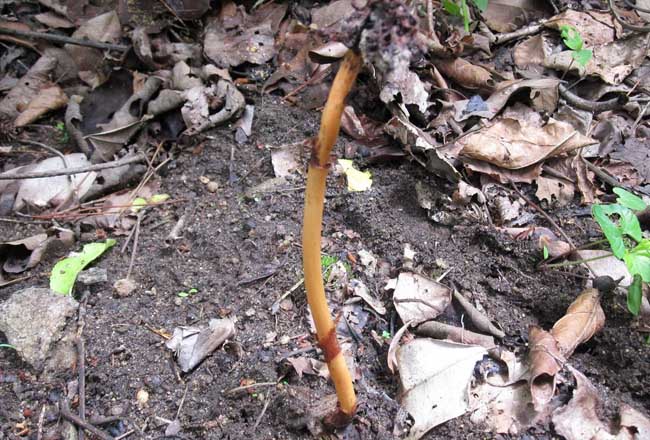
Climatic Conditions
1. Fungi: Sexual reproduction of Gastrodia elata must involve symbiosis with germination fungi and Armillaria fungi, that is, the embryonic growth (early growth) of Gastrodia elata depends on germination fungi, and once the embryo is formed it must enter symbiosis with Armillaria. Therefore, when planting Gastrodia elata, the first step is to select high-quality germination fungi and Armillaria.
2. Temperature: Gastrodia elata prefers a cool environment; the most suitable growth temperature is 10—25°C. It begins to sprout and grow at 8°C and stops growing at 30°C. When the temperature exceeds 30°C, the growth of both Armillaria and Gastrodia elata is inhibited.
3. Humidity: Gastrodia elata prefers moisture and grows well in loose sandy soil; generally, when the water content of humus soil reaches 50%-60%, Gastrodia elata grows well. Excessive soil moisture can cause tuber rot.
4. Light: From planting to harvest, sunlight has little effect on Gastrodia elata, and it is suitable for indoor cultivation. When cultivating Gastrodia elata seeds outdoors, after the arrow tuber emerges from the soil, direct solar radiation will scorch the stem, so a shade shed must be built to block light and wind.
5. Wind: Oxygen is extremely important for the growth and reproduction of Gastrodia elata and Armillaria. Indoor and basement cultivation must have ventilation openings to ensure air circulation, and the soil for planting Gastrodia elata must be loose to facilitate aeration and drainage.
6. Soil quality: Different soil textures greatly affect the growth of Gastrodia elata. Gastrodia elata and Armillaria are suitable for growing in relatively loose sandy soil. Heavy clay soil drains poorly and easily accumulates water, affecting air permeability and leading to tuber death. Soil with too much sand has poor water retention and easily causes soil water shortage, which likewise affects the growth of tubers and Armillaria. The soil pH should be 5.5—6.0, and cultivation in slightly acidic soil is preferable.
High-Yield Conditions
1. Site Selection
Places with poor direct solar radiation are the best sites for planting Gastrodia elata. Cultivation can be carried out in three different environments: indoors, outdoors, and basements, where suitable growing conditions can be created artificially. For sexually propagated seed tubers, the tubers produced in one pit can be divided and planted in 10—15 pits; planting on mountain slopes saves labor and materials. In high-cold areas above 1000 m elevation, sunny slopes should be chosen for planting. Above 500 m elevation, semi-shady semi-sunny slopes should be chosen. Below 500 m, shady slopes are best.
2. Best Sowing Time
The principle for choosing the sowing period mainly considers temperature; it should be selected at the stage when Gastrodia elata seeds have entered dormancy while Armillaria can continue to sprout and grow: in the Shangnan area, that is when the daily average temperature has dropped below 10°C and above 5°C, which is the best sowing period. The best sowing period for sexual reproduction of Gastrodia elata: in low mountain areas (below 800 m elevation) it is March—April; in high-cold mountain areas (above 800 m elevation) it is April—May. The best sowing period for asexual reproduction: in low mountain areas it is November, and in high-cold mountain areas it is March; after the end of March, areas below 1500 m elevation cannot be planted.
3. Sexual Reproduction
The yield-increasing technique for sexual reproduction of Gastrodia elata is to achieve the yield-increasing effect of the “four highs” through the “four news” planting management.
The “four news”: first, new fungal spawn, because old fungal wood transmits fungi slowly, the mycelium ages, and miscellaneous fungi contaminate; second, new fungal wood, to avoid insufficient nutrition; third, new seed tubers, to avoid reduced yield due to seed degeneration; fourth, new planting methods, namely new site, clean sandy soil, small pits, short rods, and fine materials.
The “four highs”: first, high germination rate; when sexually reproduced Gastrodia elata seeds are sown with high-quality germination fungi, the germination rate is more than one hundred times higher than that of traditional planting; second, high survival rate; when planted with germination fungi and Armillaria, the survival rate is 80% higher than that of traditional methods; third, high management skill level; the new planting method makes management convenient; fourth, high yield; with sexually reproduced seed tubers, at 60—70 cm per nest and 250 g sown per nest, the yield can reach about 15 kg, more than 20 times higher than that of traditional planting methods.
4. Regulating Climate
The key issue in increasing the yield of Gastrodia elata cultivation is artificially controlling and regulating the climate to achieve high yield. Artificial moisture retention, temperature control, avoiding direct solar radiation, preventing rain exposure, and creating ventilation and drainage conditions are the key techniques for high yield. In summer, a shade shed must be built; especially in low-elevation, heat-prone areas, the shade shed should be built before sowing, keeping the temperature at 8—30°C and soil moisture at 50%—60%. Within 40 days after sowing, rain protection measures must be taken to ensure seed germination. In winter, temperature should be raised and moisture retained to extend the growth period and increase yield. Cross-breeding or cross-pollination should be used to cultivate seeds, and 50% phoxim should be used to prevent insects, ensuring survival and vigorous growth.
Cultivation Techniques
1. Material Preparation
For each pit of sexually reproduced Gastrodia elata, the following are needed: 100 g of Armillaria spawn, 1 packet of germination fungi (400—500 g), 8—10 mature capsules of artificially pollinated Gastrodia elata, 10 broadleaf miscellaneous wood rods (oak, i.e., Mongolian oak rods, are best) 3—6 cm long and 50 cm thick, 1 kg of dry oak (Mongolian oak) leaves, 1 kg of fine branches 3—6 cm long, and about 100 kg of clean sand.
2. Breeding
Each October when digging Gastrodia elata, select large arrow tubers with plump apical buds, no insect damage, and no disease spots, over 150 g, and after selection bury them in sand to pass the winter dormancy period. Alternatively, around Xiaoman (Grain Full), wild arrow tubers with moss can be dug out on the mountain. To cultivate seeds, one must go through soil mounding and tuber cultivation, bolting, flowering and pollination, and topping and fruit picking. The main step is pollination; cross-breeding or cross-pollination is best. Gastrodia elata flowers open sequentially from bottom to top, so pollinate each flower as it opens. After pollination, the capsule matures in 17—19 days; a mature capsule has 6 raised black lines on its surface, feels slightly soft to the touch, and looks transparent to the eye, at which point it can be harvested; harvest each fruit as it matures. Gastrodia elata seeds have a short lifespan and should be sown the same day they are picked. If sowing cannot be done in time under special circumstances, air-dry the fruit for 2—3 hours, wrap it well in a kraft paper bag, and store it at a constant temperature of 4°C in a refrigerator. In addition, the seeds can be mixed into germination fungi for storage, but they must be sown within no more than 5 days.
3. Sowing
Pit construction: the pit size is 60x70 cm, on flat ground; bricks are best as material, though others can also be used, but ventilation, moisture retention, and drainage are essential. When opening pits on mountain slopes, pay attention to water retention and drainage. For slopes of 5—10 degrees, it is best to open pits along the slope; for slopes above 15 degrees, it is best to open pits horizontally, but be sure to make exhaust holes. Mixing fungal spawn with seeds: slowly tear the germination fungus leaves apart by hand, take 8—10 mature Gastrodia elata capsules, split them open in 3 batches, press them close to the leaves, and evenly mix the seeds into the fungus leaves (preferably with 2 people working, one tearing fungus leaves and one sowing seeds); stir no fewer than 3 times. Treatment of raw materials: soak the prepared dry leaves in clean water the day before; cut fish-scale notches into fresh wood rods, with the depth reaching the xylem; soak 1 kg of finger-thick branches 2 cm long in 0.2% ammonium nitrate water for 10 minutes before planting. Pit planting: first spread a 5 cm layer of sand, evenly place 250 g of soaked wet leaves on the sand, evenly sprinkle 1/2 of the seed-mixed germination fungi on the leaves, then place 5 new rods with 8 cm spacing and 8 cm left at both ends, then place 1/2 of the Armillaria (at the fish-scale notches), then place the soaked fine branches, then fill with sand, preferably enough to cover the fungal rods; the second layer is planted in the same way as above. After planting, seal the top with 5—6 cm of sand. When planting on mountain slopes, after planting, cover the top with soil and firm it to prevent the top of the pit from sinking and accumulating water after planting; after planting, cover the top with woven bags, or first cultivate fungal wood (beds) and then plant with germination fungi and seeds.
4. Harvesting and Processing
The best harvest period for Gastrodia elata is from November of the current year to March of the following year; if Gastrodia elata is dug after April when it emerges from the soil, its quality will decline. Harvested arrow tubers are not suitable for long storage and should be processed promptly. Boiling: put 100 g of alum into 5 kg of water, and once the water boils and the alum dissolves, add the Gastrodia elata. Boil by grade: boil those over 150 g for 15 minutes; those over 80 g for 7—10 minutes; those below 80 g for 5—8 minutes; they must not be overcooked, otherwise the drying ratio and medicinal efficacy will be affected. After boiling, fumigate the Gastrodia elata with sulfur for 20—30 minutes, then air-dry or oven-dry; after fumigation the color is clean white and the quality is good, and insects can be prevented.
5. Growth Cycle of Gastrodia elata
Under artificial cultivation conditions, Gastrodia elata takes about 3 years to complete one growth cycle. Its growth process is basically as follows: sow arrow tubers from November to February of the following year; Gastrodia elata seeds mature in late June and should be sown within one week. Please note that in production, Gastrodia elata seeds and seed tubers are two different concepts: the former refers to the extremely tiny seeds in the capsule formed after pollination of the spike-like inflorescence that grows after the arrow tuber produces an aboveground stem; the latter refers to small Gastrodia elata, namely Mi Ma or Ma Mi. After sowing, Gastrodia elata seeds germinate in about 15 days and can grow into seed tubers by November of that year. After about 8--12 months of enlargement and growth, the seed tubers become arrow tubers in October-November of the following year. In the spring and summer of the third year, the arrow tubers bolt and flower, and after pollination form seeds again, thus completing one growth cycle. However, in actual production, most Gastrodia elata growers (or medicinal herb growers) simply buy seed tubers for sowing, and the result is a one-year growth cycle. Strictly speaking, expressing it this way is incorrect, but as a customary saying in actual production, it is acceptable. However, the recently circulated saying of “100 days per growth cycle” is not credible, and producers should judge it according to the biological characteristics of Gastrodia elata.
Disease Prevention and Control
There are two common diseases in Gastrodia elata cultivation: mold and rot.
1. Mold
Mold is greatly harmful to Armillaria and Gastrodia elata; when Gastrodia elata is continuously cropped and water and air permeability are poor, purple-brown disease spots appear on the tubers.
Prevention and Control Measures
① The cultivation site should be sandy loam with good water and air permeability; do not choose old cropland, clay soil, or waterlogged low-lying land;
② When cultivating fungal wood or planting Gastrodia elata, if fungal wood infected by miscellaneous fungi is found, remove it and do not use it, keeping the fungal wood pure;
③ When planting Gastrodia elata and cultivating Armillaria spawn, fill the gaps between fungal wood with sand and soil (where it cannot be fully filled, leaving gaps will accumulate water when it rains and easily breed miscellaneous fungi);
④ When planting, increase the amount of fungal spawn (fungal wood) to promote vigorous growth of Armillaria, thereby inhibiting the growth of miscellaneous fungi.
2. Rot
Seed tubers suffering insect damage, mechanical injury, or adverse high-temperature and high-humidity environments are easily infected by miscellaneous fungi and cause rot.
Prevention and Control Measures
① Select complete, unbroken, brightly colored white-headed tubers or water tubers as seed sources, and do not bruise them or expose them to the sun during digging and transport;
② Pay attention to regulating temperature and humidity, and provide the best conditions for Armillaria growth to inhibit the growth of miscellaneous fungi;
③ The culture material for planting Gastrodia elata should preferably be piled, disinfected, and sun-dried to kill internal insects, pupae, and fungi and reduce harm.
Planting Precautions
Armillaria production can be carried out year-round. Generally, 90 days before sowing Gastrodia elata, purchase high-quality Armillaria test-tube mother spawn, and after expansion, transplantation, and cultivation, grow it into Armillaria fungal wood. The process flow is: mother spawn (grade 1 spawn) → stock spawn (grade 2 spawn) → stock spawn (grade 3 spawn) → Armillaria fungal wood (nutrient substrate for Gastrodia elata growth). Then introduce Gastrodia elata seed tubers and plant them together. Alternatively, 40 days in advance, purchase high-quality Armillaria cultivation spawn and directly cultivate fungal wood, because Armillaria cultivation can be carried out fully in the open with no technical difficulty. For cultivating Gastrodia elata, ensure the “three passes”; Gastrodia elata is a precious health-care and tonic traditional Chinese medicine with a large market capacity and high price, and many farmer friends want to engage in Gastrodia elata production. But Gastrodia elata production has strict technical requirements, and the most important thing is to ensure the following “three passes”:
1. Temperature
The level of temperature directly affects the growth, yield, and quality of Gastrodia elata. The best growth temperature for Gastrodia elata is 15-25°C; when it exceeds 30°C, the growth of Armillaria and Gastrodia elata will be severely inhibited; and when the temperature is below 15°C, the tuber growth rate of Gastrodia elata slows and stops; below 5°C, the tubers of Gastrodia elata will suffer cold damage and rot. Therefore, temperature control is the key to successful Gastrodia elata cultivation.
2. Humidity
Planting Gastrodia elata requires an average relative humidity of about 80%. During the peak growth season, humidity below 60% is unfavorable to Gastrodia elata growth, while above 80% easily causes tuber rot. Therefore, special attention must be paid to this.
3. Light
Artificially cultivated Gastrodia elata is mostly grown indoors, in air-raid shelters, basements, and greenhouses. From planting to harvest, Gastrodia elata should avoid direct sunlight; when sunlight shines, a shed should be built to lower the temperature so as to ensure normal growth of the tubers. It can thus be seen that before artificially cultivating Gastrodia elata, one must analyze whether local conditions are suitable for its growth, and must not introduce it blindly. Only by adapting to local conditions, planting scientifically, mastering the growth habits of Gastrodia elata, and strengthening management can success be achieved.
Analysis of the Reasons for the Low Success Rate of Gastrodia elata Cultivation
1. Blind Introduction
Planting Gastrodia elata requires quite strict technical procedures and environmental conditions. Many introducers blindly introduce it in large quantities regardless of their latitude and altitude, natural environmental conditions, or whether they have mastered the full set of techniques, which is one of the causes of large-scale failure.
2. Improper Sowing Season
Gastrodia elata prefers a cool natural environment, and the suitable breeding time is March-April. However, because most propagation equipment is currently crude and lacks heating and bolting-forcing facilities, the tiny Gastrodia elata seeds simply cannot be promptly filled with germination fungi and germinate, and cannot form protocorms.
3. Not Being Strict in Selecting Armillaria Spawn
Gastrodia elata is a special product formed in combination with Armillaria; without excellent and vigorous Armillaria, planting Gastrodia elata is just empty talk. There are many varieties of Armillaria, including Armillaria, yellow-green Armillaria, false Armillaria, thin-line fungus, thick-filament Armillaria, and flat broad-band Armillaria, etc. Most introducers do not understand fungal spawn sufficiently, find it hard to distinguish dead from live fungi, and are even less able to determine whether the variety is true or false, superior or inferior; regardless of the vitality and life or death of the spawn, they only apply more in an effort to increase yield, and as a result, at harvest the following year not a single tuber is seen and the loss is heavy.
4. Rushing for Success and Trying to Do It in One Step
Throughout its life, Gastrodia elata must rely on Armillaria to supply nutrition in order to grow and develop. Seed tubers and Armillaria must combine promptly to produce a virtuous cycle, which is the key to success with Gastrodia elata. Although Armillaria is not the food of Gastrodia elata, it is a crack troop that transports provisions for Gastrodia elata. Most introducers neglect the key link of first cultivating fungal wood and then planting Gastrodia elata, and the formation of large Gastrodia elata clumps; eager for quick results and success in one step, they use a one-time planting method of seed tubers, Armillaria spawn, and new wood, resulting in seeds germinating and forming protocorms, while Armillaria, due to the short time, cannot yet connect to the new wood, so the protocorms starve to death because they cannot get timely nutrient supply, causing the phenomenon at digging time of only Armillaria rhizomorphs wrapped all over the rods and no empty pits with Gastrodia elata growing.
5. Inaccurate Control of Dryness and Moisture at Sowing
Gastrodia elata seeds are very tiny, with extremely weak vitality and a very short lifespan, and they have very strict requirements for the dryness and moisture of sand and leaves at sowing; either too dry or too wet can kill the seed tubers within a short time. Many growers do not pay enough attention to this point, fail to control dryness and moisture well, and cause failure.