Detailed Explanation of Key Technical Points for High-Yield Cultivation and Management of Coptis chinensis
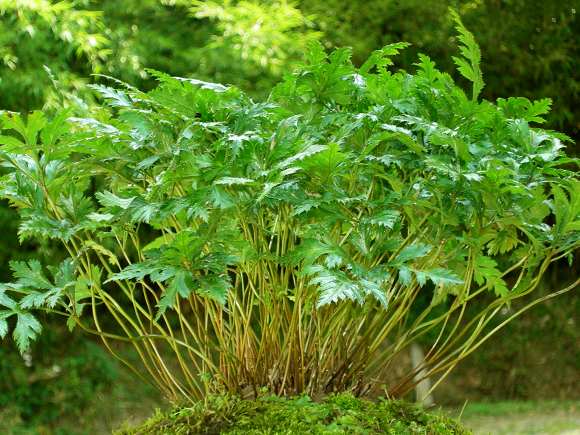
Coptis chinensis, also known as Wanglian, Xuanlian, Chuanlian, Jizhualian, etc., is a plant of the Ranunculaceae family. The main cultivated species are Coptis chinensis (Weilian) and Coptis deltoidea (Yalian), with the rhizome used as medicine. It has the effects of clearing heat and drying dampness, purging fire and detoxifying, cooling blood and improving eyesight, removing damp-heat and stopping diarrhea and dysentery, and treating heart fire and liver heat, dizziness, red eyes, irritability, and heat toxins. It is mainly produced in Sichuan, Hubei, Shaanxi, Yunnan, Hunan, Guizhou, Fujian, Jiangxi, Anhui, Guangxi and other provinces and regions, where it grows wild or is cultivated in small quantities.
Plant Characteristics
Perennial herb. The underground rhizome is mostly branched, with a rough surface, yellow-brown in color, and many fine, slender fibrous roots. Leaves are clustered, with long petioles, 3 to 5 leaflets, with edges deeply cleft into pinnate forms, serrated, light green and glossy. Flower stems emerge in late spring, reaching 100 cm in height, with terminal paniculate cymes, small flowers, yellow-green in color. Follicles split open when mature, seeds are small, yellow-brown. Coptis chinensis prefers cool, moist conditions and avoids high temperatures and dryness.
Growth Characteristics
Coptis chinensis prefers to grow in high mountain shady, moist and cool areas, with 30%-40% light transmittance, and avoids strong light, high temperatures, dryness, and waterlogged areas. It requires deep fertile soil, good drainage, and soil moisture of about 50%-60%. The seeds have a post-embryonic ripening stage and can only germinate after low-temperature treatment. Especially at the seedling stage, light tolerance is poor; the larger the seedling, the stronger its light resistance becomes.
Planting Techniques
1. Land Preparation and Shading
In the past, frame shading was always used, which caused severe damage to forests. Now, understory planting, intercropping with corn, or simple sheds are used, maintaining light transmittance at about 40%, with good drainage and soil moisture of about 50%-60%. It is afraid of waterlogging and direct light. Choosing semi-shady, semi-sunny slopes of 15-25 degrees is best.
Land preparation: First, remove debris and stones from the ground surface and pile them outside the shed, burn them into black soil, then dig and turn twice, break up the soil and rake it level. Then, following the slope direction, form raised beds (boxes) 130-150 cm wide and 10 cm high, with furrow width of 16-26 cm, and the bed surface in a tile-back shape, and dig drainage ditches around the shed. After the beds are prepared, apply 60,000-75,000 kg of decomposed cow and horse manure per hectare; crush it and spread it evenly on the bed surface, then shallow-dig to mix with the topsoil, and then cover with about 6 cm of smoked soil.
Shading: Frame sheds and simple sheds are mostly used. Frame sheds are made by cutting bamboo clumps and trees, all used as shading materials, 216 cm long, with pile spacing of 200-230 cm, row spacing of 160 cm, pile burial depth of 30-50 cm, pile height all 160 cm, then placing purlins and crossbars on top, covering with shading material above, with uniform shade density of about 60%-70%.
Simple shed: Use wooden forks 3-5 cm thick as supports, shed height 80-100 cm, built while planting; after planting one bed, build one shed.
2. Propagation Methods
Two methods are used: seed seedling propagation and cutting propagation.
(1) Seed Propagation Method
Seed collection: Around the Beginning of Summer, collect seeds from healthy plants that have been transplanted for more than 3 years. When the seeds turn yellow-green, they should be harvested. On sunny days, pick the fruit branches and pile them indoors for 1-2 days, then thresh. Avoid sun exposure, keep moist, and treat at low temperature to complete post-embryonic ripening. In production, a hotbed or uniformly mixed humus is used, buried in a pit at a thickness of 3 cm, then covered with 3-6 cm of sand or humus soil, and then covered with branches to retain moisture, checking frequently.
① Fine seedling raising: Choose a semi-shady, semi-sunny, moist and fertile mixed forest or secondary wasteland, cut weeds and unnecessary branches and burn them into charcoal as fertilizer, build a shade shed about 80 cm high and fence the edges, and deep-plow the land about 23 cm, make raised beds 130 cm wide with furrow width of 30 cm, the bed surface level and arched, free of gravel and tree roots, with fine soil. Apply 15,000-22,500 kg of decomposed cow and horse manure per hectare, and cover the bed surface with 1.5 cm of smoked soil. Around November, take the stored seeds, mix well with 20-30 times humus soil, evenly broadcast on the bed surface (about 37.5 kg of seed per hectare), then spread cow dung powder or plant ash 0.6 cm thick. In the second spring, when seedlings grow 3 leaves, combine with weeding and topdress with clear manure water or urea. Chemical fertilizer should be applied in multiple small amounts; ammonium sulfate at 75-112.5 kg per hectare, preferably broadcast on sunny days when there is no dew on the leaves, then gently sweep with a small bamboo branch to make the fertilizer fall off, preventing seedling burn. In June, apply humus soil to cultivate and protect the seedlings. In November, apply 11,250 kg of fine cow dung or horse dung mixed with plant ash per hectare to help seedlings overwinter.
② Forest green seedling raising: Choose forest with shade density above 80% and tree height below 300 cm. After land preparation, sow about 75 kg of seeds per hectare. The sowing method is basically the same as fine seedling raising. Before emergence in mid-to-late February, clean fallen leaves once. After emergence and before transplanting, carry out 2-3 rounds of weeding and fertilization. This method saves labor.
Transplanting: Transplant in the second spring after emergence, with row and plant spacing of 10 cm x 10 cm and depth of 3-5 cm. In addition, Coptis chinensis can also be planted under forest, using about 70% shade as a natural canopy, with the same method as above. It can also be intercropped with early-maturing tall-stalk crops such as corn. First sow corn, open holes at plant spacing of 30 cm, insert on both sides of the bed, 3-4 seeds per hole, keep one seedling after thinning. In July, when the corn canopy closes, plant Coptis chinensis seedlings in the bed between corn rows at row and plant spacing of 10 cm x 10 cm. After the corn is harvested, build 100 cm high frames on both sides of the bed and place the corn stalks evenly on the frames for shade. Re-sow corn every year. In the second year, plant spacing is 40 cm, third year 50 cm, fourth year 60 cm, fifth year 60-100 cm.
(2) Cutting Propagation
This method can be used in areas lacking seeds or seedlings. That is, after 5 years of Coptis chinensis cultivation, harvest early in August-September. After harvest, remove the Coptis chinensis plant from 0.1-0.13 cm below the top of the rhizome together with stems and leaves (cut off) to use as cuttings, planting immediately after cutting. When planting, all petioles should be buried in the soil, leaving only the leaves outside, and pressed firmly. The land preparation, bed making, and fertilization for this method are the same as above, and it also requires 5 years to harvest.
Field Management
The key to achieving high yield and high quality of Coptis chinensis lies in field management. Attention should be paid to topdressing and weeding. Within 3-5 days after planting, replant any missing seedlings immediately, and apply fertilizer, clear manure water or pig manure water to help seedling growth. One month after rooting, apply 7.5-10 kg of ammonium sulfate. In October-November, apply 30,000-37,500 kg of decomposed cow and horse manure per hectare. In the early stage, nitrogen fertilizer is dominant; in the later stage, spread a thin layer of smoked soil. Thereafter, apply fertilizer and earth up once each in spring and autumn every year. In spring, apply 112.5-150 kg of ammonium sulfate per hectare or 15,000-22,500 kg of human manure or humus. For winter fertilizer, apply 37,500-60,000 kg per hectare of decomposed cow and horse manure or cake fertilizer, superphosphate, lime, etc. After applying winter fertilizer, smoked soil should be added. After 3-4 years, apply less or no nitrogen fertilizer. Focus on phosphorus and potassium fertilizers, and note that no topdressing should be applied before harvest. Weeding is very important for Coptis chinensis from small seedlings to harvest; remove weeds as soon as they appear. In the seedling stage, pull them by hand to achieve complete weeding. Remove small weeds and remove them thoroughly. While weeding, pay attention to earthing up, thin at first and thicker year by year. In the second year, 1.5 cm thick; in the third and fourth years, 1.5-3 cm thick. During management, attention should be paid to adjusting shade density. Within 3 years, shade should be checked frequently; if any shade is missing, cover it quickly. Shade decreases year by year. If it is a frame shed, in the harvest year after seed collection, remove the shading material and let Coptis chinensis grow in sunlight, so that nutrients are transferred to the rhizome and the roots become firm. If Coptis chinensis is grown for cutting propagation material, the shed can only be removed at harvest. If Coptis chinensis is planted under forest, begin pruning branches in the third year after planting, with 50% shade, 30% in the fourth year, and 20% in the fifth year.
Pest and Disease Control
(1) Powdery Mildew
It mostly occurs on new leaves of the current year, forming snow-white powder, then becoming water-soaked, and the leaves gradually turn red and dark brown. At this time, pig manure water can be used as topdressing to restore the seedlings to green, and then 0.3-0.5 degrees Baumé lime-sulfur mixture can be sprayed for control.
(2) Rodent and Animal Damage
Coptis chinensis has many animal enemies, such as deer, golden pheasants, rodents, etc. They damage tender leaves, flower stems and seeds of Coptis chinensis, and some also damage the rhizome. This generally occurs in the cold season from December to April of the following year. To prevent rodents, zinc phosphide and corn flour can be mixed at 1:20 into poison bait and scattered in the field or in rodent holes.
Harvesting and Processing
Harvest in October-November of the fifth year after planting. Dig out the whole Coptis chinensis plant, shake off the mud and sand, then cut off the fibrous roots and aboveground parts together. Dry the fibrous roots and leaves separately for veterinary use. Dry the rhizome separately. When drying over a heated bed, the heat should be even. At the beginning, the heat should not be too strong; increase it gradually. Generally, when the rhizome breaks easily and the cross-section is licorice-colored, it can be removed from the bed. While hot, put it into a trough cage, push and rub off the remaining mud, sand, fibrous roots and petioles to obtain the finished product.