Detailed Explanation of Key Technical Points for Evening Primrose Pest and Disease Control
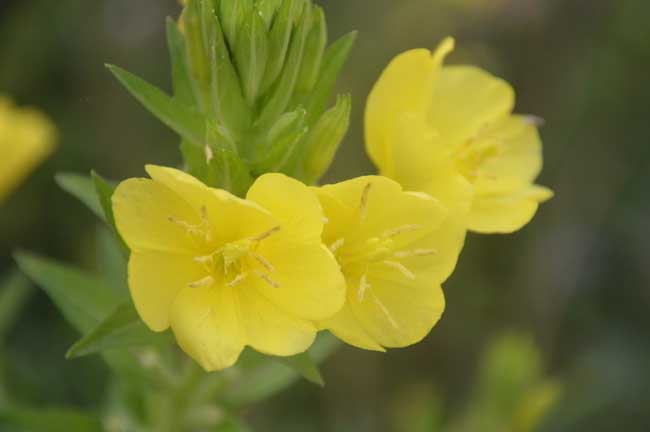
Evening primrose, also known as sundrops, mountain sesame, and wild sesame, is a plant in the genus Oenothera of the family Onagraceae. It has strong adaptability, is tolerant of acid and drought, and is not demanding about soil. It can grow in generally neutral, slightly alkaline, or slightly acidic soil, as long as the soil is well-drained and loose. If the soil is too wet, the roots are prone to disease. In the north, it is an annual plant, while south of the Huai River, it is a biennial plant. It is the most important nutritional medicine discovered this century. It can treat many diseases, regulate lipid substances in the blood, and has significant therapeutic effects on coronary artery infarction, atherosclerosis, and cerebral thrombosis caused by high cholesterol and high blood lipids. Its flower language is silent love and an unbridled heart.
Evening Primrose Leaf Spot
This disease mainly damages the leaves. After infection, the leaf spots are round, light brown, 2 to 3 mm in diameter, with purple-red edges and brown centers, densely covered with small black dots. When the disease is severe, it can cause the leaves to wither and die. The pathogen is Septoria oenotherae Westd., a fungus in the genus Septoria, subphylum Deuteromycotina. The pathogen overwinters in diseased residues as pycnidia and mycelium. In the following spring, after the pycnidia absorb water, they release conidia for primary infection. Field spread of the disease mainly relies on raindrop splash and airflow, while seed-borne infection causes long-distance spread. High temperature and high humidity, along with continuous rainy weather, favor disease development. Poor cultivation management and weak plant growth make plants more susceptible to the disease. The peak incidence period is the high-temperature and rainy season from July to August.
Control methods: 1. In autumn, thoroughly remove diseased and dead leaves from the field and burn them in a centralized manner or bury them deeply to reduce the amount of overwintering inoculum in the field. 2. Before sowing, soak the seeds in a 500-fold dilution of 50% carbendazim or 50% mancozeb for 30 minutes, then dry them before planting. 3. In the early stage of the disease, spray once with a 500-fold dilution of 50% mancozeb or a 600-fold dilution of 50% wanmeiling, with an interval of 10 to 15 days.
Evening Primrose Rot
The roots of affected plants gradually discolor and rot, the leaves wilt and dry up, until the entire plant dies. For control, irrigate with 1% lime water, or a 1500-fold dilution of 50% thiophanate, or a 1000-fold dilution of 75% chlorothalonil.
Copper Green Chafer Beetle
This pest damages seedlings in the larval stage; in the adult stage during the flowering period, it damages petals. Control methods: 1. Manual capture. 2. Use fried fragrant wheat bran mixed with a 30-fold dilution of 90% trichlorfon crystal to make poisonous bait for trapping and killing. 3. Mix the bait directly with 50% phoxim emulsifiable concentrate at a 1:1 ratio to trap and kill.
Sooty Mold and Ring Spot
Spray with a 500-fold dilution of 50% thiophanate-methyl wettable powder.
Damage by Aphids, Scale Insects, and Whiteflies
Control can be achieved with a 1000-fold dilution of 50% fenitrothion emulsifiable concentrate, Uranus, cypermethrin, and kuishaling, with relatively good results.
Mites and Scale Insects
For mites, a 800-fold dilution of kangman 23 emulsifiable concentrate or a 2000-fold dilution of 73% propargite can be used. For scale insect control, a 600 to 800-fold dilution of 40% dimethoate emulsifiable concentrate can be used.
Control of Fusarium Wilt
Spray with a 600 to 800-fold dilution of kuweilike or a 600-fold dilution of 50% carbendazim. If wilted diseased plants are found, they should be removed promptly and taken outside the garden to be burned. The soil around the diseased plants should also be turned over and quicklime spread, and replanting should be done after 1 month.