Detailed Explanation of Key Points on Rehmannia Cultivation and Propagation Techniques
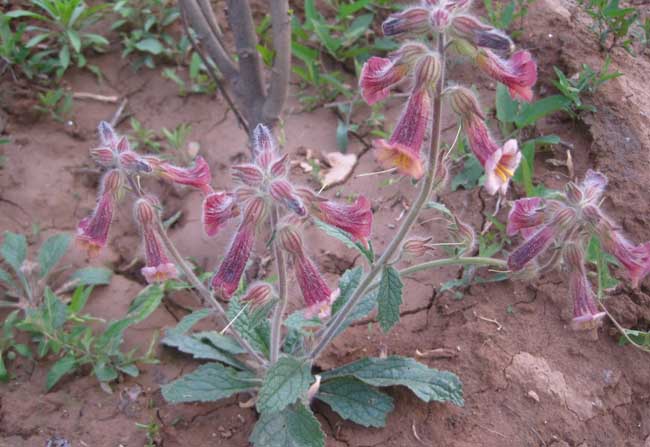
Rehmannia is a perennial herbaceous plant of the genus Rehmannia in the family Scrophulariaceae, and is one of China's traditional valuable medicinal herbs. Because it contains rehmannin, cardiac glycosides, various organic acids and vitamins, sugars and other substances, it has the effects of strengthening the heart, promoting diuresis, lowering blood sugar and protecting the liver. Among these, the rhizomes of Rehmannia can be processed by different methods to obtain raw Rehmannia and prepared Rehmannia, which belong to the heat-clearing and blood-cooling category of medicines. Raw Rehmannia has the effects of nourishing yin and clearing heat, cooling blood and stopping bleeding, and is mainly used to treat restlessness in febrile diseases, low fever due to yin deficiency, hematemesis, hematuria, metrorrhagia and metrostaxis and other conditions; prepared Rehmannia can nourish yin and enrich blood, and is mainly used to treat yin deficiency with scant blood, blurred vision and tinnitus, soreness and weakness of the waist and knees, nocturnal emission, amenorrhea and other conditions. Refreshing and nourishing beverages containing Rehmannia, beer, Rehmannia essence, Rehmannia tea, canned Rehmannia, and Shixiang Rehmannia dishes pickled with fresh Rehmannia are all very popular on the market.
At present, Rehmannia is propagated by long-term vegetative propagation using rhizomes, so problems such as high material consumption, viral infection and variety degeneration exist in the planting process, thereby causing severe damage to Rehmannia resources and resulting in a relatively large gap in the production and supply of high-quality Rehmannia medicinal material.
Collection and Treatment of Explants
In autumn (September to October), dig up robust Rehmannia underground rhizomes about 1.0 cm in diameter and free of pests and diseases, wash them clean with dishwashing liquid and tap water, and cut them into root segments 1.0-1.5 cm long. On a clean bench, rinse with 75% alcohol for 30 s, disinfect with 0.1% mercuric chloride for 7-8 min, and rinse with sterile water 5-6 times.
Induction of Explant Growth and Differentiation
Use sterilized scissors or a scalpel to remove from the disinfected explants the cut surfaces that have come into contact with the disinfectant solution, exposing fresh tissue. Inoculate the root segments promptly onto the medium MS 6-BA 0.05-2.0 mg/L NAA 0.01-0.5 mg/L. Be careful not to place the lower end facing upward. Culture the inoculated material at a temperature of about 24°C, 12 h/d light, and a light intensity of 1,500 lx. One week after inoculation, yellow-green bud points begin to appear on the roots; adventitious buds grow out after about 15 d; after 30-40 d the buds grow to 2.0-3.0 cm.
Subculture Proliferation
Remove the above shoots and inoculate them onto the medium MS6-BA1.5 mg/L NAA0.1 mg/L. After 10 d, bud clusters (3-5) are produced at the base of the shoots, and after 20-30 d the new shoots grow to about 1.0-2.0 cm. Subculture about once every 30 d, with the proliferation coefficient controlled at about 3 times, so as to obtain strong seedlings while maintaining good shoot proliferation.
Rooting and Transplanting
Divide rootless seedlings about 3.0 cm tall and growing robustly into individual plantlets and inoculate them onto the medium 1/2MS NAA 0.05 mg/L; generally after 15 d a large number of roots can be produced. When the roots are about 1.0 cm long, they can be acclimatized and transplanted. The method is to first place the test-tube plantlets in a glass greenhouse at a temperature of 25°C and a humidity of 75% with the cover removed for 3 d of hardening, then gently take the plantlets out of the bottles with tweezers, wash off the residual agar medium with a 0.125%-0.142% diluted solution of Baijunqing, and then transplant them into a disinfected substrate (perlite:vermiculite = 1:1). After transplanting, keep the temperature at 24-25°C and the humidity above 80%; the survival rate can reach more than 90%.