How to manage Ganoderma lucidum after fruiting body formation? Detailed technical points
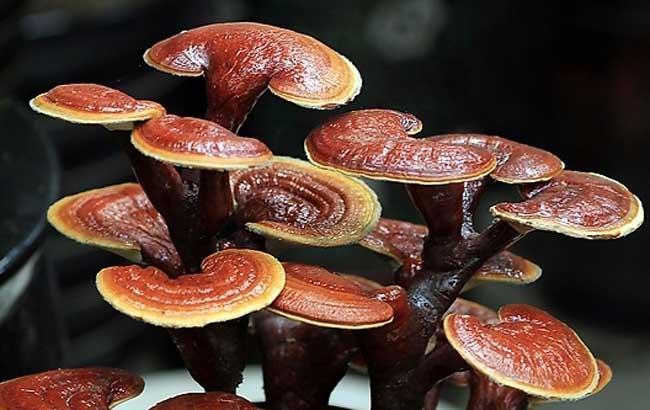
Cultivation methods for Ganoderma lucidum
1. Three-dimensional cultivation: In the mushroom shed, open (or cut) the bag openings of small fungus bags that fruit from both ends, and stack them along the wall, generally up to 6-8 layers high; or set up shelves in the shed, place large-sized fungus bags (or pots) in a single layer on the shelves, uncover the inoculation hole tape, and let Ganoderma lucidum grow upward. The Ganoderma lucidum produced by this method is very popular in the market because of its natural and clean characteristics, but due to limitations of substrate moisture and other factors, the yield is slightly lower.
2. Soil-covered bed cultivation: This method generally involves building a simple shed under tree shade or constructing small and medium arched sheds on ordinary farmland as the cultivation site. There are also two specific cultivation methods. One is to remove the plastic film from the fungus bags and place them in beds covered with soil. Although this method has the advantages of providing sufficient moisture for Ganoderma lucidum, producing plump fruiting bodies, and achieving higher yields, due to the high base of outdoor pests and diseases and the large number of microorganisms in the soil-covering material, it is very likely to cause harmful microorganisms to infect the mycelium, and it is susceptible to damage from pests and diseases. Moreover, the fruiting bodies are often not clean due to contamination with mud, sand, and other debris. The other method is to remove the plastic film from about 1/2 of the bottom height of the fungus bag, or cut the fungus bag in the middle, stand it upright in the bed, fill the gaps with soil, and retain about 1 cm of the upper fungus bag. With this method, the mycelium can receive moisture from the soil layer in the bed, while the fruiting body does not directly contact the soil covering, resulting in better production results and higher practical value.
Management after fruiting body formation
1. Temperature management: The optimal temperature requirement for the fruiting site (mushroom shed) is 26-28°C. Under special climate conditions, it can briefly tolerate low temperatures of 20°C and high temperatures of 35°C, but not for too long. If the 20°C condition is maintained for 7 days, the mycelium can turn yellow, shrink, and become fibrous, making it very difficult to fruit afterward. Even if primordia barely form, they will grow poorly, producing thin, small fruiting bodies with low commercial value and low yield. If the temperature exceeds 30°C, or even reaches 35°C, the fruiting bodies will be thin and small, with relatively thin caps, and will age prematurely. Therefore, various measures should be taken to regulate the temperature to an appropriate level and maintain it in a relatively stable state.
2. Moisture management: After the fungus bags are placed in the shed and the bag openings are opened, the relative air humidity should reach and maintain a high level of 95% to promote primordium formation, and can even briefly maintain saturated air humidity. Once finger-like protrusions appear, 95% humidity should be maintained. Note that the air humidity at this stage should be strictly maintained. If it falls below 80%, primordia are unlikely to form, or the primordia will stagnate in growth. In severe cases, mycelium fibrosis occurs and primordia can no longer form. When the finger-like protrusions gradually differentiate into the rudimentary form of the cap, the humidity condition can be appropriately relaxed to 85%-95%, and occasionally saturated humidity is also acceptable, but it should not exceed 4 hours. When the cap reaches a maximum of 3 cm or more, and the yellow growth zone at the edge is clear and obvious, that is, at the mid-growth stage, the humidity can be 80%-100%. For example, water should be sprayed at least 3-5 times per day. After spraying, the humidity reaches saturation within about 1 hour, then gradually decreases. Generally, with the natural evaporation of moisture contained in the floor and walls of the mushroom shed, plus daily water spraying, the humidity will not decrease very quickly. It takes about 4-6 hours to drop from 100% to 80%. Repeating the above management cyclically can generally meet the growth needs of the fruiting bodies. When using soil-covered cultivation, the number of water sprays can be reduced accordingly, and the specific frequency can be determined based on the humidity at that time and its retention conditions.
3. Ventilation management: Ganoderma lucidum is an aerobic fungus. From the primordium formation process to the cap differentiation stage, the oxygen demand is relatively high, which requires maintaining corresponding ventilation conditions. The standard is that after a person enters the shed, the air feels fresh and free of plastic-like odors. When the cap grows to more than 3 cm, the ventilation volume should be appropriately controlled, with the intention of appropriately increasing the carbon dioxide concentration in the shed to encourage the cap to slightly reduce its lateral growth rate and shift toward thickness development. However, increasing the carbon dioxide content is not the main reason for thickening the cap; that is only an auxiliary measure. The thickness of the cap mainly depends on factors such as substrate nutrition and moisture. The specific carbon dioxide concentrations required for each growth stage are: 0.3%-0.5% before cap differentiation, and 0.08%-0.1% afterward, not allowed to exceed 0.1%, otherwise it will inhibit the development of the fruiting body margin.
4. Light management: The light requirement for Ganoderma lucidum is scattered light, and its intensity increases with the age of the fungus. However, before primordium formation, relatively strong light should be used to stimulate Ganoderma lucidum to promote primordium formation. After finger-like protrusions appear, 100-200 lux of light should be maintained. When conditions permit, measures such as artificial lighting at night can be taken to promote rapid cap differentiation; but after the cap is formed, maintaining a normal light intensity of about 300 lux is sufficient. After that, as the fungus age increases, regulation should be carried out according to the situation. When managing light, attention should be paid to the appropriateness of light intensity, because when the light is relatively strong, the fruiting body is robust and the color deepens, and spores are ejected slightly earlier and in larger quantities; when the light is relatively weak, the cap color is relatively lighter, but the growth period is slightly longer and the fruiting body is slightly larger.
5. Inter-flush management: If the temperature conditions are suitable and there is sufficient time for another fruiting, the fruiting surface can be cleaned up. For fungus bags in three-dimensional cultivation, water should be fully replenished. Generally, methods such as soaking can be used. If conditions permit, a water replenisher can be used for the operation. The water replenishment amount should be large and efficient. Only after water replenishment can the fungus bags recover to their weight before fruiting. For soil-covered bed cultivation, the covering soil can be leveled and appropriately watered, then covered with plastic film, water spraying stopped, and light blocked to cultivate the mycelium. After about 7-10 days, management can be resumed again, and a second flush of Ganoderma lucidum can be harvested.