Detailed Explanation of Key Points for Pest Control Techniques for Polygonum capitatum
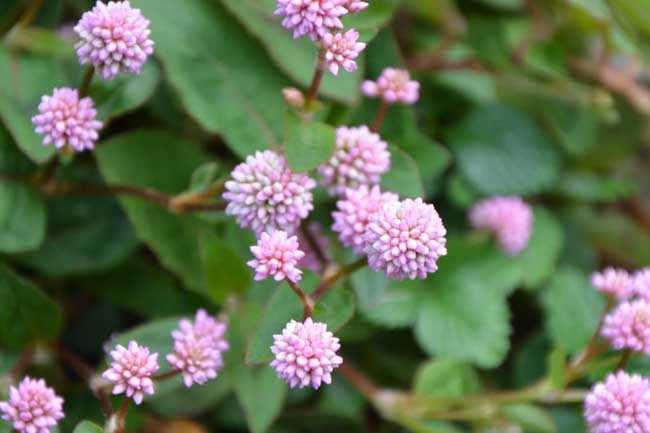
Polygonum capitatum is a herbaceous plant with creeping stems, growing in clumps. It belongs to the phylum Angiospermae, class Magnoliopsida, family Polygonaceae, genus Polygonum. It is also known as red sour stalk, green shadow, stone vegetable, sour grass, etc. The whole plant is used as medicine and can treat urethral infections, pyelonephritis and other conditions. In Yuping County, Guizhou Province, it is the second largest Chinese medicinal herb, with a planting area second only to Belamcanda chinensis. However, as the planting area of Polygonum capitatum grows larger and larger, the problem of pests and diseases has gradually become more prominent. The following introduces four common pests and diseases of Polygonum capitatum and their control measures for herb growers:
Black cutworm
Also known as soil silkworm and root-cutting worm, it belongs to the order Lepidoptera, family Noctuidae. It reproduces 2 to 3 generations per year. The larvae overwinter in soil chambers. The first-generation larvae damage Polygonum capitatum seedlings in late April and early to mid-May, causing missing plants and broken rows. Newly transplanted seedlings are especially severely affected by this pest.
[Control measures] 1. Manual capture: When newly broken seedlings are found in the field in the morning, use a twig to dig the larvae out of the soil chamber at the broken seedling and kill them. 2. Spraying pesticides: Spray the seedling roots with 59% phoxim emulsifiable concentrate at 500 times dilution or 2.5% deltamethrin at 2000 times dilution. 3. Applying poisoned soil: Mix 0.5 kg of 25% trichlorfon powder with 20 kg of fine soil evenly, and spread it into the soil before the seedlings emerge.
Two-spotted leaf beetle
Also known as four-eyed leaf beetle, it belongs to the order Coleoptera, family Chrysomelidae. It occurs 1 generation per year. In late October it lays eggs and overwinters in the soil in egg form. Although hatching only occurs in early to mid-May, the larvae damage the roots of Polygonum capitatum in the soil, causing plants to wilt and die. It pupates in late June and emerges in mid-July. Adults damage the leaves of Polygonum capitatum, biting holes or notches in the leaves, and in severe cases can eat the leaves completely. Drought favors the occurrence of this insect.
[Control measures] 1. Promptly remove weeds along field edges, ridges and canals, and deep-plow before winter to destroy eggs. 2. During the peak adult occurrence period, spray 1 to 2 times with 4.5% beta-cypermethrin at 1500 times dilution plus abamectin at 1500 times dilution.
Striped flea beetle
Also known as ground flea, flea insect and cabbage louse, it belongs to the order Coleoptera, family Chrysomelidae. It occurs 4 to 5 generations per year and overwinters as adults lurking on stems, leaves and weeds. It begins feeding when the temperature rises above 10°C, and its food intake increases greatly at around 20°C, while above 30°C its food intake decreases greatly. In early April it lays eggs in the soil around the plant roots. After hatching, it feeds on the root epidermis and young roots, causing the plants to die. In mid to late May, adults damage the leaves, causing many tiny holes and thereby affecting photosynthesis.
[Control measures] 1. Clean the field, remove residual plants and fallen leaves after harvest, remove weeds, and bury them deeply or burn them in a centralized manner. 2. During the larval damage period, spray thoroughly with 90% trichlorfon crystal at 1000 times dilution or 40% chrysanthemum · malathion emulsifiable concentrate at 2000 times dilution. 3. During the adult occurrence period, spray 2 to 3 times with 50% phoxim emulsifiable concentrate at 1000 times dilution, with an interval of 10 days.
Tobacco cutworm
Also known as night thief worm and aconite worm, it belongs to the order Lepidoptera, family Noctuidae. The insect source generally migrates in from other places. It occurs 4 to 5 generations per year. The larvae damage crop leaves, petioles or young stems. It prefers high temperatures and fears cold, so high temperature is an important reason for its outbreak. Newly hatched larvae gather near the egg mass, begin to disperse at the 2nd instar, enter a heavy-feeding period at the 4th instar, and mature larvae pupate in soil cracks and on fallen leaves.
[Control measures] 1. Clean the field and promptly remove weeds and residual branches and fallen leaves in the field. 2. Use the phototaxis of adults by installing insect-killing lamps in the field for trapping and killing. 3. Set up sex pheromone lures in the field to trap and kill adults. 4. During the young larval stage, spray with No. 1 insect virus at 1000 times dilution or 25% diflubenzuron No. 3 at 2000 times dilution.