Detailed explanation of high-yield planting techniques for bupleurum: plant it this way for higher yields per mu
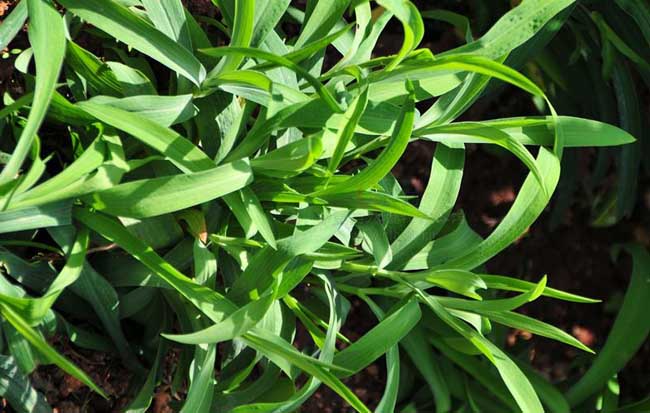
Bupleurum is one of the forty major bulk medicinal herb varieties, with an annual demand of more than 3 million kg. It has the characteristics of high medicinal value, promising development prospects, and stable market prices. Wild bupleurum resources are depleted, and cultivated bupleurum is difficult to meet market demand because it requires a high level of technical expertise, so its price has remained at a high level. Since 1996 it has stayed between 20 and 30 yuan, and the current market price is 28 to 32 yuan/kg. Bupleurum gives returns in the same year it is planted, with a general yield of 150 to 200 kg per mu, and high yields can reach 300 kg over two years. Calculated at a market price of 30 yuan/kg, the benefit per mu is about 5,000 yuan, and an additional 15 kg of bupleurum seed can be harvested, bringing the benefit per mu to more than 6,000 yuan. After deducting expenses for seed, labor time, labor, land, and chemical fertilizer totaling 1,000 yuan, the net profit is generally about 5,000 yuan, which is more than 10 times that of growing other grain crops.
Planting characteristics
Because of the influence of its own factors, bupleurum is better planted in winter or early spring. The reasons are: (1) The lifespan of bupleurum seed is relatively short. Scientific experiments have shown that after bupleurum seed is harvested, the germination rate is 85% within 3 months and 50% within 6 months. As time passes, the germination rate becomes lower and lower. (2) It has strict temperature requirements. The suitable germination period for bupleurum is 10 to 20°C. Above 25°C, the germination rate of bupleurum drops to 30%; at 30°C, the germination rate is 20%; at 35°C, the germination rate is zero. (3) The seeds are small, and the seed surface has a layer of cuticle, so after being planted in the field they generally do not germinate until 20 days later. (4) It is better to use the natural protection method. The so-called natural protection method means planting in winter, germinating in spring, and using ground temperature to provide constant-temperature natural protection. The effect is especially good and there is no need to cover with straw.
Field selection and land preparation
Bupleurum is cold-resistant and drought-resistant, but avoids waterlogging. The field should be selected as sandy loam soil with deep, fertile soil layers, loose texture, and good drainage and irrigation. Before sowing bupleurum, plow the soil deeply, level it, and rake it fine. In combination with land preparation, apply 2,000 to 3,000 kg of decomposed farmyard manure per mu, 10 to 15 kg of diammonium phosphate, or 20 to 30 kg of phosphorus-potassium compound fertilizer.
Cultivation techniques
Bupleurum is mainly propagated by seed, and can generally be sown in winter or spring, but winter sowing is better, as seedlings emerge earlier and more uniformly in spring. Winter sowing should be carried out from November to early December, with a seeding rate of 3 to 4 kg per mu. Seed treatment should be done before sowing. Bupleurum seeds are small, and the seed surface has a layer of cuticle. Generally, the cuticle must degrade after sowing before seedlings can emerge, which often easily affects normal and timely emergence and results in uneven and incomplete seedlings. After the seeds are selected, they can be soaked in warm water, an appropriate amount of washing powder can be added, and after gentle rubbing and washing, the washing powder should be rinsed off with clean water, then the seeds should be dried and stored for sowing. When sowing, an appropriate amount of fine loess and plant ash can be used to mix the seeds evenly, and then they can be broadcast. The sowing methods can be drilling in furrows or broadcasting. For furrow sowing, fertilizer can first be placed in the furrow, and when broadcasting the seeds, the soil cover should not be too thick; the soil cover alone must not exceed 0.5 cun in thickness. For broadcasting, the mixed seeds can be evenly spread over the surface of the field on leveled ground, and after sowing a shallow manual cover can be applied. Where conditions permit, the field after sowing can be irrigated to settle the soil and appropriately compacted. Seedlings can emerge after spring. The spring sowing method is the same as winter sowing, but it needs to be covered with straw to retain moisture.
Field management
After seedlings have emerged completely, give one shallow loosening of the soil in combination with fertilization. When the seedlings are about 1 to 2 cun tall, thin them in combination with weeding, removing excessively dense, small, and weak seedlings. Keep seedlings at a spacing of 1 to 2 cun between plants and 5 to 6 cun between rows. During tillering, apply 20 kg of superphosphate and 10 to 15 kg of ammonium sulfate as a topdressing in furrows opened between rows, then cover with soil and seal tightly. At the flowering and budding stage, spray 4 to 5 kg of potassium dihydrogen phosphate for foliar topdressing to promote fruit set and seed filling. During excessive rainy and cloudy weather, drain ditches promptly to remove water and prevent waterlogging, so as to reduce field humidity and prevent root rot. Throughout the growth period, attention should be paid to diseases and insect pests. Generally, insect pests mainly include soil-dwelling pests, which can be controlled with insecticidal dan and insecticidal shuang powders at 100 to 200 grams per mu, mixed with soil and spread in the field at sowing time, to prevent cutworms, grubs, wireworms, and other soil-dwelling pests. For pests occurring during the growth period, such as aphids and leaf green caterpillars, 90% trichlorfon or 40% omethoate emulsifiable concentrate at 200 times dilution, as well as pesticides such as decis and kuaishaling, can be used for spray control.
Harvesting and processing
Collection of bupleurum stems, seeds, and medicinal roots. For collecting stems and seeds, when the seeds turn yellow-black and the leaves have all withered and turned yellow, the stems can be cut together with the seeds and threshed. Dry the stems and seeds separately in the sun and store them properly for later sale. The medicinal roots should generally be harvested after two years. For root harvesting, dig deeply by hand and dig out all the medicinal roots. They must not be pulled out directly, to prevent broken roots from affecting yield and to increase income. The medicinal roots should be sorted by category, kept uniform and neat in size, tied into small bundles, and dried in the sun before sale.