Detailed Explanation of Key Cultivation Techniques and Field Management Methods for Saposhnikovia divaricata
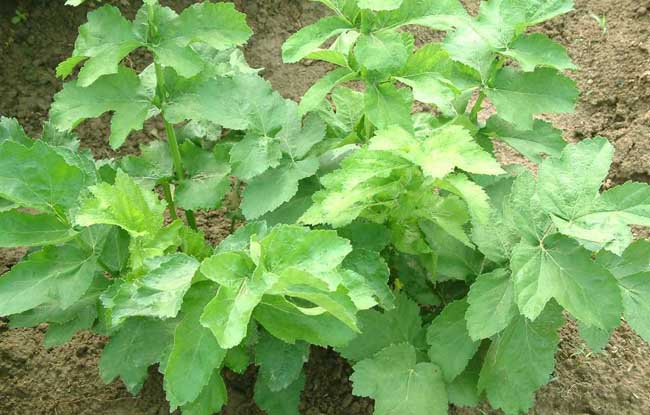
Saposhnikovia divaricata is a perennial herbaceous plant, 30-100 cm tall, entirely hairless. The main root is thick and long, with a pale brown surface bearing scattered protruding lenticels. The root crown is densely covered with brown fibrous leaf petiole remains. The stem is solitary and dichotomously branched. Basal leaves are clustered, with long petioles and leaf sheaths at the base; the leaf blades are long-ovate or triangular-ovate, bipinnate to tripinnate. Cauline leaves are smaller, with relatively broad leaf sheaths. Compound umbels are terminal; there are no involucral bracts, rarely 1; the umbellules have 4-9 flowers, with short triangular sepals that are relatively conspicuous; there are 5 white petals. The schizocarp is yellow-green or dark yellow when mature, long-ovate, with verrucose protrusions, slightly laterally compressed; the fruit has 5 ribs. The flowering period is August to September, and the fruiting period is September to October.
Growth Habits
Saposhnikovia divaricata has strong adaptability, is cold-tolerant and drought-tolerant, prefers sunny and cool climate conditions, and is suitable for growing in well-drained, loose and dry sandy loam. It can be cultivated in northern China and the Yangtze River basin region.
The seeds germinate easily and can germinate within the range of 15-25°C. The germination rate of fresh seeds can reach over 50%. Seeds stored for more than 1 year show a significantly reduced germination rate, so it is best to use fresh seeds for production. The suitable temperature for germination of Saposhnikovia divaricata is 15°C, and both spring and autumn sowing are possible in production. Seeds sown in spring emerge in about 20 days, while seeds sown in autumn emerge the following spring.
Planting and Cultivation Techniques
1. Site selection and land preparation: Saposhnikovia divaricata is a deep-rooted plant, with the main root reaching 50-60 cm in length. It should be planted in sandy loam with high, dry terrain and good drainage; when planted in clay soil, the roots are extremely short, highly branched, and poor in quality. Saposhnikovia divaricata is a perennial plant, so sufficient base fertilizer should be applied during land preparation: 3000-4000 kg of barnyard manure and 15-20 kg of superphosphate per mu, with deep plowing and fine harrowing. In northern China, flat beds 1.3-1.7 m wide are made; in the rainy southern regions, high beds 1.3 m wide with 25 cm deep furrows are made.
2. The main propagation method is seed propagation, and root division propagation can also be used.
① Seed propagation: Sowing can be done in spring or autumn. For spring sowing, the Yangtze River basin sows from late March to mid-April, while North China sows from early to mid-April; for autumn sowing, the Yangtze River basin sows from September to October, while North China sows before the ground freezes, with seedlings emerging the following spring. For spring sowing, the seeds should be soaked in warm water for 1 day to fully absorb water and promote germination. In the prepared beds, drill furrows at a row spacing of 30-40 cm, with a furrow depth of 2 cm. Sow the seeds evenly in the furrows, cover with soil and level it, press lightly, cover with straw and water, and keep the soil moist. Seedlings emerge in 20-25 days after sowing. Use 2 kg of seeds per mu.
② Root division propagation: At harvest time or in early spring, take root sections with a diameter of more than 0.7 cm and cut them into small segments 3 cm long as planting material. Plant at a plant spacing of 15 cm × 50 cm and a hole depth of 6-8 cm, with 1 root segment per hole, inserted in the same direction. After planting, cover with soil 3-5 cm deep. Use about 50 kg per mu.
3. Field management
① Thinning: When seedlings are 5 cm tall, thin to a plant spacing of 7 cm; when seedlings are 10-13 cm tall, final thinning is done to a plant spacing of 13-16 cm.
② Weeding and earthing up: Weeding should be done multiple times before June to keep the field clean. When the plants close their rows, remove old leaves first, then earth up around the roots to prevent lodging; in winter, along with clearing the field, earth up again to help the roots overwinter.
③ Topdressing: Topdressing is required once in early June and once in late August each year, applying human feces and urine, superphosphate, or compost in furrows between the rows.
④ Removing bolting stems: For plants over 2 years old, except those retained for seed production, bolting stems should be removed promptly.
⑤ Drainage and irrigation: From after sowing or planting until seedling emergence, the soil should be kept moist. Saposhnikovia divaricata has strong drought resistance and mostly does not require irrigation. During the rainy season, timely drainage should be carried out to prevent waterlogging and root rot.
Pest and Disease Control
1. Powdery mildew: It occurs in summer and autumn, damaging the leaves. Control methods: ① Apply phosphorus and potassium fertilizers, and ensure ventilation and light penetration; ② When the disease occurs, spray with 50% thiophanate at 800-1000 times dilution for control.
2. Yellow-winged fennel moth: It occurs during budding and flowering, damaging flower buds and fruits. Control methods: In the morning or evening, spray with 90% trichlorfon at 800 times dilution or BT emulsion at 300 times dilution for control.
3. Yellow swallowtail butterfly: It begins to cause damage in May, with larvae biting and feeding on leaves and flower buds. Control methods: ① Manual capture and killing; ② During the young larval stage, spray with 90% trichlorfon at 800 times dilution or 80% dichlorvos emulsifiable concentrate at 1000 times dilution.
Harvesting and Processing
Generally, harvesting is done from late October to mid-November in the winter of the second year after planting, or before sprouting in spring. Saposhnikovia divaricata propagated by root division in spring can be harvested in the same year under conditions of sufficient water and fertilizer and vigorous growth. The roots of Saposhnikovia divaricata grow relatively deep and are brittle and easily broken, so during harvesting, a deep furrow should be opened from one end of the trench and the roots dug out sequentially. Remove residual stems, leaves, and soil, remove fibrous roots when half-dried, grade according to root thickness and length, tie into small bundles of 0.25 kg, and sun-dry until completely dry.
Seed Retention Techniques
Select vigorous 2-year-old plants free from pests and diseases. Apply additional phosphorus fertilizer to promote flowering and plump seed set. After the seeds mature, cut off the stems and branches, rub off the seeds, air-dry them, and store in a cool place. Alternatively, at harvest time, select root sections with a diameter of more than 0.7 cm as seed roots, plant them while harvesting, or heel them in in situ for transplanting and permanent planting the following spring.