A Detailed Guide to American Ginseng Planting Techniques and Management Methods
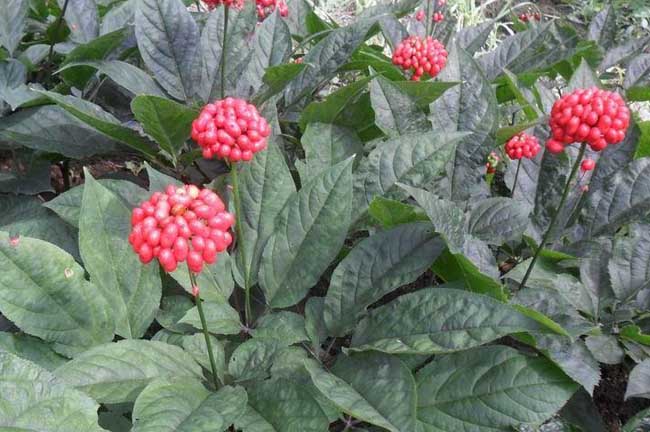
American ginseng is a type of ginseng, also known as Guangdong ginseng or Huaqishen, named after the old Chinese name for the United States, "Huaqi Guo." It originates from the region stretching from northern United States to southern Canada, primarily Wisconsin. It is usually divided by origin into (what is generally called) Huaqishen and Canadian ginseng; although the two are the same variety, due to climatic influences, the former has more pronounced horizontal wrinkles on the root surface than the latter and also has a higher content of active ingredients. Methods of consumption include boiling, stewing, and steaming, and it can also be sliced and held in the mouth to dissolve or ground into a fine powder and taken with water.
Site Selection
Because it prefers a cool, moist, semi-shaded, semi-sunny climate and well-aerated, loose, fertile soil rich in humus. American ginseng planting sites should be chosen on well-afforested, southwest-to-northeast-oriented ventilated slopes with good drainage, in fertile gullies or on both banks of rivers, rather than in open, sparsely forested, dry areas in front of hills or on northwest-to-southeast-oriented winter cold-wind pathways. Practice has proven that as long as organic fertilizer is scientifically applied and chemical fertilizers are used reasonably, it can be grown on sandy loam and silty loam relatively rich in phosphorus and potassium.
Land Preparation
To reduce damage from nematodes and other pests and diseases, the previous crop for American ginseng should preferably be a grass family crop. For example, after wheat or corn harvest, leave the stubble, plow once every half month and sun the ridges to promote decomposition of previous crop residues and accelerate soil maturation. At the same time, apply 6000 kg of decomposed pig manure and cow/horse manure per mu (chicken manure and human excrement are too alkaline and not suitable), along with 50 kg of finely crushed high-quality organic fertilizer and decomposed cake fertilizer, and 100 kg of high-quality ternary compound fertilizer, evenly mixing and turning them into the 20—30 cm plow layer. In late autumn, level the land and make high beds, one every 2 m, with a bed height of 25 cm, a bed top of 1.4 m, a side slope ratio of 1:1, and a furrow bottom width of 10 cm. The bed surface should be as level and fine as possible, and 3 cm of finely crushed phosphorus-containing weathered stone should be spread on top (4 cm for transplanted seedlings), then 1—2 cm more after sowing. During this process, 20 g of 50% carbendazim per square meter should be used for soil disinfection, of which 15 g is mixed into the soil during plowing and bed preparation, and the remaining 5 g is mixed into the phosphorus-containing weathered stone spread on and covering the beds at sowing time.
Sowing and Transplanting
For direct seeding, use 3.5 kg of seed per mu, with row and plant spacing of 10×10 cm. After 4 years it can be harvested, which saves labor and produces long roots with high yield, but wastes mulch, requires more spraying and is more costly, and more importantly, cannot meet market demand for thick, short roots, so root prices are low. Therefore, production still adopts the method of first raising seedlings and then transplanting. For seedling raising, sow 3.5 kg of seed at 5×6 cm plant and row spacing on 2 fen of land, grow for 2 years, then dig out and transplant at 20×10 cm row and plant spacing to about 1 mu, and grow for another two years before harvesting. American ginseng cannot be grown on the same land repeatedly, and seedling land cannot be used again to plant American ginseng.
1. Sowing
① Seed treatment: In August, when the berries turn red, harvest fresh berries, immediately rub off the flesh and wash, then after brief drying, soak the seeds in 1000-fold 50% carbendazim for 10—20 minutes, remove and air-dry, then soak in 50 ppm high-quality gibberellin for 24 hours, remove, rinse once with clean water, and then mix with sand (seed:sand = 1:3). After mixing with sand, place in a basin or box in a cool place until November. The temperature should be controlled below 25°C, and humidity should be about 10%—12% moisture content. Too wet easily rots the seeds; the standard is moist enough that a handful forms a ball when squeezed and falls apart when released. Seeds from the current year germinate vigorously; seeds from the previous year germinate weakly.
② Sowing time: In late November, seeds treated by the above method may have 70%—80% cracked, while those not treated with gibberellin have about 30% cracked. They can be picked out in batches for sowing, with the sowing period extending to the end of December. The remaining uncracked seeds are stored at 0—5°C, and can still crack by February of the following year, and can also germinate after sowing. Seeds that crack later than that cannot germinate, or cannot fully germinate, because the low-temperature treatment time is less than 70 days and physiological after-ripening cannot be completed.
③ Sowing method: On the leveled bed surface with sufficient moisture, scatter 3 cm of sieved, evenly fine, moistened, chemically disinfected weathered stone, then level again, punch holes with a standard 5×6 cm plant and row spacing hole-punching board (2 cm deep) and sow, to ensure consistent standard depth. After sowing, scatter more chemically disinfected weathered stone to cover the seed. For smoothness, after covering with weathered stone, smooth it once with a board to ensure a sowing depth of 2 cm, then cover with 10 to 15 cm of grass to preserve moisture and prevent freezing. Seedlings generally emerge around April 20.
2. Transplanting. To meet market demand, save land, reduce costs, and ensure uniform and consistent growth, transplanting is adopted. Generally, 2-year-old seedlings are used for transplanting.
① Digging seedlings: Best from late October to early November after the above-ground parts of American ginseng have withered. Dig open the bed soil along the bed, then start lifting roots from one end, digging as deep as possible to avoid damaging the roots. Try to dig, select, disinfect, and transplant in one continuous operation; prolonged piling easily causes water loss and heat damage that affect survival. If planting cannot be finished before the new year, do it as early as possible after the new year in late February to early March before the buds begin to sprout.
② Seedling selection: Select seedlings with robust root systems, plump buds, and no pests or diseases, and grade them into three classes according to size for transplanting.
③ Disinfection: Seedlings easily carry pathogens, so they need disinfection before planting. Generally, soak seedlings in 1000-fold 50% carbendazim solution for 10 minutes, which has a certain effect on preventing root diseases.
④ Transplanting method: Planting density: grade one 20×10 cm, grade two 20×8 cm, grade three 20×6 cm. For well-aerated, drought-prone soil, oblique planting is better (place seedlings into the bed at a 45-degree angle to the bed surface); for poor aeration, flat planting is better. Soil covering thickness: grade one seedlings 5 cm, grade two 4 cm, grade three 3 cm. Before transplanting, both the 4 cm bed layer and the weathered stone used to cover the seedlings must be mixed with chemicals for disinfection.
Field Management
1. Cold protection. Whether direct-seeded seedlings, transplanted seedlings, or sown seeds, after late November all must be covered with 10—15 cm of grass to preserve moisture and prevent freezing. Field edges and bed edges should be covered more thickly, and to prevent wind from blowing it away, press branches and stones on top of the grass.
2. Drought resistance. In years with little rain or snow and drought, spray water to prevent buds from drying out and to ensure normal seedling emergence in spring.
3. Spring and summer management
① Remove cold-protection materials in good time: It is best to remove cold-protection materials in late March to early April when winter jasmine blooms. Too early makes plants vulnerable to freeze damage; too late causes seedlings to emerge late, and tender stems are easily scorched by sunlight. When removing grass, some short, broken grass may be left to help preserve moisture and prevent rainwater from washing the ground. Each locality should remove cover scientifically and in good time according to climate and phenological changes.
② Bed surface disinfection: After removing grass, rake away miscellaneous leaves and spray the whole field with 1% copper sulfate for disinfection and sterilization, but the solution must not seep onto buds or roots, to avoid damage and effects on seedling emergence.
③ Loosening the bed surface: After removing grass, if the bed surface is moist, loosen the soil immediately; if dry, spray water to moisten first, then loosen the soil, to aerate, raise temperature, and promote seedling emergence and growth. Throughout the emergence period, the bed surface must remain moist to prevent tender stems and leaves from being scorched by dry surface soil.
④ Build a shade shed: American ginseng prefers oblique and scattered light and fears strong light, but still needs sunlight to provide energy for photosynthesis. After large ginseng plants have lifted their noses and after the cover grass is removed from first-year sown ginseng, scientifically and reasonably set up shade sheds to regulate light and promote healthy growth of American ginseng. Use double-permeable (light-permeable and rain-permeable) large sheds, with main posts totaling 2.2 m long (buried 50 cm underground), and four-side main posts 1.9 m (buried 50 cm underground); the longitudinal spacing between posts depends on the length of the longitudinal poles. Crossbars are 2.4 m long; first tie the crossbars with wire, then place three longitudinal poles on each bed on the crossbars and fix them with wire. On the longitudinal poles place shading grass curtains, and around the perimeter use corn stalks and the like to form windbreaks. The light transmittance of the curtains depends on the age of the ginseng: 1—2 years, light transmittance 15—20%; 3—4 years, light transmittance 30%—35%. In addition, in mid-April when American ginseng seedlings are about to emerge, shade sheds must be set up in good time; too early keeps bed temperature low and delays emergence, while shading after emergence easily scorches tender stems and leaves.
⑤ Topdressing: American ginseng is a perennial herbaceous plant with persistent roots, so it must be topdressed every year to replenish nutrients. After emergence in spring, apply ternary compound fertilizer and decomposed cake fertilizer at 50 g/sq m each, and heated kang soil at 500 g/sq m. The topdressing furrow should be shallow, and fertilizer must never touch the ginseng rootlets, to prevent fertilizer burn. If the bed surface is dry after topdressing, water it in good time.
⑥ Root-protection mulching: Root-protection mulching is carried out in early May when American ginseng is at the initial leaf-unfolding stage and after topdressing is finished. Too early and the tender stems and leaves are easily broken; too late and ginseng leaves cross and cover the bed surface, easily damaging petioles and blades. The mulch is mostly chopped wheat straw and the like.
⑦ Drought resistance and waterlogging prevention: The American ginseng growing areas in our city generally have spring drought, summer waterlogging, and autumn dryness, so in spring it is often necessary to water to ensure seedling emergence; in autumn, spray water in good time to promote root expansion and weight gain; in summer, drain water to prevent waterlogging and ensure normal ginseng growth; and in drought and high temperature, also spray water.
⑧ Seed selection and seed retention: At present, the plant type and maturity period of the American ginseng population are seriously uneven (maturity differs by more than 1 month), so purification and rejuvenation are imperative. In addition, to ensure plump seeds, appropriate flower and fruit thinning is also necessary. Thin flowers when 3/4 of the inflorescences have bloomed and a small portion have set fruit, removing the top 1/2 of the inflorescences so that retained fruits are large and mature uniformly. During the fruit enlargement stage, remove the unswollen green fruits so that nutrients are concentrated in the retained fruits and ginseng roots.
4. Prevention and control of diseases, pests, and rodents
① Diseases: Those harming stems and leaves include black spot, phytophthora blight, and anthracnose; those harming stem centers and bases include damping-off, seedling blight, and stem rot; those harming roots include root rot, phytophthora blight, sclerotinia rot, and rusty root rot. For American ginseng diseases, the principle of prevention first and integrated control should be implemented, combining agronomic measures and pesticides, mainly using broad-spectrum fungicides and supplementing with specific agents. For underground diseases, treat seeds, seedlings, and soil with carbendazim and the like at sowing and transplanting, which has considerable preventive effect. For above-ground diseases, after leaf unfolding, spray 1:1:400 Bordeaux mixture once every half month, interspersed with 1000-fold 50% carbendazim solution, 2000-fold Xiaojunling solution, 500—1000-fold 20% triadimefon solution, 1000-fold 70% thiophanate-methyl solution, 500—700-fold 7% mancozeb solution, 500-fold 50% Tuzet solution, etc. On average, spray once every 7 days, and re-spray after rain. In addition to alternating and interspersing multiple agents to improve control effectiveness, because the growth stage of American ginseng, climate, pesticide manufacturers, and production dates differ, the spray concentration and dosage must be tested before spraying to avoid phytotoxicity. Remove diseased plants immediately, burn them in a centralized manner, and drench the diseased holes with 50% lime milk or 400-fold 50% carbendazim solution for disinfection.
② Pests: For underground pests such as white grubs, mole crickets, cutworms, and wireworms, use poisoned bait with 50% phoxim, 90% trichlorfon, etc. to trap and kill them; for aphids, inchworms, armyworms, etc., use low-toxicity, residue-free agents such as 50% phoxim, 90% trichlorfon, 80% dichlorvos, and 40% omethoate for spraying and killing.
③ Rodents: Use bromadiolone poisoned bait to trap and kill them.
Harvesting and Processing
1. Harvest time. Generally harvested after 4 years of growth; sometimes harvested after 5 years to propagate seeds. Harvest time is late October, beginning when stems and leaves turn yellow. When digging, try to keep the root shape intact, shake off the soil, and place indoors for grading; sometimes small young ginseng roots are picked out and planted for another cycle.
2. Processing fresh ginseng. Use clean water to wash off mud, but do not soak in water for too long, to avoid poor color and difficulty in drying. After washing, place in a well-ventilated heated drying room for dehydration and drying, completing it at 30—35°C over 3 weeks. Never use a high-temperature baking oven, because drying too quickly will form a hard outer shell on the surface before full drying, easily causing many wrinkles or cracked skin, and the center of the cross-section often darkens, reducing quality; but if drying is too slow, dark spots will appear on the outside of the roots, causing rot and reducing commercial quality.