Detailed Explanation of Key Techniques for Winter Pruning of Cornus officinalis
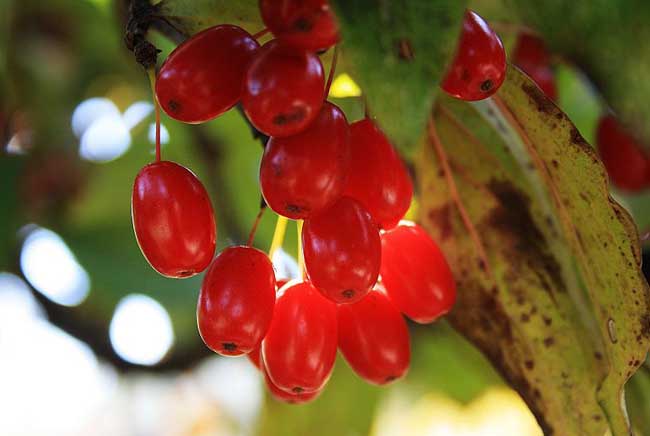
Cornus officinalis, also known as jujube bark, medicinal bark, and cornus flesh, is a precious traditional woody Chinese medicinal herb with a very wide range of medicinal uses. Foping County, Shaanxi Province, has a long history of cultivation and has already achieved large-scale production. In 2001 and 2002, the county was named "Hometown of Chinese Cornus officinalis" and "National-Level Cornus officinalis Medicinal Source Base County" by the State Forestry Administration and the Ministry of Science and Technology respectively. Moreover, Cornus officinalis has become an important component of ecological construction in Foping County and is a pillar industry of the local rural economy. The author has been engaged in Cornus officinalis production in Foping County for more than 30 years and has accumulated and summarized a relatively mature set of cultivation experience. The deep winter pruning techniques are now presented for the reference of the broad community of medicinal herb growers.
In winter, Cornus officinalis enters its dormant period. Deep winter pruning can prevent sap loss, ensure its safe overwintering and robust growth the following year, and more importantly, transform the tree shape and regulate nutrition, changing it from planar fruiting to three-dimensional fruiting, thereby achieving the goal of increasing per-unit yield and total output.
Pruning Methods for Cornus officinalis
1. Thinning: also called branch thinning. Its effect is to promote the sprouting and growth of branches below the cut, moderate tree vigor, and is mostly used where branches are too dense by cutting the first branch from its base, which can improve light conditions, extend the lifespan of fruiting branches, promote flower bud formation, and increase fruit set rate. Thinning out vigorous growth-promoting branches balances tree vigor; thinning out weak branches promotes the growth of other branches.
2. Heading back: cutting off a portion of the treetop, also called short cutting. Its effect is to promote the sprouting of new branches from buds below the cut, rejuvenate old branches, and promote flowering and fruiting.
3. Renewal pruning: that is, short cutting on perennial branches, used to control auxiliary nourishing branches, cultivate fruiting branch groups, and promote the renewal and rejuvenation of scaffold branches.
4. Leaving unpruned: also called long release. That is, retaining branches without pruning. Generally, only relatively weak branches, lower-tier branches, and the like can be left unpruned. Its effects are twofold: first, moderating growth vigor: for vigorous trees and vigorous branches, it can moderate growth vigor; for weak trees and weak branches, under conditions of enhanced water and fertilizer, it can restore growth as quickly as possible and strengthen tree vigor. Second, it is conducive to flowering and fruiting: Cornus officinalis has the characteristic of flowering and fruiting on axillary buds, and leaving vegetative branches unpruned can promote more flowering and more fruiting.
Pruning and Training for High-Yield Tree Shapes
1. Open-center layered shape: also called main branch layered shape. Trunk height 60-80 cm. Main branches are arranged in dispersed layers on the central leader. The first layer retains 3 main branches, arranged close together, 30-40 cm apart, with an opening angle of 50°-60°; the second layer retains 2 main branches, arranged in the spaces between the first layer's main branches; the third, fourth, and fifth layers each retain one main branch, with the top removed to open the center. Distance between layers: 80-100 cm between the first and second layers, 60-70 cm between the second and third layers, arranged in a staggered manner. Its characteristics are a full tree crown, a firm framework structure, reasonable distribution of scaffold branches, open angles, and good ventilation and light penetration; fruiting branch groups are borne on main branches and lateral branches, resulting in a large fruiting area, overcoming the shortcomings of excessive branches and a closed canopy under natural growth conditions. This tree shape is suitable for scattered planting around houses and buildings, as well as for shaping and pruning Cornus officinalis trees growing on deep soil layers with vigorous growth.
2. Natural open-center shape: also called open-center shape without a central leader. Main branches 2-3, height 40-60 cm, growing outward at an oblique angle of 45°, with an azimuth angle of 120°. Each main branch retains more than 4 secondary main branches: the first secondary main branch is retained on the outer side of the main branch, and the second, third, and fourth secondary main branches are arranged in sequence on the outer side of the main branch, with a branch spacing of about 35 cm. On these, developmental branches are retained as inverted branches to cultivate fruiting branch groups. This tree shape is relatively short, with an open crown, good ventilation and light penetration, and easy management. It is suitable for pruning and shaping Cornus officinalis trees on hillside land with relatively shallow and poor soil.