Detailed Guide to Corydalis Planting Techniques: Teaching You to Grow Corydalis Well
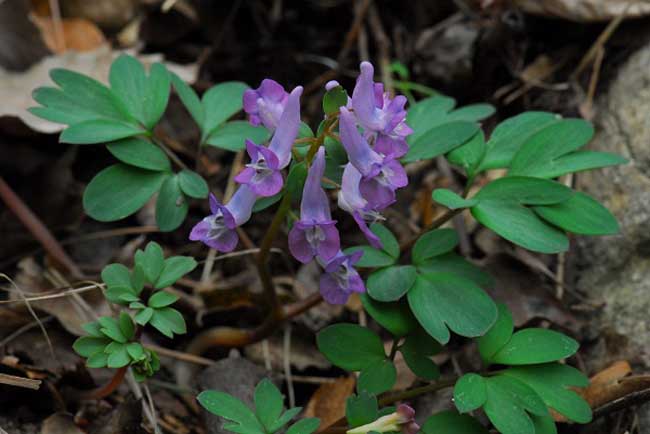
Corydalis, also known as Yanhusuo, is a perennial herbaceous plant of the genus Corydalis in the Papaveraceae family. Its dried tubers are used as medicine, with effects of invigorating blood and dispersing stasis, regulating qi and relieving pain. "Leigong Paozhi Lun" records: “When heart pain is unbearable, quickly seek Corydalis.” "Compendium of Materia Medica" records: “Xuanhusuo can move qi stagnation within the blood and blood stagnation within the qi, therefore it specifically treats all pains throughout the body. When used appropriately, its effects are indescribably wonderful.”
Botanical Characteristics of Corydalis
Corydalis is a perennial herb with stems 10~20 cm tall. The tuber is spherical, yellow inside. The aerial stem is slender and slightly succulent, bearing 3~4 leaves. The leaves are bipinnately ternately parted, with the ultimate segments lanceolate or narrowly ovate. It has a raceme inflorescence, ovate bracts, and very small sepals that shed early; the petals are purplish-red, 4 in number, arranged in two whorls. The two outer petals are slightly larger, with the outermost one extending at the base into a long spur; the two inner petals are narrow and small, fused together. There are six stamens, diadelphous. The ovary is superior, composed of two carpels forming one locule. The fruit is a capsule, flat-columnar in shape. The flowering period is March to April, and the fruiting period is April to May.
Biological Characteristics of Corydalis
Corydalis originally grows in mountainous areas, sparse woodlands, or grassy areas at forest edges. It prefers a warm and humid climate and fears strong light exposure. It is afraid of drought but can tolerate cold. Its growing season is short, and it has relatively high fertilizer requirements. Strong winds are unfavorable for its growth.
The root system of Corydalis is relatively shallow, mostly concentrated in the topsoil layer at a depth of 1~3 cun. The tuber generally has 1~2 buds, with some having 3~4 and a few having only one. The optimum temperature for sprouting is a soil temperature of 18~21°C. In the Hanzhong region, seedlings generally begin to emerge after the Start of Spring (early February) and emergence ends around the Rain Water solar term (late February). In most parts of the country, emergence occurs from late January to early February.
Before Corydalis seedlings emerge, the underground stems have already begun to elongate, growing horizontally and slightly upward. The first stem node forms in late November, and by early February the underground stems have fully extended. Each seed tuber can produce 2~4 underground stems, each with 2~5 stem nodes.
From sowing to seedling emergence, the underground stem growth stage of Corydalis requires 100~120 days, after which comes the tuber formation stage. Corydalis tubers form in two locations: First, they form from the swelling of the nodes of underground stems, commonly called “daughter Corydalis.” Usually, under fine planting and adequate fertilization, one planted Corydalis tuber can form more than 10 daughter Corydalis from the swelling of its underground stem nodes. However, if fertilization is insufficient and planting is extensive, one planted Corydalis tuber can only produce 5~8 daughter Corydalis. Second, they develop from the tissues of the seed stem, commonly called “mother Corydalis.” Mother Corydalis begins to form in early February and completes formation by late February. “Daughter Corydalis” begins to form from the swelling of stem node growth points, taking approximately 50 days, that is, from mid-to-late March to late April as the stem node swelling period. The period from late March to mid-April is especially the peak period for new tuber growth. The growth quality of Corydalis during this period directly affects the harvest yield.
Corydalis is a typical sun plant. It grows relatively fast and has a relatively short lifespan (short growth cycle). From sowing to harvest is only about 210 days, with the actual growth period being only about 100 days. Therefore, applying sufficient basal fertilizer, promptly applying topdressing, and ensuring adequate supply of water and fertilizer during the growth period play a decisive role in increasing yield. In the original production area of Dongyang County, Zhejiang, medicinal farmers believe that the best weather for the peak growth period of Corydalis in early spring is “three sunny days and three rainy days” (that is, one rainfall per week), which is most suitable for Corydalis growth. Therefore, if early spring drought occurs (especially in March to April), irrigation must be provided promptly (maintaining once per week), which is the key to achieving high yields.
Based on the above, combined with research on Corydalis production experience data nationwide, the living habits of Corydalis can be simply summarized in three phrases: the “Three Likes” (likes sunlight, likes warmth, likes moisture), the “Three Fears” (fears waterlogging, fears drought, fears continuous cropping), and the “Five Don'ts for Planting” (① Heavy clay yellow soil and alkaline soil cannot be used; ② Low-lying waterlogged fields should not be planted; ③ Continuous cropping fields should not be planted; ④ Areas without irrigation and drainage conditions are not suitable for planting; ⑤ Seed stems without disinfection cannot be planted). Carefully selecting a suitable growing environment and strictly controlling the “Five Passes” are very important for improving per-unit yield of Corydalis.
Corydalis Planting Techniques
Corydalis cultivation techniques can be summarized in four phrases: “shallower, sparser, warmer, moister.” Shallower means the planting (soil covering) depth should be 2 cun; sparser means the sowing density should be 2.5 cun square or with row and plant spacing of 2×3 cun; warmer means keeping warm through winter; moister means keeping the bed surface moist and not too dry.
1. Land Selection, Preparation, and Bed Making
① Land selection. For planting Corydalis, select fertile plots (fields) with deep soil layers, good irrigation and drainage, and relatively high soil organic matter content. Sandy loam is preferred, such as sandy mud, half-sand half-mud fields, and alluvial soil being the best. Dead yellow mud, white clay soil, and gravelly soil are all unsuitable for planting. Soil physical and chemical properties should be neutral or slightly acidic, usually with a pH of around 5.6-7.5.
The root system of Corydalis is mainly distributed in the topsoil layer at about 1-3 cun. The looser the soil, the more developed the root system, which is beneficial for stem node swelling and nutrient absorption; daughter Corydalis will be larger, more numerous, and yield higher. Compacted soil is not conducive to the growth and spreading of stems and branches, resulting in small stem nodes and low yield. If the soil is too alkaline, it easily forms stunted seedlings with slow growth, and the fibrous roots (stems and branches) shrink. Soil that is too sandy has poor water and fertilizer retention, easily leading to premature aging of growth; also, because sandy soil absorbs heat too strongly, the temperature difference between day and night is large, and the soil temperature exceeds the environment required by the crop, inhibiting growth.
② Land preparation. After selecting the field for planting Corydalis, first carry out fine tillage. Three ploughings and three harrowings to make the topsoil into loose and fine loam is the foundation for achieving increased Corydalis yield. If there are many large clods in the Corydalis field, it will affect seedling emergence and hinder root growth, seriously reducing the next year's yield. When preparing the Corydalis field, apply sufficient basal fertilizer, because Corydalis has shallow roots, likes fertilizer, and has a short growing season, so sufficient basal fertilizer is the key to increasing yield. Based on analysis of large-scale high-yield experience, applying 3000 jin of decomposed pig and cattle pen manure, 100 jin of oil cake fertilizer, and 100 jin of phosphate fertilizer per mu can achieve relatively good yields. If oil cake fertilizer is applied excessively or undecomposed fertilizer directly contacts the seed stems, it will cause seedling burn. Although the seed stems do not change color or rot, bud germination stops after growing 1-2 cm. If too much nitrogen fertilizer is applied, it will cause excessive vegetative growth of stems and leaves, and during heavy rain they will lodge in patches, creating favorable conditions for downy mildew spore parasitism and reproduction, causing large-scale death after infection and reducing yield. Therefore, when applying oil cake fertilizer, fermenting it in advance is beneficial for full absorption by the Corydalis root system.
③ Bed making. After the plot is prepared, make beds immediately. Generally, transverse bed making is preferred, which is conducive to irrigation and drainage. Also, shorter bed surfaces are easier to level, improving land utilization. For one mu of land, reasonable bed making results in a utilization area of about eight fen. Generally, bed width is 4 chi, ditch width is 7 cun-1 chi, and ditch depth is 5-7 cun. The specific bed making is as shown in the diagram:
2. Planting Time and Methods
① Planting time. Corydalis propagates by tubers, has a short growth period, and only occupies the time equivalent to one season of wheat. It has high returns, high yield, and quick results. The high-yield planting period is between the Autumn Equinox and Cold Dew (that is, late September to early-to-mid October). Production areas have the experience that “planting early is better than applying fertilizer once.” If delayed until after Frost's Descent, the underground stems will have less than 100~120 days of growth before seedling emergence, resulting in significant yield reduction.
② Seed selection. Select medium-sized, uniformly sized, flat-round, yellow, scar-free, insect-free new daughter Corydalis tubers of the current year as seeds. If the selected seeds are too large, the planting quantity will increase. If old mother Corydalis is used as seed, its reproductive capacity is weak and will affect yield. Seeds selected according to requirements have many stem buds on the tubers, emerge robustly, and have strong disease resistance.
③ Reasonable close planting. When planting on the bed surface, a plant and row spacing of 2×3 cun or 2.5 cun square is relatively reasonable. Field experiments have proven that the disease incidence rate is directly proportional to planting density. That is, the greater the density, the faster the infection, the higher the incidence rate, and the more severe the disease. Comparative test results on infection under different planting densities of 2 cun, 2.5 cun, and 3 cun were: checked on April 11: infection rate above 55% at 2 cun density; 20% at 2.5 cun density; 10% at 3 cun density. Checked on April 25: 100% seedling decline at 2 cun density; 70% at 2.5 cun; 40% at 3 cun. Early seedling decline affects yield, while delaying seedling decline can increase yield. The reason for more infections at excessive density: mainly because overly dense aboveground stems and leaves affect the microclimate of the Corydalis bed surface, with poor ventilation and insufficient light, relatively increasing the humidity of the Corydalis bed surface and providing a good parasitic and reproductive environment for downy mildew pathogens, thus causing early onset and rapid spread. However, planting too sparsely is also not acceptable, as too sparse reduces per-unit area yield.
④ Soil covering. After planting, maintain a reasonable soil covering depth. 2 cun to 2.5 cun is appropriate. In individual cold winter areas, the soil covering depth can be increased to 3 cun. Because Corydalis roots are shallow, if the soil covering is thin, underground stems will have fewer branches, stem nodes will be short, tubers will overlap, and yield will be low. Too deep soil covering will affect seedling emergence and cannot ensure full stands.
⑤ Planting method and sowing quantity per mu. First, stretch a rope and tread the beds on the prepared plot. Place seeds on the bed surface at 2.5 cun square spacing. On the placed seeds, thinly scatter a layer of old wall soil or decomposed fine farmyard manure at 2000~3000 jin per mu, 100 jin of oil cake fertilizer, and 100 jin of phosphate fertilizer. Then use a hoe to lift the soil from the trodden bed ditches onto the bed surface, which is the soil covering, making the bed surface arched. The sowing quantity per mu is generally about 120-140 jin, varying with seed size.
Field Management of Corydalis
① Weeding. Corydalis is planted densely in beds, has very shallow roots, and grows horizontally along the topsoil, so hoeing is not suitable for weeding, to avoid cutting stem buds or pulling out seedlings. Hand pulling is generally recommended, but it is relatively labor-intensive. Pulling weeds once in one mu of Corydalis field often requires 15-20 labor days. To save labor, Corydalis production areas promote using iron rakes or bamboo rakes to repeatedly rake the soil in winter to remove weeds. Specific method: Twist 8# iron wire into an iron-toothed rake with teeth 1 cun long, install a bamboo or wooden handle. One week after planting Corydalis, rake the Corydalis bed surface once every 5-7 days with the iron rake, pick up all grass roots, and finish by about early December. In this way, after seedling emergence the next year, weeds will be significantly reduced, and with three to five laborers pulling weeds, the weeds can be completely removed. Note that the rake teeth must not exceed 1 cun in length and must not rake too deeply, to prevent damaging seed stems and stem buds.
② Topdressing. Production practice in Zhejiang production areas and the Hanzhong region has proven that in Corydalis fertilization, “sufficient basal fertilizer, heavy application of winter fertilizer, skillful application of seedling fertilizer, and increased phosphate fertilizer” are important factors for increasing yield. Test results: applying an additional 100 jin of phosphate fertilizer per mu, compared with only applying 300 jin of oil cake fertilizer, increased yield by 11.3%. Fertilization timing: ⑴ Basal fertilizer is applied into the topsoil for Corydalis cultivation before planting; ⑵ Winter fertilizer: applied from late November to early December before Corydalis seedling emergence, preferably pig and cattle pen manure and human feces and urine, with pig and cattle pen manure at 3000-4000 jin per mu and human feces and urine at 2000 jin; ⑶ Seedling fertilizer: the first application in early February when seedlings are more than 1 cun tall, applying 2000-3000 jin of dilute urine per mu, or 5~8 jin of urea diluted with water; the second application from early to mid-March, combined with irrigation, applying 8-10 jin of urea per mu, or 10~15 jin of nitrogen-phosphorus compound fertilizer; the third application from late March to mid-April, during continuous rainy weather, broadcasting 5~10 jin of plant ash once per week, which not only has fertilizer effect but also has disease prevention and sterilization effects.
③ Irrigation and drainage. From mid-to-late March to late April is the peak growth period of Corydalis, requiring more water. If drought and little rain occur, irrigate once per week, preferably in the early morning or evening. Each irrigation should be slow irrigation with quick drainage, not submerging the bed surface, not allowing irrigation water to remain in the field for too long, and certainly not overnight. After late April, irrigation should stop as harvest approaches. In addition, if winter drought occurs, one winter irrigation can be carried out, which is beneficial for the germination and growth of Corydalis stem buds. However, after heavy rain, accumulated water in the field should be drained promptly.
Pest and Disease Control of Corydalis
Common diseases of Corydalis are downy mildew, sclerotinia disease, and rust disease. Downy mildew is distributed over a relatively wide area and causes relatively serious damage.
1. Downy mildew. Corydalis downy mildew is an infectious disease caused by Phycomycetes fungi in the class Deuteromycetes. In the early stage of onset, the affected leaves produce small brown spots (pathogen spore masses), which then gradually expand and merge into irregular brown lesions, gradually covering the entire leaf. When humidity is relatively high, a layer of grayish-white frost-like substance (mycelium) forms on the leaf underside. When humidity is suitable, the disease develops very quickly. After three to five days, the entire field can become infected. The stem and leaf surfaces turn brown, with deepened color, as if scorched by fire, so the disease is also commonly called “fire blight.” Finally, the diseased leaves rot and dry up, and the plants die quickly. Corydalis downy mildew spores spread with wind and rain to infect and cause damage, or overwinter in the soil with diseased tissue remnants, with a lifespan of up to three to four years. Therefore, continuous cropping fields cannot be planted the next year to avoid repeated infection.
[Control Methods]
① Seed soaking. Use 65% zineb, prepared as a 1:350 dilution. First rinse the selected seeds with clean water, then immerse them in the solution for 10 minutes. Remove the seeds, let them dry slightly, and they are ready for sowing.
② Chemical control. Use 40% phosethyl-Al (also called Yishuangling), prepared as a 1:350~500 dilution (in old production areas, because phosethyl-Al has been used for years, pathogen spores have developed resistance, so the concentration should be appropriately increased to 1:250~300; new production areas can use the lower concentration of 400-500 times). It can also be sprayed with 70% mancozeb at 800-1200 times dilution, alternating with phosethyl-Al, for better control effects. Using phosethyl-Al to control Corydalis downy mildew is currently a relatively ideal chemical. It can inhibit the germination of sporangia, the asexual reproductive organs of downy mildew, and the release of zoospores. It can also inhibit the growth of Phytophthora mycelium and has a killing effect on already released zoospores. After being absorbed by plants, it also has bidirectional translocation (that is, acropetal and basipetal), while other chemicals such as zineb and thiophanate have no effect on Phycomycetes. Years of control practice in the Hanzhong region have also proven this.
③ Plant fungicides. Use 1 kg each of hemp willow leaves, neem bark, and sweet wormwood, add 15 kg of cold water, soak for 7 days, and take the liquid for spray control. Its characteristics are safe use, no toxic side effects or residual toxicity. It not only delays the onset of downy mildew until mid-April but also delays seedling decline and increases yield. In 1985, the Chenggu County Medicinal Materials Company used eight groups of different chemicals to control downy mildew at the Dongjiaying Corydalis research site. Test results showed that the yield increase effect of plant fungicides was second only to phosethyl-Al.
2. Sclerotinia disease. Sclerotinia disease is caused by a type of ascomycete fungus. The sclerotium is black on the outside and white inside. During germination, several apothecia can grow on it. Numerous asci are arranged in the apothecia, and each ascus contains 8 ascospores. It mainly damages the base of stems and leaves of Corydalis near the topsoil, producing yellowish-brown or dark brown prismatic lesions. When humidity is relatively high, the stem base soft-rots, plants lodge, branches and leaves overlap, and they die in patches. When lifting up bundles of rotted stems and leaves by hand, white cotton-like mycelium and irregular black mouse-dropping-like sclerotia of various sizes can be seen covering the soil surface. Because this disease causes soft rot at the base of Corydalis stems, people also call it “chicken nest blight” or “leaf-falling rot.” This disease was relatively rare in the Hanzhong region in the past. In recent years, it has occurred in small amounts in individual places with long planting histories, mostly caused by seed-borne infection. Sclerotinia disease begins in mid-to-late March, spreads more in April, and is especially likely to occur and infect when there is much rain in early spring, low-lying terrain, poor drainage, and excessive planting density.
[Control Methods]
① It can be rotated with gramineous crops (wheat, rice, corn), preferably with paddy-upland rotation.
② After rain, open ditches promptly to drain water, reduce field humidity, and lessen disease occurrence.
③ When diseased plants are found, pull them out promptly and scatter lime.
④ Before seedling emergence, spray with 1:1:300 Bordeaux mixture (that is, 1 jin of copper sulfate, 1 jin of quicklime, plus 300 jin of water) for control; after seedling emergence and during the damage period, alternately use carbendazim at 800 times dilution and Bordeaux mixture at 1:1:300, applying once every 7-10 days, with relatively good results.
3. Rust disease. Rust disease is caused by a type of basidiomycete fungus and causes relatively mild damage to Corydalis. It occurs during continuous spring rain, high air humidity, low temperature, and moist soil, mainly damaging Corydalis stems and leaves. In the early stage of onset, irregular yellow-green dark spots appear on the leaf surface. In the later stage, the lesions are obvious, orange-yellow, and slightly sunken at the lesion sites. On the leaf underside, the lesion sites are raised and bear orange-yellow protruding gelatinous substances, which are the uredinia. After the spore masses rupture, they release large amounts of rust-yellow powder (urediniospores). Besides damaging Corydalis, it also damages other crops.
[Control Methods]
① Agricultural control. Adopt paddy-upland rotation, rotating once every 3-4 years; after diseased plants are found, remove all of them, pour quicklime water into the pit to suffocate and kill pathogen spores, and prevent infection.
② Chemical control. Starting from early to mid-March, use 97% sodium dinitro-o-cresolate, prepared as a 400-500 times aqueous solution for spray control; or use 50% dinitro compound, prepared as a 200-250 times solution for spray control, alternating chemicals once every 7-10 days, with relatively good results.
Harvesting and Processing of Corydalis
1. Harvest. In the Hanzhong region, Corydalis can generally be dug and harvested in late April when the aboveground stems and leaves turn yellow and withered. However, with fine cultivation and timely field management, the seedling decline period can be delayed, sometimes until early May, with a relative yield increase of about 10~20%. The average yield is 600 jin per mu (fresh), high-yield plots can reach 800 jin per mu, and the highest yield per mu has reached 1301 jin. One mu of Corydalis can plant more than 40,000 plants. Calculating an average of 20 grams of fresh Corydalis per plant, the yield per mu can reach 1600 jin, showing great yield-increasing potential.
2. Harvest time. Generally, digging begins after the Start of Summer solar term in early May. Corydalis tubers are relatively small, so choose sunny days and use a small iron-wire rake to dig the soil for harvesting, or use a small hoe. After harvesting Corydalis, spread it out to air-dry immediately. Remember not to put it into gunny bags and pile it up, otherwise it will easily heat up and mold.
3. Seed selection and storage. After harvesting Corydalis, first select seeds, choosing disease-free and insect-free medium-sized daughter Corydalis with a diameter of 1.4-1.6 cm as seeds. The selected seeds should continue to be spread thinly indoors to release moisture. After about 10-15 days, when the seed coat turns white and is slightly dry, they can be stored by layering with moist sand. Specific method: First spread 2-3 cun of moist sand indoors, place 4-6 cun of Corydalis seeds on the sand, then spread another 2-3 cun of moist sand on top, layering repeatedly, with the height not exceeding 2-3 chi. After piling, check frequently to prevent rodent damage. At the same time, when piling, place several bundles of rice straw upright in the pile as air holes to prevent heating. If heating is found, use a watering can to sprinkle water evenly from the top of the pile. If excessive moisture and rotting are found, turn the pile immediately, remove rotten grains, add dry sand to the wet sand and mix, and store until planting.
4. Processing. Take the remaining part of Corydalis after seed selection, sieve it, divide it into large and small categories, wash off the soil separately, and boil in boiling water. Large Corydalis is boiled for about 3-5 minutes, small Corydalis for 2-3 minutes, until a cut section shows no white center. Remove, sun-dry, and it becomes dried Corydalis commercial product. Generally, three jin of fresh Corydalis can be processed into one jin of dried commercial product.