What are the propagation methods for Pinellia ternata? A detailed explanation
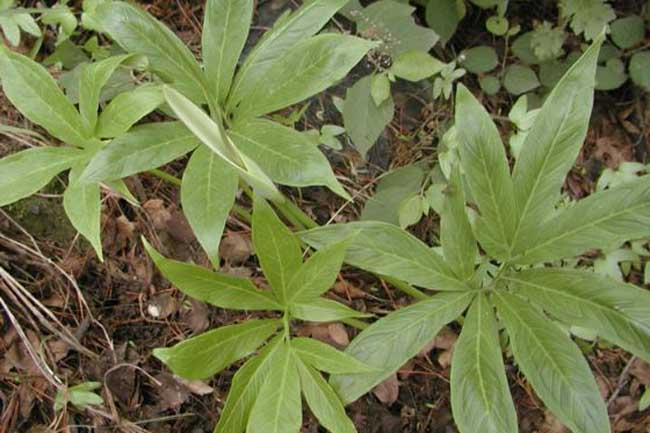
Pinellia ternata is an important medicinal herb in the treasure trove of traditional Chinese medicine, found only in China and Japan in Asia. For the propagation and cultivation of Pinellia ternata, three methods are generally used: underground corm propagation, bulbil propagation, and seed propagation.
Corm propagation
When digging up the corms around Cold Dew, select the smaller ones as seed stock, bury them in moist soil in a cool, ventilated place, and around the following Qingming, transplant them into the field at a row-to-plant spacing of 10 × 6 cm. Do not plant too deep; about one cun is sufficient. At a soil temperature of 15--20 °C, seedlings emerge in half a month. Use 40 to 50 kg of seed per mu.
Bulbil propagation
In summer and autumn, after the aboveground parts wither, the bulbils under the leaf stalks are just maturing and can be harvested as seed stock. Open holes at 6 to 8 cm, sow 2 per hole, cover with 3 cm of soil, press lightly, apply an appropriate amount of phosphorus and potassium fertilizer, keep moisture levels moderate, and strengthen management after seedlings emerge. Bulbil propagation is currently the main method for propagating Pinellia ternata, with reliable germination and an early maturation period.
Seed propagation
Select biennial Pinellia ternata seeds, prepare the land and make beds around Qingming, and sow on trial in the bed at a row spacing of 8 to 10 cm. Cover the seeds with about 2 cm of soil, firm the soil, then water so the seeds settle evenly into the ground. Cover with wheat straw or rice straw to keep it moist, remove the straw after seedlings emerge, thin the seedlings at 6 cm, remove weeds, and strengthen management. Use about 3 jin of seed per mu. No matter which propagation method is used, field management must be strengthened, sufficient base fertilizer applied, and if seed is not being kept, the flower scapes should be removed to increase yield.