Detailed Explanation of Isatis indigotica Planting Techniques and Key Field Management Points
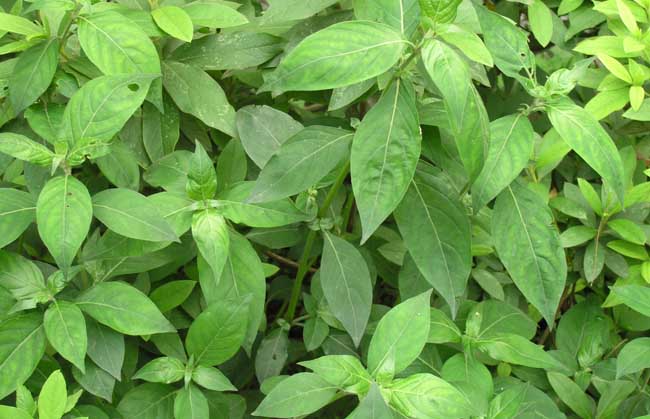
Isatis indigotica has no great demands on soil for its growing habits, and basically it can be successfully planted in ordinary soil. It is resistant to severe cold and prefers warmth, but is afraid of waterlogging, and it can grow normally in the Yangtze River basin and the vast northern regions of China.
Isatis indigotica is propagated by seed, with spring sowing and summer sowing. Spring sowing: between March and May, select well-drained, loose and fertile soil, and draw furrows 15 cm deep at a row spacing of 18-20 cm. Evenly scatter the seeds into the furrows, cover with soil, tread once with the foot, or push back and forth twice with a large hoe, then level and water. Generally at around 18°C, seedlings emerge in 7-10 days. Summer sowing: between June and July, the method is the same as for spring sowing, and seedlings emerge in 4-5 days.
Field management: thin the seedlings when the seedlings are about 6 cm tall, with a plant spacing of about 5 cm; from Xiaoman to Mangzhong, apply 15 kg of ammonium nitrate and 15 kg of superphosphate per mu as topdressing, then water after covering with soil; during the Summer Solstice to Minor Heat, cut the leaves, and 4-5 days after cutting the leaves, when watering, apply 10 kg of urea as topdressing.
Harvesting and processing: spring-sown Isatis indigotica is cut once for leaves during the dog days, cutting the leaves from the base, and it is best to sun-dry them for one or two days. From Cold Dew to Frost's Descent, dig up the roots, sun-dry them, and use them as medicine. For summer-sown plants, cut the leaves and sun-dry them when digging up the roots, and the root-digging season is the same as above.