How to Grow Pseudostellaria heterophylla? A Detailed Explanation of Key Planting Points
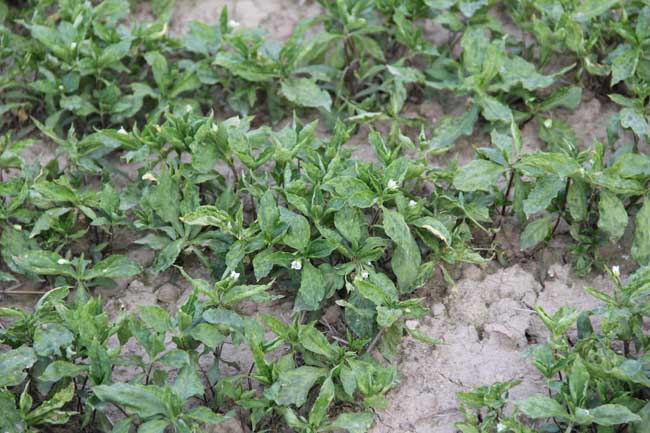
Pseudostellaria heterophylla has a very broad range of uses, is in great demand on the market, and has excellent planting prospects. Today we will briefly discuss the basic key planting points for Pseudostellaria heterophylla.
Choosing the Ginseng Plot and Applying Plenty of Base Fertilizer
Choose a hillside plot of red-yellow soil; land left fallow for one year after cultivation (second-year fallow land) is best, and the plot must not accumulate water after rain. The plot must be carefully plowed and harrowed, and beds made: bed width 1 m, furrow width 25 cm, furrow depth 15 cm. On the leveled bed surface, open furrows crosswise with a row spacing of 12-15 cm and a depth of 6-9 cm. Apply per mu of plot 15-20 kg of NPK compound fertilizer and 40 kg of superphosphate, or 2000-2500 kg of human and livestock manure plus 40 kg of superphosphate, as base fertilizer, and add an appropriate amount of carbofuran mixed into the base fertilizer to prevent damage from white ants, cutworms, and the like.
Plant at the Right Time and Ensure Planting Quality
Planting can be done from late October to December, generally in early November. Select larger tuberous roots that are free of pests and diseases and intact as seed roots. Plant the seed roots in the furrows at a plant spacing of 6-7 cm, with the buds pointing upward and slightly tilted; never plant them vertically. After planting, cover the seed with soil and farmyard manure. Too sparse a density affects yield, while too dense a density increases the amount of seed used and raises production costs. About 40 kg of seed roots are needed per mu. The planting depth should preferably be 6 cm; too deep and the tuberous roots become fat and fewer in number, affecting yield; too shallow and the tuberous roots are small and prone to branching, and are also easily dried out and killed in dry weather, affecting yield and quality. Water promptly after planting to settle the roots.
Strengthen Field Management to Ensure a Bumper Harvest
After the seedlings emerge uniformly in February-March, carry out intertillage to loosen the soil and remove weeds. When loosening the soil, do not step on the beds; stand in the furrows to work. Combined with fertilization, apply per mu 1500-2000 kg of human and livestock manure and 8 kg of compound fertilizer, diluted with water. In April-May, carry out intertillage and weeding twice, with topdressing according to seedling growth. Pseudostellaria heterophylla is susceptible to waterlogging, high temperatures, and drought. After rain, clear the furrows and drain water promptly; in the dry season, water promptly.
Harvest in Time and Preserve the Seed Tubers
In June, the aboveground part of Pseudostellaria heterophylla begins to wither. After withering, cut off the yellow leaves of the aboveground part and then dig them up. This is the seed-preservation period for Pseudostellaria heterophylla. Generally, seed preservation is done in the ginseng plot: interplant spring soybeans in the plot kept for seed, and when the Pseudostellaria heterophylla plants have completely withered and yellowed, the soybeans use their branches and leaves to shade and cool the plot, which helps the seed tubers survive the summer safely. After harvesting Pseudostellaria heterophylla, sun-dry it for 2-3 days. After drying, the fine roots break easily; turn it several times in time so they fall off, then winnow away the fibrous roots with a winnowing basket, and it can be sold as a medicinal commodity.