Black nightshade berries growing by the fields make a superb congee; people ate them often 20 years ago, but now they are rarely seen.
For many rural children born in the 1980s and 1990s, childhood was both happy and painful. Why say that? Because in those days, living conditions were not as good as they are now. Back then, rural children had no money to buy toys and no money to buy snacks to satisfy their cravings, so it was rather painful.
But at the same time it was happy. Although there was no money to buy toys or snacks, in the rural countryside and mountains there were all kinds of wild foods, such as wild fruits and wild vegetables. Especially after summer arrived, wild fruits covered the hills and fields, and you could eat your fill. Below, the author will share with you a kind of wild fruit found by rural fields, which people often ate 20 years ago.
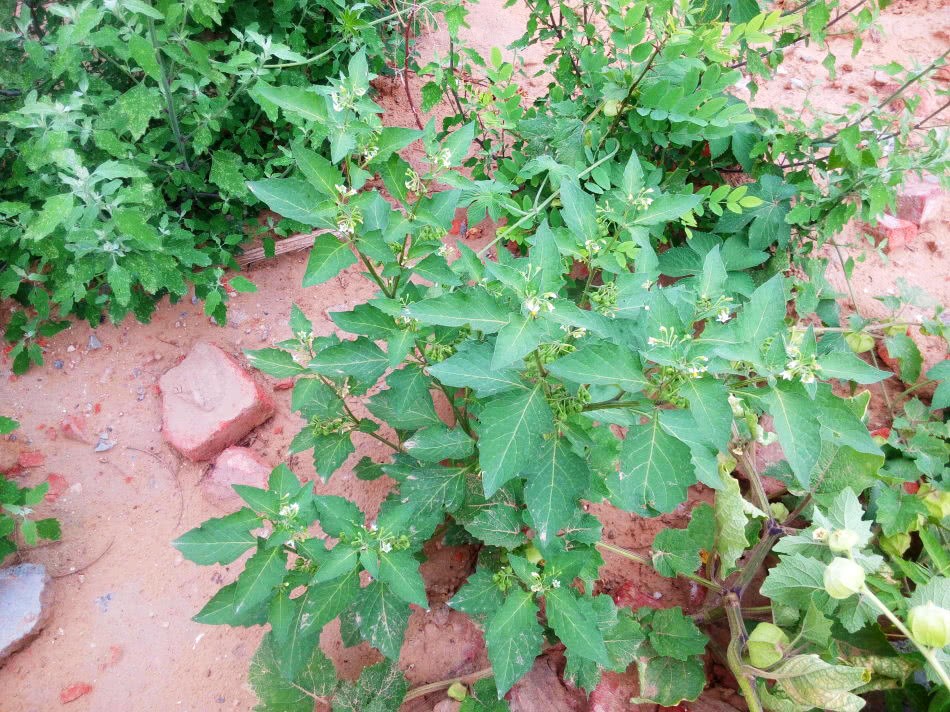
In the past, there were far more wild fruits in the rural countryside than there are now. At that time, quite a few wild fruits often grew in the farmland. One of them was green when unripe and turned black after ripening. Whether ripe or not, it looked just like a "grape," making people want to eat it. This wild fruit is the "long kui berry" (black nightshade berry), though in the author's hometown people prefer to call it "tian hei hei," "tian pao guo," or "wild grape."
The author remembers that as a child, once the summer vacation began, he would go with friends to play by the fields, catching shrimp and loaches, and then pick wild fruits to eat. Black nightshade likes to grow near farmland, so when they got tired from playing, they would pick one or two black nightshade berries to satisfy their cravings. After eating the berries, a friend would open his mouth and grin, showing a mouth full of big black teeth, which was especially amusing. Some friends would also pick the berries and throw them at each other, leaving bruises black and blue on their bodies.
At that time, although the adults allowed them to eat black nightshade berries, they did not allow them to eat many. In the past, no one knew why, but after growing up they learned that black nightshade berries are actually poisonous, so you cannot eat too many.
In fact, not only are the berries of black nightshade edible; its leaves can be eaten too. However, it is no longer the season to eat black nightshade leaves now. In March and April, you can pick the tender leaves of black nightshade and eat them as a wild vegetable. In particular, using them to make congee is superb. In the author's hometown, black nightshade leaves are also called "long kui cai" (black nightshade greens). Using them to make congee is said to relieve fatigue and reduce sleepiness, and can be used to treat symptoms of drowsiness.
Besides being edible, the black nightshade berry actually also has medicinal value. According to the Bencao Tujing, when used as medicine, the black nightshade berry has the effects of clearing heat and detoxifying, resolving phlegm and relieving cough, and promoting urination. It can be used to treat sores, carbuncles and swellings, skin eczema, difficult urination, chronic bronchitis in the elderly, excessive vaginal discharge, prostatitis, dysentery, and many other conditions.
Therefore, although black nightshade likes to grow near farmland, in the past old farmer friends did not dislike it; on the contrary, they liked it very much. But now black nightshade by the fields is rarely seen. I wonder whether it is because of pesticide spraying.
Dear friends, did you eat or play with black nightshade berries when you were little? What do you call it where you are from? You are welcome to leave a comment and share!