Detailed Explanation of Platycodon grandiflorus Planting Techniques and Management Methods
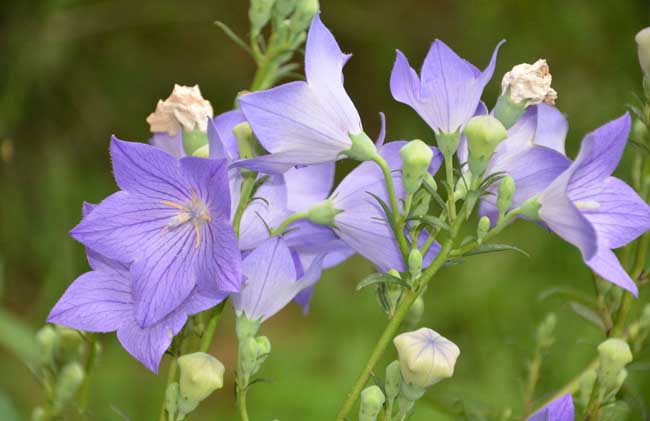
Platycodon grandiflorus, also known as balloon flower, bellflower, doraji, etc., is a perennial herbaceous plant of the genus Platycodon in the family Campanulaceae. Its root is used as medicine and has the functions of dispersing lung qi, dispelling cold, eliminating phlegm, and draining pus. Platycodon grandiflorus prefers a mild climate, is cold-tolerant and sun-loving, and is best suited to loam, sandy loam, clay loam, and humus loam. It dislikes waterlogging and is afraid of wind damage. It is cultivated throughout both northern and southern parts of China, with the "Tong Platycodon grandiflorus" from Tongcheng, Anhui, being particularly prized for its quality.
Platycodon grandiflorus is not only a valuable traditional Chinese medicinal herb but can also be used as a vegetable. When planting Platycodon grandiflorus, each mu can yield 800 kg to 1,200 kg of fresh product (two-year-old fleshy roots). Calculated at a protected price of 5.5 yuan per kg (fresh product), this can generate returns of between 4,500 and 7,000 yuan. Platycodon grandiflorus has strong adaptability, and its cultivation techniques are relatively simple. It can be cultivated in both northern and southern parts of China and is suitable for large-scale cultivation, with broad development prospects. The cultivation techniques are described below:
Land Selection
Platycodon grandiflorus is suitable for growing in relatively loose soil, especially preferring sloping land and mountainous areas, with semi-shaded, semi-sunny terrain being optimal. Flatland cultivation requires good drainage conditions. Platycodon grandiflorus is not suitable for continuous cropping.
Land Preparation
Platycodon grandiflorus has relatively long fleshy roots, so ridge cultivation is best. In early spring (mid to late April), spread farmyard manure and plow the land, harrow it fine, and level it (deep plowing of 30 cm). When making ridges, first mark grid lines on the ground at 2-meter intervals, open furrows, then spread the soil from the furrows to both sides to form ridge beds with a ridge width of 1.7 m and a furrow width of about 30 cm. If drought occurs, irrigation can be carried out along the furrows in preparation for sowing.
Selecting Good Seed
For Platycodon grandiflorus seeds, select seeds from plants at least 2 years old that are not stale (seeds stored for one year will have their germination rate reduced by more than 70%). Before planting, conduct a germination test to ensure the seed germination rate is above 70%. The specific method for the germination test is: take a small amount of seeds, soak them in warm water at 40°C to 50°C for 8 to 12 hours, remove the seeds, drain the water, place them on cloth, mix with wet sand, and germinate them at a temperature of about 25°C. Be careful to stir and spray water promptly; they will germinate in 4 to 6 days.
Sowing
Platycodon grandiflorus can be sown in spring or summer. Spring sowing should be done around mid-May, that is, when the soil temperature reaches above 15°C, and summer sowing should be done before late July. In our local area, it is best to open furrows and sow in rows when the rains come (mid to late May). Before sowing, first open small furrows on the ridge bed at a row spacing of 20 cm, with a width of 5 cm and a depth of 2 cm. Scatter the seeds evenly into the furrows, using about 1-1.2 kg of seed per mu, then immediately cover with decomposed fine manure soil or humus soil, with a covering depth of about 3 cm. It is essential that the depth be uniform. After sowing, cover with mulch and spray the seedbed with Decis at 2,000 times dilution to prevent underground pests and ensure the emergence rate.
Fertilization
Before sowing Platycodon grandiflorus in the field, apply 2,000-3,000 kg of farmyard manure, 40 kg of grain compound fertilizer, and 30 kg of superphosphate per mu. To prevent white grubs, when turning the farmyard manure, add 1 kg of Jiadifen powder per ton and mix it evenly with the farmyard manure, then apply before plowing. For later topdressing, mainly use clear manure water or urea. In July of the same year and July-August of the following year, apply 25 kg of urea or clear manure water for topdressing to promote seedling growth. Clear manure water can be applied at about 2 tons per mu each time, with a concentration of about 10%. If the concentration is too high after topdressing, promptly wash the seedlings with clean water.
Field Management
Dry-sown seeds need about 25 days to emerge, and sprouted seeds also need about 10 days to emerge. After the seedlings emerge, promptly remove weeds. If the seedlings are too dense, thin them in a timely manner, with 10 to 12 plants per 100 square cm being appropriate. Keep one plant at 5 cm intervals when thinning (about 60,000 plants per mu), and combine this with loosening the soil. Weeding should also be carried out in a timely manner later. In addition, Platycodon grandiflorus has a long flowering period, which consumes a large amount of nutrients and affects root growth. Except for seed-production fields, promptly remove flowers and fruits to improve root yield and quality.
Pest and Disease Control
The main insect pests of Platycodon grandiflorus are underground pests, such as cutworms, white grubs, and wireworms. If cutworms occur, use Decis at 40 ml per mu for control. White grubs can be removed manually when plowing. After seedling emergence, use phoxim diluted 2,000 times for drenching control. The main disease of Platycodon grandiflorus is root rot, which occurs at the junction between the root and the external environment, causing the whole plant to die. For control, spray with Kanguling combined with streptomycin. For each vial of Kanguling, add one vial of streptomycin and 20 kg of water, and spray over 0.5 mu of land.
Harvest
When harvesting Platycodon grandiflorus, after cutting the above-ground plants, dig out the fleshy roots, remove impurities, and promptly sell them fresh.