What Type of Tea Is Pu'er Tea? A Detailed Explanation of Pu'er Tea's Classification
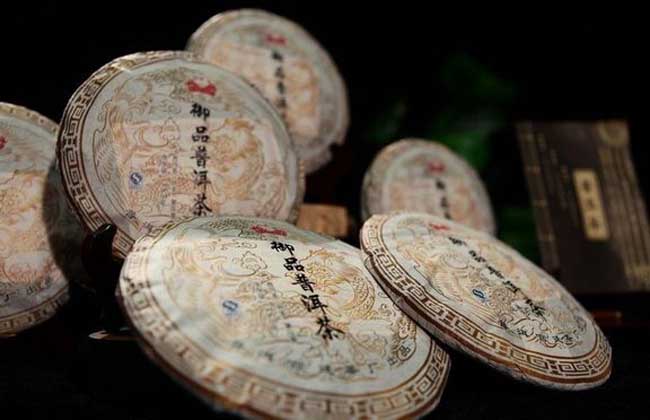
Pu'er tea is mainly produced in the Xishuangbanna, Lincang, Pu'er and other areas of Yunnan Province, and it has a very long history. As early as more than three thousand years ago during the period of King Wu's conquest of Zhou, the Pu people, ancestors of Yunnan tea growers, already presented tea to King Wu of Zhou, though at that time the name "Pu'er tea" did not yet exist. Later, because the original shipping and distribution center was in Pu'er County, it was named Pu'er tea. Now let us take a look together at what type of tea Pu'er tea is!
What type of tea is Pu'er tea?
Pu'er tea belongs to dark tea. Dark tea is one of the six major tea categories and is a post-fermented tea. Its main producing areas are Sichuan, Yunnan, Hubei, Hunan, Shaanxi, Anhui and other places. The raw materials used are relatively coarse and mature, and the tea-making process generally includes four steps: fixation, rolling, pile fermentation and drying. By regional distribution, it is mainly classified into Anhui ancient Yi dark tea (An tea), Hunan dark tea (Fu tea), Sichuan Tibetan tea (border tea), Yunnan dark tea (Pu'er tea), Guangxi Liubao tea, Hubei old dark tea and Shaanxi dark tea (Fu tea).
The Processing Technique of Pu'er Tea
1. Fixation: Pu'er tea mostly uses wok fixation. Because large-leaf tea has a high water content, during fixation the tea must be alternately covered and tossed so that the fresh leaves lose water evenly, achieving the goal of thorough and uniform fixation.
2. Rolling: Rolling is the direct rubbing and kneading of the fixed tea leaves by hand. The force should be controlled flexibly by hand according to the composition of the tea raw materials. Tender leaves should be rolled gently and for a short time, while old leaves should be rolled firmly and for a long time. Rolling until the tea leaves basically form strips is the appropriate degree.
3. Sun-drying: Sun-drying uses sunlight to dry the moisture in the tea leaves. Generally, a bamboo mat is used to spread the tea leaves thinly in the sunlight to dry, and drying until the tea leaves are about 90% dry is the appropriate degree.
4. Pile fermentation: Pile fermentation is the key step in forming the color, aroma and taste quality of Pu'er tea. Generally, the tea leaves are first sprinkled with water to absorb moisture and become damp, then piled to a certain thickness and allowed to ferment naturally. After piling and fermenting for several days, the tea leaves turn brown in color, develop a special aged aroma, and the taste becomes rich and mellow.
5. Air-drying: After pile fermentation reaches the appropriate degree, the tea is spread out indoors on a bamboo mat to air-dry, so that the tea leaves after pile fermentation release moisture and dry naturally in the air.
6. Screening: After the pile-fermented and dried tea leaves are first broken up and loosened, methods such as sieving, winnowing and picking are used to blow away fine fragments and dust, and old stems are picked out for grading, thus producing loose Pu'er tea. After loose Pu'er tea is sorted into coarse and fine, large and small, long and short, it can be blended according to the variety of commercial tea to be made and further processed into compressed teas such as Pu'er round tea, brick tea and tuo tea.
The Drinking Benefits of Pu'er Tea
1. Nourishing and protecting the stomach: Pu'er tea at a suitable concentration is viscous, sweet-smooth and mellow. After entering the human gastrointestinal tract, the film it forms attaches to the surface of the stomach, creating a protective layer for the stomach. Long-term drinking can nourish and protect the stomach.
2. Anti-inflammatory and sterilizing: Medical research experiments have proven that Yunnan Pu'er tea can inhibit bacteria. Taking strong tea liquid ten times a day can treat bacillary dysentery. This is because Yunnan large-leaf tea contains abundant tea polyphenols.
3. Cancer prevention and anti-cancer: Professors Liang Mingda and Hu Meiying used cell culture and electron microscopy methods to study the anti-cancer effects of Pu'er tea for more than ten years, and found that Pu'er tea has the strongest effect in killing cancer cells, and drinking Pu'er tea can prevent cancer.
4. Slowing aging: The substances in tea with anti-aging effects are catechin compounds. The total amount of catechins contained in Pu'er tea is higher than in other tea tree varieties, so its anti-aging effect is better than that of other tea categories. At the same time, during the processing of Pu'er tea, macromolecular polysaccharides are converted into soluble monosaccharides and oligosaccharides, and vitamin C also increases severalfold. These substances can all improve the function of the human immune system, thereby achieving the effects of preserving health and extending life.
5. Lowering lipids and aiding weight loss: Kunming Medical College in China conducted 55 clinical trials on Yunnan Pu'er tuo tea for the treatment of hyperlipidemia, and compared them with 31 cases treated with clofibrate, a drug with relatively good lipid-lowering effects. The therapeutic effect of Pu'er tea was higher than that of clofibrate. Long-term drinking of Pu'er tea can reduce cholesterol and glycerides, so long-term drinking can treat obesity.
6. Anti-arteriosclerosis: Drinking Pu'er tea can sometimes cause physiological effects in people such as vasodilation, decreased blood pressure, slowed heart rate and reduced cerebral blood flow. It has a good therapeutic effect on patients with hypertension and cerebral arteriosclerosis, and elderly people who occasionally drink a pot can also extend their lives.
7. Strengthening teeth and protecting teeth: Pu'er tea contains many physiologically active components and has a sterilizing and disinfecting effect. Professor Cao Jin of Hunan Medical University conducted experiments using Pu'er tooth-strengthening tea to inhibit the adhesion ability of Streptococcus mutans, and found that Pu'er tooth-strengthening tea has the effect of resisting plaque formation, and drinking more can also prevent tooth decay.