Is Maojian a green tea? A detailed explanation of Maojian's tea category classification
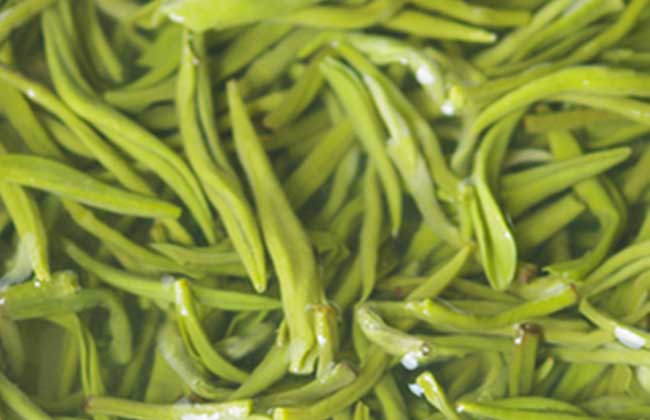
Maojian is one of the most common teas. The tea leaves are covered all over with white down, the color is fresh and lustrous, clean, and free of impurities, the aroma is elegant and fresh, and the taste is brisk, mellow, and sweet in aftertaste. Common types include Weishan Maojian, Xinyang Maojian, Ziyang Maojian, Duyun Maojian, Huangshan Maojian, Guzhang Maojian, and others. Now let us take a look together at whether Maojian is a green tea!
Is Maojian a green tea?
Maojian is a green tea. Maojian tea belongs to the green tea category of teas. Maojian is produced in Huangshan, Xinyang, Weishan, Duyun, and other places in our country. In each place, Maojian tea is named by adding the place name to Maojian tea in order to distinguish it. Maojian is made through a series of processes: sieving, spreading, fixation, rolling, breaking up clumps, strip sorting, initial drying, spreading to cool, and re-drying. After being picked, it is pan-fired, and there is no fermentation process during this time, so it belongs to the unfermented tea category, and the unfermented tea category is classified as the green tea category among the six major tea categories.
The production process of Maojian
1. Sieving: Classify and grade the freshly picked leaves according to different varieties, different grades, and different picking times, remove foreign matter, and spread them separately.
2. Spreading: For the fresh leaves after screening, gently turn them once about every 1h. The indoor temperature should be below 25°C, and direct sunlight should be prevented. The spreading time should preferably be controlled at 2-6 hours according to the grade of the fresh leaves. Spread them until the grassy odor dissipates.
3. Fixation: The moisture content of the fixed leaves should be controlled at about 60%. The sign of proper fixation is that the leaf color is dark green, the leaf texture feels soft when pinched by hand, slightly sticky, can be tightly held into a ball, is slightly elastic, the grassy odor has disappeared, and there is a slight tea fragrance.
4. Rolling: For high-grade tea, the rolling time should be controlled at 10-15 minutes; for medium- and low-grade tea, it should be controlled at 20-25 minutes. Apply appropriate pressure according to whether the leaves are old or tender. The surface of the rolled leaves should be sticky with tea juice, and after gripping by hand there should be a sticky, moist feeling.
5. Breaking up clumps: For mechanical breaking up of clumps, it is advisable to use a tea leaf clump-breaking machine suitable for making famous high-quality green tea, to break up the leaf clumps formed by rolling.
6. Strip sorting: For mechanical equipment, it is advisable to use a strip-sorting machine suitable for making famous high-quality strip-shaped green tea. The strip-sorting time should not be too long, the temperature should be controlled at 90-100°C, and the leaf amount put in should not be too much. It is advisable to use a leaf amount of 0.5-0.75 kg and a time of about 5 minutes.
7. Initial drying: For mechanical equipment, it is advisable to use a mesh-belt or chain-plate continuous dryer suitable for making famous high-quality green tea. According to tea quality, the air inlet temperature for initial drying should preferably be controlled at 120-130°C, the time at 10-15 minutes, and the moisture content at 15-20%.
8. Spreading to cool: Place the tea leaves after initial drying indoors and spread them promptly and fully to cool for more than 4h.
9. Re-drying: Re-drying is still carried out in the dryer, with the temperature preferably at 90-100°C and the moisture content below 6%.
What types of Maojian are there?
1. Xinyang Maojian: Xinyang Maojian is produced in Xinyang City, Henan Province. The terrain in this area is high and steep, and the ecological environment is uniquely favorable. High-grade Maojian tea is mainly made from one bud and one leaf or one bud and two leaves, while medium-grade tea is mainly made from one bud and two or three leaves. The tea has a tender green color with a hidden emerald hue, a high, clear aroma with a cooked chestnut fragrance, a rich taste that withstands multiple infusions, and a tender, bright green leaf base. In the production area, Xinyang Maojian calls fresh leaves tea grass, tea green, green leaves, raw leaves, and so on. The quality of fresh leaves is closely related to the quality of the finished tea. In areas with good temperature and humidity, fresh leaves grow well, and the made Maojian tea has a glossy, lustrous appearance. In areas with poor temperature and humidity, growth is also poor, and the finished product has a dry and withered feel. There are also differences depending on whether picking is early or late and whether the leaves are large or small. If picked early, the leaves are too tender and the aroma is insufficient, and the yield is low; if picked late, the leaves are old and coarse, and the aroma is inferior.
2. Duyun Maojian: The main production areas of Duyun Maojian are in the area of Tuanshan, Shaojiao, and Dacao in Duyun City, Guizhou Province. Last year, the average temperature there was 16°C, and the average annual precipitation was more than 1400 mm. In addition, the soil layer is deep, the soil is loose and moist, and the soil is acidic or slightly acidic, containing large amounts of iron and phosphate, which is suitable for the growth of tea trees. Duyun Maojian tea is picked around Qingming. This matches what is stated in the Draft Gazetteer of Duyun County: "It can be picked from Qingming to Liqiu. The one picked before Guyu is called yuqian. The tea is best, and the fine one is called Maojian tea." The picking standard is one bud and one initially opened leaf, with a length not exceeding 2.0 cm. Usually, pan-firing 500 grams of high-grade Maojian tea requires about 53,000-56,000 bud tips.
3. Huangshan Maojian: Huangshan Maojian tea is produced in Xinming Township, Huangshan District, Anhui Province. This township is located on the northern foot of the world-famous Huangshan mountain range. Within its borders, high mountains stand, peaks surround it, streams crisscross, the land is fertile and moist, the fragrance of green bamboo and flowers and trees drifts about, sunshine duration is short, the temperature difference between day and night is large, diffused light is abundant, the air is fresh and pollution-free, and the average altitude is 500-800 m. Tea cultivation has a long history. There are now 9500 mu of tea gardens, and the output of Taiping Houkui tea accounts for about half of the district's total.
4. Ziyang Maojian: Ziyang Maojian is produced in the near-mountain canyon area of Ziyang County by the furnace of the Daba Mountains in the upper reaches of the Han River in Shaanxi. It is a historically famous tea. The strips are round and tight, plump and uniform, the color is emerald green, white down is visible, the tea aroma is tender and lasting, the liquor color is tender green and clear and bright, the taste is fresh and mellow with a sweet aftertaste, and the leaf base is plump and tender and intact, tender green and bright. The fresh leaves used are picked from the fine green tea varieties Ziyang cultivar and Ziyang Dayepao. The tea buds are plump and the down is especially abundant. Processing is divided into ten procedures: fixation, initial rolling, pan-firing the base, re-rolling, initial drying, strip sorting, re-drying, raising the down, full drying, and roasting for fragrance.
5. Wufeng Maojian: Wufeng Maojian is produced in Wufeng Tujia Autonomous County, Hubei Province. It is in the tail area of the eastern extension of the Yunnan-Guizhou Plateau and has the good name "Hometown of Chinese Tea." Wufeng Maojian is a type of green tea. High-grade tea is mainly made from one bud and one leaf or one bud and two leaves, while medium-grade tea is mainly made from one bud and two or three leaves. The tea has a tender green color with a hidden emerald hue, a high, clear aroma with a cooked chestnut fragrance, a rich taste that withstands multiple infusions, and a tender, bright green leaf base.
6. Guzhang Maojian: Guzhang Maojian is produced in Guzhang County in the Wuling Mountain area of Hunan and is named after the place. It belongs to the green tea category. It is a famous tea of ancient and modern times. It is made by selecting the young tender buds and leaves of suitable tea tree varieties and processing them finely. It has the characteristics of being tight and straight with abundant down, emerald green in color, tender and highly pleasant in aroma, mellow and brisk in taste with a sweet aftertaste, and resistant to multiple infusions. It has a unique mouthfeel and fragrance and is praised as a "treasure among green teas." The unique growing environment and unique processing techniques have created the unique quality of Guzhang Maojian.
7. Baima Maojian: Baima Maojian is produced in the Baima Mountain branch range of the Xuefeng Mountains, where it meets the Huangjin Well by the Yunxi River, and it is named because of this. Its appearance is tight and compact in strips, sturdy, uniform and clean, slightly curved, emerald green and glossy in color, with visible white down. After brewing, the aroma is high and fragrant, the taste is fresh and brisk, the liquor color is clear and bright, and the leaf base is tender green and uniform. In 1991, it was rated as a provincial-level famous tea of Hunan.
8. Shengdi Maojian: Shengdi Maojian is a round-strip pan-fired green tea produced in the area of Daxiaoping Tian Shan and Xiaoping Tian Shan in Guigang, Guangxi. The strips are smooth, tight, and fine, the bud tips are visible and lustrous, the liquor color is jade-green and bright, it is fresh, tender, and fragrant, and the taste is sweet and mellow. It is picked as one bud and one leaf and made through spreading, pan-firing, rolling, drying, screening, and re-fragrancing. It is divided into special grade and grades one to four.
9. Weishan Maojian: Weishan Maojian is produced in Weishan Township in Shuiweishan, Ningxiang County, Hunan Province. This tea belongs to the yellow tea category. Its appearance is slightly curled into block form, its color is yellow, bright, and oily, white down is visible, the liquor color is orange-yellow and translucent, the pine-smoke aroma is fragrant and rich, and the taste is mellow, sweet, and refreshing. The leaf base is yellow, bright, tender, and uniform. In 1988, it won the bronze medal award at China's first Food Expo.