Key Points and Detailed Methods of Guinea Fowl Farming Technology
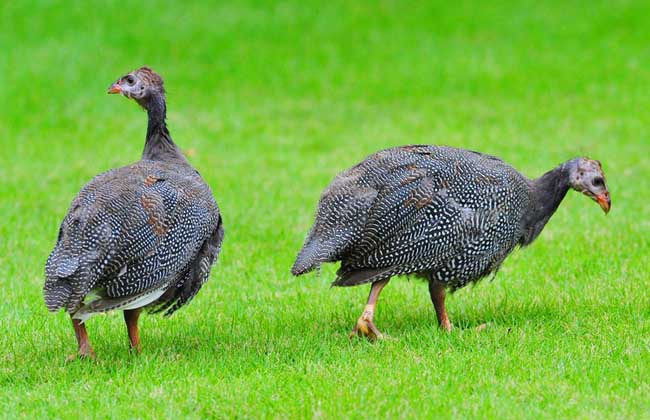
Guinea fowl, also known as pearl fowl, mountain chicken, guinea bird, etc., originated in Africa. China first introduced guinea fowl from the Soviet Union in 1956 and successfully raised them, but for about 30 years they were kept as ornamental birds. Large-scale farming began in 1992. Through continuous exploration and summarization of experience, by 2012 the farming technology began to mature. Let's take a look at guinea fowl farming technology together below!
Variety Classification of Guinea Fowl
The main varieties of guinea fowl include the great guinea fowl, the crested guinea fowl, and the grey-breasted guinea fowl. The great guinea fowl is distributed in Somalia and Tanzania, characterized by only a few feathers on its back with white spots. The crested guinea fowl is distributed in the tropical forests of Africa. The grey-breasted guinea fowl includes two types, one with blue wattles and one with red wattles. Many varieties have now been bred, including grey guinea fowl, white guinea fowl, lavender guinea fowl, and their crossbreeds. Among them, the grey guinea fowl is the most widely raised variety. What is commonly called guinea fowl in China mainly refers to the grey guinea fowl type, such as the French ISA guinea fowl.
Morphological Characteristics of Guinea Fowl
The guinea fowl has a relatively small head and a body length of 50-55 cm. The front of the beak is pale yellow and the rear is red. Below the beak, there is a red wattle on each side. The face is pale blue-purple, with no feathers around the eyes. The neck is slender. The base color of the whole body plumage is blue-brown, densely covered with white spots. Male and female guinea fowl have the same plumage. Generally, males are slightly larger than females, with taller legs. The male's comb is more raised, and the wattles are slightly larger. When approaching sexual maturity, the male's call is short and excited. The appearance resembles a female peacock, with a very small head, a pale blue-purple face, and a strong, pointed beak. The tip of the beak is pale yellow and the rear is red. Below and behind the beak, there is a heart-shaped wattle on each side. There are no feathers around the eyes, and a ring of white markings extends straight to the upper part of the neck. The neck is slender and covered with a ring of purple-blue needle-like feathers. The legs are short; when young, the legs are red, and after maturity they become grey-black. They walk quickly. The whole body plumage is grey with regular round white spots shaped like pearls, hence the elegant name "guinea fowl."
Farming Value of Guinea Fowl
1. Guinea fowl meat is tender, nutritious, and delicious. Compared with ordinary broiler chickens, it has higher protein and amino acid content, while fat and cholesterol content are very low. It is a special poultry with a gamey flavor.
2. Guinea fowl has a high slaughter rate, a large edible portion, fine bones, a small head and neck, well-developed breast and leg muscles, and a body that is approximately oval. For a guinea fowl with a live weight of 1700 grams, the dressed weight is 1544 grams, accounting for 91% of live weight, and the half-eviscerated weight is 1415 grams, accounting for 83% of live weight. It can be seen that both its slaughter rate and meat yield are relatively high.
3. Guinea fowl breeding hens begin laying at 28 weeks of age. In one laying period, they can lay about 160 eggs and provide about 110 chicks. Each breeding bird consumes about 40-44 kg of feed throughout the entire laying period. The optimal slaughter time for commercial meat guinea fowl is 12-13 weeks of age, when live weight can reach 1300-1500 grams, and the meat-to-feed ratio is 1:2.7-2.9.
4. Guinea fowl has good adaptability, strong disease resistance, and simple requirements for equipment and housing. It tolerates coarse feed and is easy to raise, so engaging in guinea fowl farming requires little investment, has quick turnover, and high returns. In addition, guinea fowl is moderate in size, neither as large as a turkey requiring portioned sales, nor as small as a quail. It is suitable both for an ordinary family to eat in one meal and as a high-grade meat poultry for banquets.
Living Habits of Guinea Fowl
1. Adult guinea fowl like dryness and dislike dampness, tolerate high temperatures, resist cold, and have strong disease resistance. They can still live at -20 to 40°C. However, if the temperature is slightly low after hatching, the chicks are prone to catching cold, diarrhea, or death.
2. Guinea fowl usually live in groups of 30-50 and never separate alone. After domestication, they still like group activities. When startled, they also flee and hide in groups, so guinea fowl are suitable for large-group raising. In addition, guinea fowl have a strong homing instinct. When returning to the roost in the evening, they often each return to their own house, and even if occasionally separated, they can still return to the group and the roost.
3. Adult guinea fowl weigh 2.2-2.5 kg, at 12 weeks of age weigh 1.2 kg, and at 28 weeks of age weigh 1.9 kg. Female guinea fowl begin laying at 28-30 weeks of age. Over 35 weeks of laying, 165-195 hatching eggs can be obtained. Egg weight is 42-50 grams, and the shell is brown with a few spots.
4. Guinea fowl still retain the characteristics of wild birds. They like to roost at heights, and their activity can also be seen at night. Chicks in particular are quite active and often burrow around everywhere, causing death. This habit should be given sufficient attention in raising.
5. Guinea fowl are gentle, timid, and alert. Any abnormality or movement in the environment can cause the whole flock to panic. Hens make harsh calls, and the flock will have a chain reaction, with calls rising and falling one after another. If a red drinker is replaced with a yellow drinker, the flock will not dare to approach the drinker for a relatively long time.
6. Guinea fowl have a very broad diet. Cereals, bran and middlings, cakes, fish bone meal, grasses, vegetable leaves, fruits, etc. can all be used in mixed feed.
7. Guinea fowl are good at flying, love climbing, and are fond of activity. Their wings are well developed and strong, and they have a certain leaping ability at 1 day of age. They can walk almost constantly throughout the day, and when resting or at night they like to climb to high places to roost.
8. When kept free-range on earthen ground, guinea fowl often dig pits in the ground to provide themselves with conditions for dust bathing. During dust bathing, they spread sand evenly between the feathers and skin.
9. Guinea fowl have a rhythmic and continuous harsh call, which is indeed a major characteristic. This call greatly disturbs people's rest, but it also has several functions. First, the sudden strong outburst of this call at night serves as an alarm. Second, once this call decreases or its intensity weakens, it may be a sign of disease.
Artificial Incubation of Guinea Fowl
Guinea fowl hatching eggs must be fresh, with a storage period not exceeding 10 days. Egg weight should be about 45-50 grams, and the egg shape should not be too round, too long, or deformed. The incubation period of guinea fowl hatching eggs is 26-28 days, with days 0-23 in the incubator and the remainder of the time in the hatcher. Other incubation techniques are basically the same as those for ordinary chickens, but the incubation temperature should be slightly higher. The incubator temperature is 38.1°C, the hatcher temperature is 37.6°C, the incubator humidity is 55%, and the hatcher humidity is 70%-80%.
Feed Formulas for Guinea Fowl
1. Newly hatched chicks: corn 50%, wheat meal 3%, wheat bran 2%, soybean cake 31%, fish meal 12%, bone meal 1.1%, salt 0.4%, additives (trace elements, multiple vitamins, amino acids, growth promoters, antibiotic drugs, etc.) 0.5%.
2. 4-8 weeks of age: corn 55%, wheat meal 6%, bran 4%, grass meal 2%, soybean cake 22%, fish meal 8%, bone meal 1.6%, shell meal 0.5%, salt 0.4%, additives (trace elements, multiple vitamins, amino acids, growth promoters, antibiotic drugs, etc.) 0.5%.
3. 8-12 weeks of age: corn 54%, wheat meal 8%, bran 6%, grass meal 4%, soybean cake 18%, fish meal 6%, bone meal 1.5%, shell meal 1.5%, salt 0.5%, additives (trace elements, multiple vitamins, amino acids, growth promoters, antibiotic drugs, etc.) 0.5%.
4. 12-25 weeks of age: corn 52%, wheat meal 8%, bran 14%, grass meal 6%, soybean cake 12%, fish meal 4%, bone meal 1.5%, shell meal 1.5%, salt 0.5%, additives (trace elements, multiple vitamins, amino acids, growth promoters, antibiotic drugs, etc.).
Brooding Facilities for Guinea Fowl
1. Building the brooding house: The brooding house should be used to raise chicks of the same size and variety. Male and female chicks should be raised in separate pens, and if conditions permit, in separate houses. The brooding house is required to have good sealing performance to help keep the house warm. The brooding house can have a cement floor and be capable of drainage, which is helpful for cleaning, washing, and disinfecting the house. A disinfection pool should be set at the entrance of the house, and shoes must be disinfected before entering.
2. Ground free-range brooding: In winter and spring, 5-7 cm thick litter should be spread. In summer, spread sand on the ground and then add a thin layer of litter. The litter should be clean, dry, free of mildew, and cut to about 10 cm long. After one brooding cycle, the litter should be cleared out of the house and composted together with manure, and must not be used again.
3. Flat rearing on wire mesh: When using floor mesh for flat rearing, the mesh surface can be made of iron wire, wood, or bamboo. The mesh spacing (or mesh size) should be appropriate, generally 1.2 cm spacing or 1.2 cm square mesh. The height of the mesh surface should be 60-70 cm. The entire mesh surface is best if movable, so that after the flock is moved out, the mesh can be lifted to remove manure and clean the house.
4. Cage brooding: When using cage brooding, water troughs and feed troughs should be provided according to the number of chickens and placed evenly. A raised brooder umbrella is used for heating. In places with limited housing area and convenient electricity use, stacked electric brooding cages can be used, with 4 tiers per cage, totaling 1200-1600 chicks.
Brooding Management of Guinea Fowl
1. Brooding density: The rearing area for guinea fowl should increase as the chicks grow. At 1 week of age, raise 50-60 birds per square meter; at 2 weeks of age, raise 30-40 birds per square meter; by 3 weeks of age, only 20-30 birds can be raised per square meter.
2. Brooding temperature: Within the first 3 weeks of brooding, whether the temperature in the house is suitable is the key to the success or failure of brooding. It should be neither too high nor too low. Newly hatched chicks should live under a brooder umbrella at 35-38°C, and thereafter the temperature should be reduced by about 3°C each week. Whether the house temperature is suitable can be observed from the behavior of the flock. If too cold, the flock huddles together; if too hot, the chickens open their mouths and pant; at a suitable temperature, they are lively and appear comfortable.
3. Brooding humidity: High temperatures in the brooding room often lead to low humidity and dry air. Chicks lose too much water, which affects their health and, in severe cases, causes dehydration. When the humidity in the brooding house is low, clean water can be sprinkled on the floor. Maintain a relative humidity of 60%-65% in the brooding room, which can be measured with a wet-and-dry bulb thermometer hung indoors. In the later brooding period, humidity requirements are not strict; maintaining normal humidity is sufficient.
4. Ventilation and lighting: Only natural ventilation devices are needed. Generally, doors, windows, and roof ventilators are enough to meet the chicks' ventilation needs. Chicks need a certain amount of light duration and light intensity. In enclosed houses, chicks at 1-2 days of age need 23 hours of light, at 3-7 days of age need 20 hours, at 2 weeks of age need 16 hours, and at 3 weeks of age male chicks need 12 hours while female chicks need 14 hours. Light intensity: 3 watts per square meter for 0-10 days of age, and 2 watts per square meter for 11-21 days of age. Attention should be paid to making the lighting uniform throughout the house.
5. Feeding and watering: Chicks should be started on feed 24 hours after hatching. They can first be given 5% glucose water to drink, and 2-3 hours later fed soaked, air-dried broken rice or corn meal. After 1-2 days, compound feed can be given. At 1 week of age, feed 6-8 times per day and night; at 2 weeks of age, 5-6 times; at 3 weeks of age, 4-5 times. After starting feed, they can freely drink water of good quality at 20-25°C. The number and length of long feed troughs and water troughs used during brooding depend on the number raised. In principle, ensure that each chicken has 2.5 cm of feed trough length and 0.6 cm of water trough length.
6. Observing the flock: During brooding, one should frequently enter the house to observe the flock's spirit, eating, drinking, droppings, and other conditions. If abnormalities are found, the cause should be identified promptly, the disease confirmed, and timely isolation, treatment, or culling carried out. According to the specific situation, targeted medication can be given to the flock for prevention. To prevent feather pecking and reduce flying ability, beak trimming and removal of the last joint of the left or right wing can be done within 10 days of age.
Management of Guinea Fowl During the Growing Period
1. Growing chicken house: In places with large temperature differences across the four seasons, growing chickens should be raised in enclosed houses. The house can have a cement floor and should be convenient for washing and disinfection. The growing chicken house should have natural ventilation and mechanical ventilation. All light-transmitting parts should have shading curtains, and the entrance should have wire mesh. Growing chickens can be raised free-range on the ground. In cold weather, spread litter on the ground; in hot weather, spread sand. They can also be raised on full floor mesh, 2/3 floor mesh, or 1/2 floor mesh, with the remaining ground covered with litter. When raised free-range on the ground, the house should have high perches for the chickens to rest on.
2. Rearing density: In the early growing period, 15-20 birds per square meter; in the late growing period, 6-15 birds per square meter. In the early rearing period, growing chickens can occupy 1/3 of the house floor area, and as the chickens grow, the occupied area is gradually increased until they occupy the entire house. The above rearing density refers to the standard when the house temperature is 20-25°C and the relative humidity is 65%-70%. Normally, the rearing density can be appropriately reduced or increased according to the temperature and humidity in the house.
3. Lighting management: Growing male and female chickens should be raised separately and given different lighting. In the early growing period, maintain 8-9 hours of light, and in the late growing period gradually increase light to 14 hours. The light intensity should be uniform at 0.5-1.0 watts per square meter. In the late growing period, males should have their light duration increased earlier than females, because male guinea fowl mature more than 1 month later than females, and increasing light in advance can accelerate the sexual maturity of males.
5. Restricted feeding: Restricted feeding means feeding quantitatively according to the different weeks of age of the chickens so that body weight meets the standard. They should not be fed too much, which would cause overweight, early maturity, early laying, and early aging, nor too little, which would fail to reach standard body weight, delay maturity, delay the start of laying, and affect egg production. When body weight exceeds the standard, the feed amount can be reduced as appropriate or not increased. When overweight is substantial, feeding every other day can be implemented.
6. Disease prevention: When staff enter the chicken house every day, they should try to keep quiet and carefully observe whether there are abnormalities in the guinea fowl's spirit, eating, defecation, and so on. Wash water and feed troughs daily, promptly clean manure in the house and replace litter, and strive to maintain good hygiene in the house. This is crucial for preventing flock diseases. Growing guinea fowl are susceptible to intestinal diseases, coccidiosis, candidiasis, trichomoniasis, etc., and preventive medication should be used under veterinary advice. When growing chickens are transferred to the laying house, this should be done at night under dim light.
Management of Guinea Fowl During the Laying Period
1. After new guinea fowl are transferred to the adult house, at about 22 weeks of age or in mid-March, transitional feed begins to be used. The early growing feed can also be mixed with laying-period feed, and the amount of vitamins added should be increased by 30%. When the laying rate reaches about 10%, switch to pre-laying feed, and around the end of August switch to late-laying feed.
2. During the laying period of new guinea fowl, the feed should be relatively stable. The feed formula or main ingredients should not be changed frequently. Feed changes should have a 5-7 day transition period so that the digestive system of the guinea fowl can adapt well. The quality of feed for laying guinea fowl must be guaranteed. Moldy and spoiled ingredients must not be used, and those stored too long should also be avoided as much as possible.
3. During the laying period of new guinea fowl, especially before 45 weeks of age, the flock should be ensured sufficient intake. Only by taking in enough nutrition can a high laying rate be guaranteed. Generally, during the laying period, feed about 90 grams of complete feed per day, 3-4 times. The first feeding should be carried out within 2 hours after turning on the lights in the morning, and the last feeding should be carried out about 3 hours before turning off the lights at night. Around noon, 1-2 feedings can be given.
4. When feeding new guinea fowl, distribute the feed in the troughs as evenly as possible, and level the feed once half an hour after each feeding. Before the next feeding, check the consumption after the previous feeding. If feed accumulates in some part of the trough, check the number of chickens there, their mental state, and whether the cage is deformed. If no abnormality is found, level that feed to other places for the chickens to eat.
5. Breeding guinea fowl during the laying period are generally fed dry mash. Only when a small amount of fine powder remains in the trough about 1 hour after feeding can a small amount of water be used to moisten it to stimulate intake. Feed color, smell, and particle size all affect intake, and these should be kept as stable as possible. At the same time, keep feeding records, including feed type, manufacturer and date, total daily feeding amount, and average daily intake.
Disease Prevention and Treatment of Guinea Fowl
1. Newcastle disease
[Symptoms]The flock often becomes ill suddenly, with ruffled feathers, retracted head and neck, drooping wings and tail, cyanotic or purple-black wattles and cones, open-mouth breathing or difficulty breathing, often making a special "gurgling" sound, and the crop filled with foul liquid matter that often flows from the mouth when the bird is held upside down. Diarrhea occurs, with yellow-green or grey-white foul-smelling loose droppings. Some sick chickens show neurological symptoms such as paralysis of the legs and wings, unstable walking or standing, head and neck tilted backward or twisted to one side, and finally paralysis and death. Necropsy shows hemorrhage in the mucosa and serosa of the proventriculus, small intestine, and other areas.
[Prevention and Treatment]When Newcastle disease occurs, drug treatment is ineffective and instead delays time. In the first 3 days of onset, anti-Newcastle disease serum can be tried with some effect. Sick chickens in the middle and late stages should all be culled and deeply buried or treated at high temperature. For flocks with only a few cases or other flocks not yet affected, emergency vaccination with strain I or strain II attenuated vaccine can be used. After the disease occurs, buying and selling chickens and the entry and exit of personnel should be prohibited. The chicken house and equipment can be spray-disinfected with 0.2%-0.4% benzalkonium bromide solution, and transport tools can be disinfected with 1%-2% caustic soda solution. Taking comprehensive preventive and control measures at ordinary times is the key to preventing this disease. Vaccination with strain or vaccine can be given at 12 days of age, and Newcastle disease oil vaccine can be injected at 40 days and 120 days of age. Newly introduced chickens must be raised separately for more than 2 weeks and vaccinated on schedule. At ordinary times, sanitation and disinfection of the chicken house should be strengthened.
2. Infectious bursal disease
[Symptoms]The occurrence of infectious bursal disease has no obvious seasonality, and chickens 3-5 weeks of age are susceptible. Sick chickens are depressed, drink more water, have greatly reduced appetite, ruffled feathers, close their eyes and sleep, pass white watery loose droppings, and have feces clinging to the feathers around the vent. They stagger when walking, tremble, become weak, and die. Surviving sick chickens appear emaciated and grow slowly. Necropsy shows the bursa of Fabricius is highly swollen in the early stage and atrophied in the later stage, with edema, hemorrhage, and creamy sticky secretions in the mucosa of the bursa. There are hemorrhagic spots on the mucosa at the junction of the proventriculus and gizzard.
[Prevention and Treatment]The fundamental measure for preventing this disease is to strengthen feeding management and carry out timely immunization injections according to the immunization program. Attenuated bursal vaccine can be inoculated once each at 18 days and 28 days of age, and breeding chickens can be injected once with bursal oil vaccine at 18-20 weeks of age. When this disease occurs, bursal hyperimmune serum or hyperimmune yolk antibody can be tried by injection, and traditional Chinese medicine preparations such as "Guan Nang San" can also be used. At the same time, strengthen care for sick chickens and add multiple vitamins, etc.