Detailed Explanation of Key Technical Points for Raising Wannan Three-Yellow Chickens
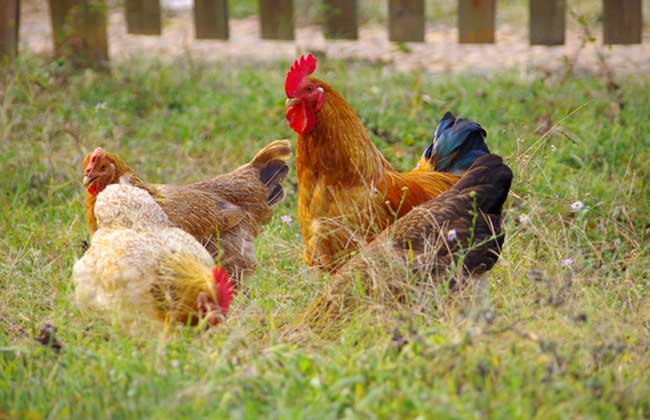
The Wannan Three-Yellow Chicken originates from Xuancheng City, Anhui Province. Locally it is generally raised as a meat chicken, usually using a combination of free-range and housed rearing. This not only lowers feeding costs but also gives better meat quality, so the farming results can be described as very ideal. Its wide adaptability, tolerance of coarse feed, strong disease resistance, ease of raising, and excellence in both meat and egg production have made it famous far and wide. Let us take a look below at Wannan Three-Yellow Chicken farming techniques!
Culling Low-Yielding Hens
Practice has shown that low-yielding hens consume about the same amount of feed as high-yielding hens. In a flock there are often 10-30% low-yielding hens. If these low-yielding hens are culled, the flock's egg production will not decrease much, but feed consumption can be reduced by 10-30%. Feed costs account for about 70-80% of poultry farming costs, so saving 10-30% of feed is a very large saving. Trials have shown that in the same group of hens, egg production in the second year is 15% less than in the first year, the third year is 28% less than the first year, the fourth year is 37% less than the first year, and the fifth year is 45% less than the first year. There is also a popular saying that “long-lived hens lay sparsely, old hens lay few eggs,” so when feeding hens attention should be paid to controlling the years of use. Generally, laying hens are best fed continuously for 2 years, while meat-type breed hens are generally used for only 1 year before they should be culled.
Environmental Disinfection Management
Chicken houses and equipment should be strictly handled according to the four-step procedure of cleaning, rinsing, disinfection and fumigation, or after being washed clean, a layer of fresh lime should be whitewashed on the inside and outside of the chicken house and on the walls, and then all the cleaned equipment should be placed in a sealed room and fumigated for 24 hours. Houses and equipment that have never raised chickens can simply be cleaned, rinsed and spray-disinfected. For the disinfectant, 2% caustic soda or 0.3% Nongle (Xundumie) can be used. The fumigation dose is at 3x concentration (that is, per cubic meter, 42 ml formalin + 21 g potassium permanganate + 10.5 ml water). Chicken farms should promptly eliminate rats and insects. Rat damage and insect damage not only consume feed and cause waste, but also consume oxygen, produce carbon dioxide and water, release heat and excrete urine and droppings, causing a local rise in feed temperature and increased humidity, which leads to feed caking and mold. More seriously, rats also bite young chickens to death, steal eggs and spread diseases, so rat poisons or trapping measures should be used to do a good job of rat control and prevent feed waste and contamination.
Breeding Chicken Management Techniques
The raising of breeding chickens must be stricter than that of commercial chickens throughout the entire rearing period, especially at 18-36 weeks of age, that is, from the start of laying to the peak laying period, which is the most critical period for their growth, development and production. Physiologically, the body is at a turning stage, and its feeding and management requirements are strict and detailed. This is of great significance for the timely start of laying of the breeding flock, the rapid rise to peak laying and maintaining it for a longer time, and maintaining a relatively high fertilization rate. To increase the chickens' appetite, a variety of forage grasses can be planted alongside, which not only saves feed but also provides better nutrition. In summer and autumn, an appropriate amount of stem-and-leaf forage grass leaves can be selected, such as chicory, Youyou corn grass, cocksfoot, Youyou Russian feed, and even pak choi, sweet potato leaves, etc., chopped up and fed to the chickens to promote balanced nutrient absorption. The nutrition the chickens obtain daily should be increased or decreased accordingly, specifically shown in that in summer the chickens' feed intake decreases, so the daily diet's nutrient concentration should be raised somewhat compared with other seasons. In adjusting the feeding amount, because the coordination of body weight gain must be maintained, the chickens can be weighed at the end of the week, and then according to their weight gain combined with the feeding plan, the amount to feed can be determined. If they are divided into groups, samples should be taken proportionally and weighed separately, and different feeding amounts given accordingly. In actual feeding, slightly increase the increment for lighter chickens, while for heavier chickens, because they require a larger amount of feed, the increment for maintaining medium body weight should be moderately controlled to achieve the goal of controlling body weight. (Contribution: Rural Notes)