What Are the Laying Hen Breeds? A Detailed Introduction to Common Breeds
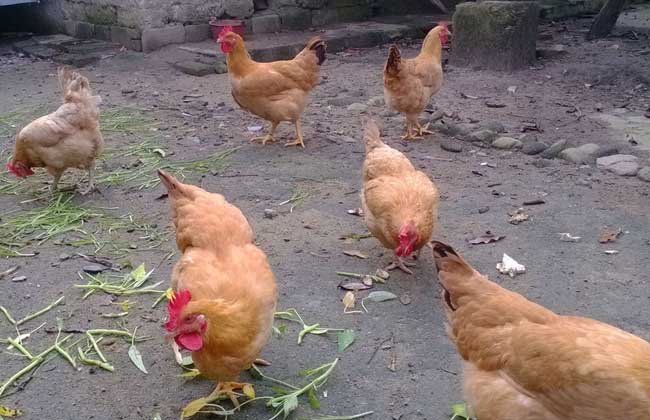
Laying hens are chickens raised specifically to produce eggs for egg supply. Eggs are the main source of income from raising laying hens. Unlike meat chickens, the main focus in raising laying hens is improving egg quality and maintaining or increasing egg production, rather than improving meat quality. Let's take a look below at what the common laying hen breeds are!
White Leghorn
[Origin] The White Leghorn originated in Italy and got its name because it was first exported from the port of Livorno in 1835. It is now found all over the world and is the world breed with the longest history, the widest distribution, the highest production and stable heredity among standard laying hen breeds. It is also the most widely used breeding material in modern laying hen breeding.
[Appearance] The White Leghorn is characterized by pure white feathers over the whole body, pure white eggshell color, and mostly a single comb. The rooster's comb is thick and upright, while the hen's comb is thinner and falls to one side. The skin, beak and shanks are all yellow.
[Performance] The White Leghorn is lively and active in temperament, easily startled as a flock, has no broodiness, and has high egg production. High-producing flocks can lay about 300 eggs per year. The adult body weight is 2.7 kg for roosters and about 2.0 kg for hens, with an average egg weight of 54-60 grams.
Rhode Island Red
[Origin] The Rhode Island Red originated in Rhode Island on the east coast of the United States.
[Appearance] The Rhode Island Red has a rectangular body, a strong build, a single or rose comb, red and oval wattles, yellow beak, shanks, toes and skin, mostly black primary wing feathers and tail feathers, red-brown feathers over the whole body, and shanks without feathers.
[Performance] The average body weight of adult Rhode Island Red roosters is 3.8 kg and of hens 3 kg. Hens start laying at 180-210 days of age, produce 160-170 eggs per year, with an egg weight of 60 grams and brown eggshells. They have broodiness and are now mostly used as the paternal breed for producing commercial hybrid laying hens.
New Hampshire
[Origin] The New Hampshire was developed in the state of New Hampshire in the United States. It was bred over more than 30 years by selecting chickens from the Rhode Island Red with good constitution, high egg production, heavy eggs and good meat quality.
[Appearance] The New Hampshire is similar in body and appearance to the Rhode Island Red, with a slightly shorter back, lighter feather color, a single comb and brown eggshells.
[Performance] The New Hampshire produces 180-200 eggs per year, with an average egg weight of 60 grams.
Australorp
[Origin] The Australorp originated in Australia and was developed by selecting the Black Orpington with emphasis on egg-laying performance.
[Appearance] The Australorp has a deep and broad body, a full breast, a medium-sized head, black beak, eyes and shanks, white soles, a single comb, and red wattles, earlobes and face. The skin is white, and the feathers over the whole body are black and glossy, with relatively tight plumage.
[Performance] The Australorp has strong adaptability and matures relatively early. Hens start laying at 6 months of age, with an average annual egg production of about 160 eggs, an egg weight of about 60 grams and brown eggshells. Broodiness is not strong. The adult rooster weighs about 3.75 kg and the hen 2.5-3 kg.
Plymouth Rock
[Origin] The Plymouth Rock originated in the state of Plymouth Rock in the United States and is named after its place of origin, hence it is called the Plymouth Rock. The varieties introduced into China include the Barred Plymouth Rock, Buff Plymouth Rock and White Plymouth Rock.
[Appearance] The Barred Plymouth Rock has a rather round body type, with all parts of the body well developed. The feathers over the whole body have black-and-white barred markings, with black feather tips, and the markings are clear and uniform. About two-thirds of the rooster's barring is white and about one-third black, while the hen's black-and-white barring is almost equal. The hen's feathers appear darker, while the rooster's appear lighter. It has a single comb, red earlobes, and yellow beak, shanks, toes and skin. The Buff Plymouth Rock's appearance is similar to the Barred Plymouth Rock, except that the feathers over the whole body are light yellow. The White Plymouth Rock has a single comb, red wattles and earlobes, dark beak, shanks and toes, light yellow skin, and white feathers over the whole body.
[Performance] The Barred Plymouth Rock generally produces about 180 eggs per year, and selected high-producing individuals can reach 250. The average egg weight is 56 grams, and the eggshells are brown. The Buff Plymouth Rock's production performance is similar to the Barred Plymouth Rock. The White Plymouth Rock produces 150-160 eggs per year, with an egg weight of about 60 grams and light brown eggshells.
Langshan
[Origin] The Langshan originated in the Nantong area of Jiangsu Province, China. Because there is a small hill south of Nantong Port, it is named Langshan chicken.
[Appearance] The Langshan has two color varieties, black and white. Its greatest body and appearance features are an upright neck, a high-raised tail, a U-shaped back, a well-developed breast, a tall body with long legs, and a majestic and imposing appearance. The head is suitably sized, and the eyes are dark brown. It has an upright single comb, and the comb, wattles, earlobes and face are all red. The skin is white, the beak and shanks are black, and most feathers are black. There are feathers on the outer side of the shanks. It has strong adaptability and disease resistance, well-developed breast muscles and good meat quality.
[Performance] The Langshan reaches sexual maturity at 7-8 months, produces about 170 eggs per year, with an egg weight of 59 grams and brown eggs. The adult rooster weighs 4.15 kg and the hen 3.25 kg.
Cochin
[Origin] The Cochin is one of the world-famous meat chicken breeds. It originated in the Shanghai area of China and has made a great contribution to the improvement of foreign chicken breeds.
[Appearance] The Cochin now has nine varieties in total. Its appearance features include a small head, a short beak, bright red single comb, wattles and earlobes, brown eyes, yellow skin, a thick and short neck, a broad and deep body, a short back that rises upward, a full breast, and abundant feathers. Its shape is roughly square, with short yellow shanks bearing shank feathers and toe feathers.
[Performance] The Cochin is gentle in temperament, strongly broody and late-maturing, not starting to lay until 8-9 months. Its annual egg production is about 80-100 eggs, with an egg weight of about 55 grams and yellow-brown eggshells. The meat is tender. The adult rooster weighs 4.9 kg and the hen 3.7 kg.
Silkie
[Origin] The Silkie originated in Jiangxi, Guangdong, Fujian and other provinces of China, and is distributed throughout the country as well as widely abroad. It is classified as an ornamental chicken.
[Appearance] The Silkie's appearance features include the "ten complete" traits, namely purple comb (the comb body is like a mulberry), tassel head (feather crest), green earlobes, beard, five toes, feathered legs, silky feathers, black skin, black bones and black meat. In addition, the eyes, beak, toes, heart and fat are also black.
[Performance] The adult rooster weighs 1.35 kg and the hen 1.20 kg. The egg production is about 80 eggs, with an egg weight of 40-42 grams.