Construction Plan for a Chicken Coop for Free-Range Native Chickens in an Orchard
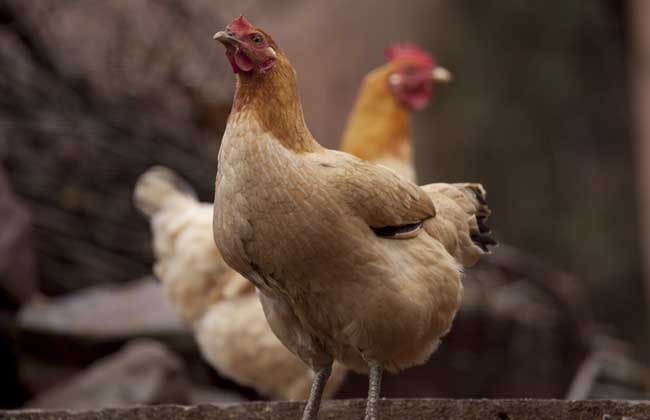
With the implementation of rural land transfer policies in the country, many ambitious young people in rural areas are now contracting land in their hometowns to grow fruit trees and raise chickens. This article provides a design plan for building a coop for free-range chickens in an orchard. Let us take a look at the construction plan for a coop for free-range native chickens in an orchard!
Benefits of Free-Range Native Chickens in an Orchard
1. Weed control and pest elimination, saving feed: Chickens have a habit of eating grass and grass seeds, and have a certain suppressing and inhibiting effect on weeds. According to experiments, when 20 chickens are stocked per mu of orchard, weeds amount to only about 20% of those in an orchard without chickens; as the number of chickens increases, weeds become even fewer. Chickens forage in the orchard, preying on adults, larvae and pupae of pests such as termites, scarab beetles, leaf miners and cutworms, thereby reducing the harm pests cause to fruit trees. Letting chickens eat large amounts of natural feed not only improves the quality of the chicken meat, but also reduces feeding costs and increases the yield and quality of the fruit.
2. Building soil fertility and reducing investment: Chicken manure contains nutrients such as nitrogen, phosphorus and potassium that fruit trees need for growth. According to analysis, the manure produced by one chicken in a year contains 900 grams of nitrogen fertilizer, 850 grams of phosphate fertilizer and 450 grams of potash fertilizer. If calculated at 20 chickens raised per mu of orchard, this is equivalent to applying 18 kg of nitrogen fertilizer, 17 kg of phosphate fertilizer and 9 kg of potash fertilizer, which improves soil fertility, promotes fruit tree growth, saves fertilizer and reduces investment. At the same time, make full use of the buildings used for watching over the orchard, and build a certain number of simple chicken sheds in a rough-and-ready way to save investment.
3. Strengthening physique and reducing disease: The air in the orchard is fresh, the water source is clean, and it is far from village dwellings, which can avoid and reduce the mutual spread of chicken diseases.
Construction of a Coop for Free-Range Native Chickens in an Orchard
1. In coop construction, the site selection for the native chicken coop is quite important. Depending on the size of the orchard, the free-range coop should be built in the central position of the orchard so that the native chickens can forage and move about easily. The coop should face south with its back to the north, warm in winter and cool in summer, with good ventilation.
2. The floor level inside the coop should be 25--35 cm higher than the ground outside the coop; otherwise, the coop floor and litter will become damp, leading to disease in the flock, and in addition, during heavy rain, rainwater will flow backward into the coop.
3. The color of the rolled-up plastic windows of the coop. For the south and north sides, the lower rolled-up sections should preferably be dark in color, and the upper sections should preferably be transparent. Moreover, the transparent upper part should account for no more than one third of the window area. The lower part of the upper and lower rolled-up curtains should be fitted with devices to keep them from bulging in the wind, so as to help with insulation and prevent drafts from entering.
4. The roof of the coop should be covered with rice straw for heat insulation and warmth retention.
5. The door for people to enter and exit the coop should be sturdy and lockable. Eaves should be built above the door and windows to prevent rainwater from blowing in.
6. Windows should be set in the east and west walls of the coop to facilitate ventilation and cooling in summer.
7. Each small compartment of the coop should have a ground-level window for chickens to enter and exit, and adjacent ground-level windows should not face the same side.
8. Dig a well in a suitable place between two new coops, for the flock's drinking water and for washing the coop, etc. If necessary, set up netting between the two coops to separate them.
9. In the middle of the north side of the coop, starting at a distance of 10 m, build simple rain-and-sun shelters along the north direction, each 2-2.5 m wide, extending toward the far end, with a height of 1.5 m, for the flock to shade from the sun and take shelter from heavy rain. Also install water pipes and automatic drinkers in the shelters. Alternatively, build a separate rain-and-sun shelter above each automatic drinker, with the area of each shelter determined according to circumstances (according to fruit tree density). The distance between each drinker should be 10--12 m.
10. The ground outside the coop should be properly leveled, and large ditches should be covered, so that the chickens can conveniently enter and exit the door and walk outside the coop.
11. Inside the coop, 30 automatic drinkers need to be purchased, and 20 outside the coop, 50 in total. Inside the coop, 60 large feed buckets need to be purchased. 2 sprayers.
12. In winter, the grass and leaves dry up and insects hibernate, so it is not suitable to keep the flock on free range. If free range is to be continued, the chickens must be provided every day with cornmeal, soybean meal, wheat bran, and large amounts of organic waste such as surplus vegetables and vegetable trimmings from vegetable greenhouses. At present, the vegetable trimmings left after harvesting in greenhouses can be fed to chickens.
13. Build roads outside the coop, and install water, electricity, netting and other facilities inside the coop. Set up 3—4 energy-saving street lamps. Set up relatively sturdy netting around the perimeter of the orchard to prevent chickens from being stolen and from escaping.
Feeding and Management of Free-Range Native Chickens in an Orchard
1. Choosing chicken breeds: For raising chickens in an orchard, local chickens should be chosen as the main breed; it is not suitable to raise fast-growing large breeds such as Avian. Local chickens have strong adaptability, strong disease resistance, tolerance of coarse feed, sturdy and powerful legs, and are diligent in foraging. Although they are small in size and slow-growing, they are easy to manage, and their meat tastes good and commands a high market price, making them very popular with consumers. Apple orchards, chestnut orchards and peach orchards are basically suitable for raising this type of chicken. When raising chickens from other places, note that they must not be beak-trimmed or toe-trimmed, so as to avoid affecting their foraging ability.
2. Stocking density: In the 1st week of age after leaving the temperature-controlled brooding house, stock about 1500-2000 birds per mu of orchard. In the 2nd week of age, stock about 1000-1500 birds per mu of orchard. From the 3rd week of age, the density should be appropriately reduced further.
3. Raising young chickens: Young chickens are small and have poor resistance, so they cannot be put directly into the orchard to be raised. Therefore, a comfortable growing environment must be created for them to lay the foundation for rapid growth. The specific rearing methods are the same as for cage raising.
4. Doing a good job of removing the heat source: The de-brooding period is generally at 4 weeks of age. When the outside temperature is low and the temperature difference between inside and outside is large, young chickens have low stress resistance and poor regulatory function and cannot adapt to environmental changes, so they should be released on warm, sunny days. For the first few days, release them for 2-4 hours a day, then gradually increase the release time day by day, so that the young chickens gradually adapt to environmental changes. In the first few days of free range, due to the effects of transfer between groups and de-brooding, a certain amount of vitamin C or multivitamins can be added to the feed or drinking water to prevent stress. Dogs are often kept in orchards for guarding; when the chickens are on free range, do not let dogs or other animals suddenly approach the flock, to prevent frightening them.
5. Feeding management: Feeding during the free-range period should follow the principle of “less in the morning, a moderate amount in the evening”, and at the same time take into account the poor foraging ability of young chicks by adding feed as appropriate, and feed little but often. Except for the first week of free range, when they are fed in the coop morning and evening, at midday they are given one supplementary feed in the resting shelter; from the 2nd week onward, the midday feeding can be omitted. The morning feeding amount should be reduced from the full amount at the beginning of free range to 70%, and for large chickens over 5 weeks of age it can be reduced to 60% or even less; the evening feeding must be to satiety. The nutritional standard should gradually shift from complete feed at the beginning of free range (the 4th week) to grains and miscellaneous cereals, and after 5 weeks of age all should be switched to grains and miscellaneous cereals, so as to artificially encourage them to look for food in the orchard, thereby increasing the chickens' activity level, taking in more organic matter and nutrients, and improving the chicken meat quality and grade.
6. Clean drinking water: Place fixed drinkers in different areas of the orchard, so that the chickens do not look for water sources themselves and mistakenly drink medicated water or groundwater. Especially during the period when the orchard is being sprayed with pesticides, attention should be paid to replenishing clean water to prevent the chickens from drinking the leftover pesticide solution from spraying the fruit trees.
7. Attention to the environment: In winter, pay attention to strong cold air moving south from the north; in summer, pay attention to sudden changes in wind and clouds, and beware of strong winds and heavy rain. Especially in the first one or two weeks of free range, pay attention to listening to weather forecasts and always observe changes in the sky and clouds; after 3 weeks of age, since stress resistance is stronger, there is generally not much of a problem. When the weather is fine, release the flock from the coop in the early morning, and drive the flock back into the coop in the evening when it gradually gets dark. If the climate suddenly changes, the chickens should be called back in time.
8. Pay attention to observation: Raising chickens in an orchard is often not a full-time job, and moreover, when on free range the chickens peck at insects and grass everywhere, so abnormal conditions in the chickens are not easy to detect in time. If the chickens contract an infectious disease, they will spread pathogenic microorganisms throughout the whole environment. Therefore, during free range, patrols and observation should be strengthened, and sick or weak chickens that lag behind, stay alone in a corner, or are listless should be isolated, observed and treated in time. When the chickens return to the coop in the evening, count their number, so as to discover problems in time, identify the cause and take effective measures.
Summary: In short, when building a chicken coop, the scale of native chicken raising should be taken into consideration, so that the coop design is reasonable. At the same time, when building a free-range chicken coop, consideration should also be given to the raising of young chickens and to the activity space and ease of catching for growing chickens and market chickens.