Why do roosters crow? The main reasons are these
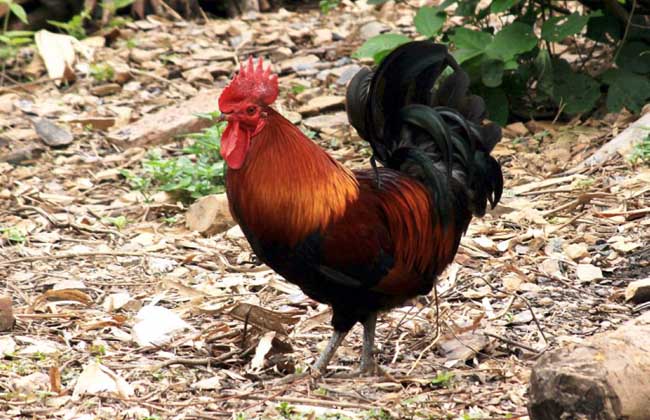
Roosters crowing and hens laying eggs is the most ordinary thing, and in many cultures the rooster's crow is associated with the arrival of early morning, which seems to suggest that roosters can tell the time. Why do roosters crow? And usually in the morning? Let's take a look together below at why roosters crow!
Why do roosters crow?
Rooster crowing is an instinctive response to light stimulation, controlled by an internal biological clock and hormones, but external light and sound stimuli can also trigger rooster crowing, and the influence of external stimuli on rooster crowing is also subject to the rooster's internal control. Inside a chicken's brain there is a “pineal gland” that can secrete melatonin, and when the melatonin level drops, the chicken will crow. The vast majority of birds are night-blind, and chickens are no exception; under normal circumstances, chickens sleep at night. Only when it is pitch dark will the pineal gland secrete melatonin. If light shines into the eyes, as the dawn light appears, the secretion of melatonin is suppressed, and the rooster involuntarily “announces the dawn”.
Crowing reflects the level of male hormones
Chickens are a social animal, and especially a rooster as the head of the family always has a pile of family trivia to handle and must shoulder many tasks of commanding and making decisions. For example, when a rooster finds food, it will make a call to summon its wives and concubines to come and share. If what it finds is a delicacy such as an earthworm or a bean, the frequency of its call will be relatively high. Conversely, when it finds rice grains of low appeal, the frequency of its call will be lower.
Some hens also crow
Some hens also crow, or if a hen is injected with male hormones, the hen will also begin to crow. This is because in a hen's body only the left ovary and oviduct develop, while the right side remains in an undifferentiated state. If its left ovary malfunctions, the undifferentiated right ovary will develop into a testis and produce male hormones. Urged on by the male hormones, the hen can then crow just like a rooster.