Detailed Explanation of Key Points in Rural Green-Shell Laying Hen Breeding Technology
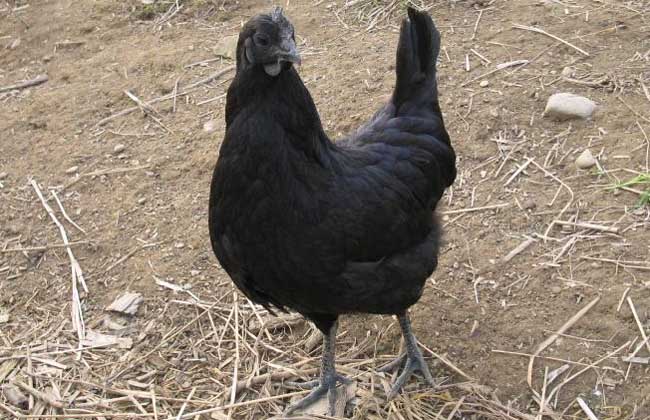
Green-shell laying hens are generally raised mainly in free-range systems; they are tolerant of coarse feed and have strong disease resistance and foraging ability. In many rural areas, farmers use mountain land to raise green-shell laying hens. This rearing model has the characteristics of good isolation conditions, fewer disease occurrences, high survival rates, and low investment. With this model, farmers can reduce feeding costs, while the quality of the green-shell eggs produced is also guaranteed. At present, green-shell laying hen farming is increasingly flourishing in the Guizhou region.
The first consideration is the construction of the chicken house. Farmers should adapt to local conditions, use local materials, and keep it simple. Permanent or simple shed housing can be built. The shed width is 5 m, and the length depends on the size of the flock (15 chickens per sq m), with a middle height of 1.8-2 m. The front and rear walls are about 1 m high. The roof is first covered with a layer of tar felt, then covered with a layer of thatch or wheat straw, and a layer of plastic film over the grass for waterproofing and insulation. The four walls of the shed are made into fence walls with woven straw, or enclosed with plastic sheeting, plastic film, tar felt, etc. Drainage ditches should be present around the shed. Several closable openings should be left on the south side of the shed for the chickens to enter and exit. The plastic sheeting or film around the perimeter is movable; in hot weather, it can be lifted 0.8-1.0 m to help lower the temperature.
Next, in terms of feeding green-shell laying hens, during the brooding period they should be fed a complete formula feed, using the method of small and frequent meals to keep the chicks constantly in a state of strong appetite, so as to promote chick growth and development. During the growing and grazing periods, more green forage and miscellaneous coarse grains should be fed. Green forage is generally produced by planting grass to raise chickens. High-quality forage grass can be used as one of the main feed sources for raising chickens, greatly reducing concentrated feed by 2.32 kg and saving 8.5 yuan in cost per chicken, with significant economic benefits. Generally, high-quality forage grasses such as hn-mc Youyou chicory and hn-mc Youyou grain amaranth are selected for planting. Feeding forage grass to chickens helps enhance the disease resistance of the chickens, improve the survival rate and breeding benefits of raising chickens, and reduce the use of drugs, especially completely replacing the use of various vitamins.
Finally, the management of green-shell laying hens also requires strict disease prevention and deworming. Farmers should pay attention to preventing and treating coccidiosis, generally preferably preventing it once each at 15 days of age and 35 days of age. To deworm against coccidia, 300 g each of smartweed, purslane, and garlic can be chopped and mixed into the feed or boiled in water and fed to the chickens. Usually, an appropriate amount of Chinese herbal medicines such as isatis root, Andrographis paniculata, honeysuckle, wild chrysanthemum, and forsythia can be added to the feed, controlling the amount of Western medicines as much as possible and reducing drug residues.